Introduction to Seiken Jodan Uke
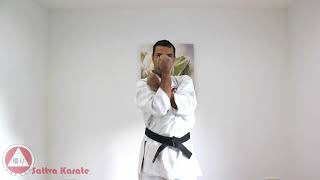
Jodan uke, or upper block, is a fundamental defensive technique in karate that protects the head and upper body from overhead attacks. This block utilizes the forearm in a circular motion to redirect incoming strikes safely away from vital targets. Mastering proper form and timing is essential for effective self-defense and competitive karate.
Stance Foundation
Begin in a stable fighting stance with feet shoulder-width apart and knees slightly bent. The practitioner's weight should be evenly distributed between both legs, allowing for quick movement and balance. A solid stance provides the necessary foundation for generating power and maintaining control throughout the blocking motion.
Chamber Position
Draw the blocking arm upward along the centerline of the body with the fist positioned near the opposite hip. The chambering motion builds momentum and prepares the arm muscles for explosive extension. The non-blocking arm remains extended forward to maintain proper form and balance.
Blocking Arc and Execution
Execute the block by driving the forearm upward and outward in a smooth circular arc, rotating from the shoulder. The blocking surface is the outer forearm, angled to deflect strikes rather than meet them head-on. The motion should be sharp and controlled, with the blocking arm ending at a 45-degree angle above the head.
Power Generation
Generate power by rotating the hips and torso simultaneously with the blocking arm's movement. This hip rotation amplifies the block's strength and creates the necessary force to redirect even powerful overhead attacks. Proper coordination between lower and upper body movements ensures maximum efficiency and impact.
Common Mistakes to Avoid
Practitioners should avoid raising the shoulder too high, which creates tension and reduces mobility. The block must not travel too far across the body's centerline, as this leaves the opposite side vulnerable. Additionally, the motion should be one fluid movement rather than a series of jerky actions.
Practical Application and Combinations
After executing jodan uke, immediately follow with a counter-strike using the non-blocking hand or a swift kick. The block creates an opening for offensive techniques while the opponent is still committed to their strike. Regular practice with a partner develops timing and reflexive application in realistic scenarios.
KARATE BLOCK 👊|| HOW TO DO JODAN UKE (UPPER BLOCK) || #karate #worldkaratefederation #block
Key Takeaways
- •Introduction to Seiken Jodan Uke
- •Stance Foundation
- •Chamber Position
- •Blocking Arc and Execution
#karate #Block#worldkaratefederation #upperblock
Frequently Asked Questions
What does this video teach about seiken jodan uke?
This video covers introduction to seiken jodan uke, stance foundation, chamber position. It provides detailed instruction from Martial Arts Training School.
How long does it take to learn seiken jodan uke?
The basic mechanics can be understood in a single session, but developing reliable execution requires consistent drilling over weeks of practice. This 7-part breakdown helps structure your training by isolating each phase of the technique.
What are the key details for finishing seiken jodan uke?
Practitioners should avoid raising the shoulder too high, which creates tension and reduces mobility. The block must not travel too far across the body's centerline, as this leaves the opposite side vulnerable. Additionally, the motion should be one fluid movement rather than a series of jerky actions.
Related videos
Basic Karate Training (Oi Tsuki+Zenkutsu Dachi+Jodan Uke)
The Motodojo Diaries
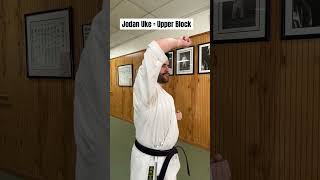
Learn to perform the basic upper block - JODAN UKE! Practice on your own or with a partner! #karate
Okinawa Goju Ryu Karate Do International - OGKI
Jodan Uke - Upper Level Block
Pathways Dojo
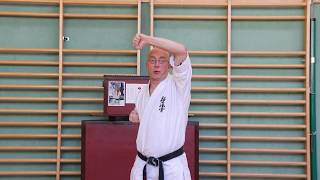
Jodan Uke
OYAMA KARATE Tulln
How to do Jodan Uke / Upper Block - Sattva Karate Goju Ryu
Sattva Karate