Introduction to Jodan Uke
Jodan uke, the upper block, is a fundamental defensive technique in karate that protects against attacks directed at the head and face. This essential movement forms the foundation for advanced upper-body defense and is practiced in all karate disciplines. Proper execution requires precise timing, correct body mechanics, and consistent repetition.
Stance Preparation
The practitioner begins in a stable zenkutsu dachi (front stance) with feet shoulder-width apart and knees slightly bent. The back foot should be firmly planted at a 45-degree angle to maintain balance and generate power. This foundation ensures the block remains stable against incoming force.
Chamber Position
Both arms are drawn downward toward the hip in a chamber position, with fists facing inward. The blocking arm's elbow remains close to the body while the opposite arm provides counter-balance. This coiling motion loads energy for the explosive execution of the block.
Execution of the Block
The blocking arm extends upward and across the body in a sweeping arc, rotating from the hip and shoulder simultaneously. The forearm makes contact with the incoming attack at a 45-degree angle, deflecting energy away from the centerline. The opposite arm retracts to the hip to complete the rotation and maintain structural integrity.
Body Mechanics and Power Generation
True blocking power originates from hip rotation and weight distribution rather than arm strength alone. The practitioner should drive the blocking action by pivoting the back foot and rotating the torso as one unified movement. This coordinated body mechanics prevents the block from being overwhelmed by superior force.
Solo Practice Method
Practitioners should perform the jodan uke repetitively, focusing on consistent form and timing with each repetition. Practicing in front of a mirror allows for self-correction of arm angle, chamber depth, and body alignment. Slow, deliberate movements should precede faster, more dynamic repetitions for proper muscle memory development.
Partner Training Application
With a partner, one practitioner assumes an attacking position while the other executes the jodan uke as a response. The attacker should initially move at controlled speed to allow the defender to develop proper timing and distance awareness. Progressive speed increases gradually develop reactive speed and real-world application.
Common Errors and Corrections
Practitioners often perform the block with only arm movement, neglecting essential hip rotation. Additional common mistakes include raising the shoulder too high or allowing the blocking arm to drift too far from the body. Correcting these errors requires focused attention during solo practice before progressing to partner drills.
Integration into Kata and Kumite
The jodan uke serves as a primary defensive tool in traditional kata sequences and freestyle kumite competition. Consistent practice of this fundamental technique directly enhances overall defensive capability and timing. Mastery of jodan uke establishes the foundation for more advanced blocking combinations and defensive strategies.
Learn to perform the basic upper block - JODAN UKE! Practice on your own or with a partner! #karate
Key Takeaways
- •Introduction to Jodan Uke
- •Stance Preparation
- •Chamber Position
- •Execution of the Block
#karate #karateblocks #gojuryu #martialarts #karateclass #karatelife #drills #mma
Frequently Asked Questions
What does this video teach about seiken jodan uke?
This video covers introduction to jodan uke, stance preparation, chamber position. It provides detailed instruction from Okinawa Goju Ryu Karate Do International - OGKI .
How long does it take to learn seiken jodan uke?
The basic mechanics can be understood in a single session, but developing reliable execution requires consistent drilling over weeks of practice. This 9-part breakdown helps structure your training by isolating each phase of the technique.
What are the key details for finishing seiken jodan uke?
Practitioners often perform the block with only arm movement, neglecting essential hip rotation. Additional common mistakes include raising the shoulder too high or allowing the blocking arm to drift too far from the body. Correcting these errors requires focused attention during solo practice before progressing to partner drills.
Related videos
Basic Karate Training (Oi Tsuki+Zenkutsu Dachi+Jodan Uke)
The Motodojo Diaries
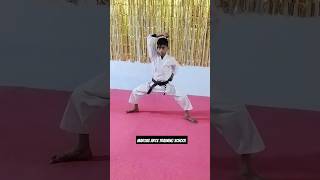
KARATE BLOCK 👊|| HOW TO DO JODAN UKE (UPPER BLOCK) || #karate #worldkaratefederation #block
Martial Arts Training School
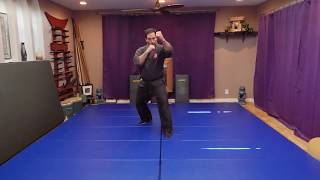
Jodan Uke - Upper Level Block
Pathways Dojo
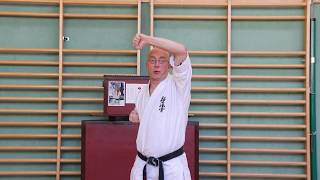
Jodan Uke
OYAMA KARATE Tulln
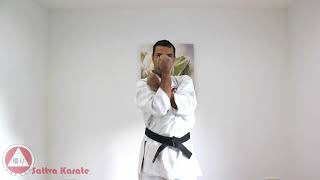
How to do Jodan Uke / Upper Block - Sattva Karate Goju Ryu
Sattva Karate