![Basic Kihon Shuto Uke, Mae Ashi Geri Chudan, Gedan Barai Nukite & Bunkai [KarateKece]](https://img.youtube.com/vi/pMVv-XaxMzg/hqdefault.jpg)
Basic Kihon Shuto Uke, Mae Ashi Geri Chudan, Gedan Barai Nukite & Bunkai [KarateKece]
0
Shuto Gedan Barai·KarateKece
Basic Kihon Shuto Uke, Mae Ashi Geri Chudan, Gedan Barai, Nukite & Bunkai [KarateKece] Shuto Uke adalah tangkisan denga…
Translation: lower knife-hand sweep
Shuto Gedan Barai (Lower Knife-Hand Sweep) is a Kyokushin Karate knife-hand sweeping block to the lower level. [1] Mas Oyama taught that every block must also be an attack — the blocking motion itself should cause pain and damage to the attacker's limb. [1] The technique requires proper body rotation and timing. [1]
Shuto Gedan Barai is a fundamental blocking technique in traditional karate, refined in Kyokushin for full-contact effectiveness. [1]
Trained for real-world blocking effectiveness in Kyokushin's full-contact system. [1]
Traditional Karate → Kyokushin Karate (Oyama). [1]
Used in Kyokushin full-contact karate tournaments
No images yet for this technique.
Sign in to suggest an image.
Basic Kihon Shuto Uke, Mae Ashi Geri Chudan, Gedan Barai, Nukite & Bunkai [KarateKece] Shuto Uke adalah tangkisan denga…
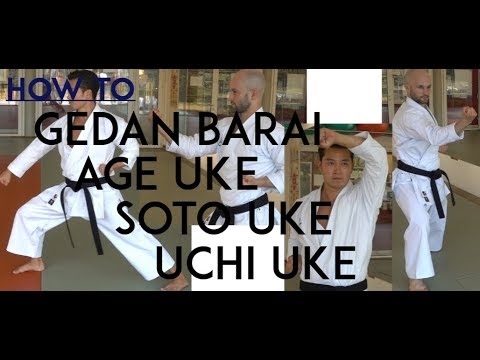
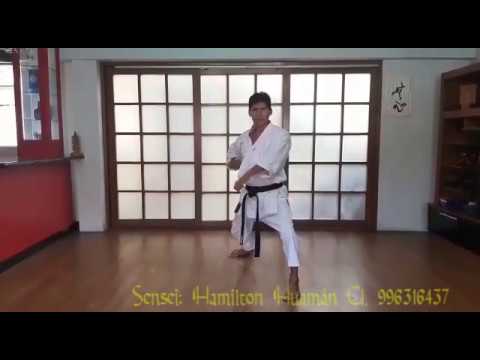
This time we present the karate basic blocks GEDAN BARAI, AGE UKE, SOTO UKE and UCHI/YOKO UKE for SHOTOKAN and SHITO RYU…
Sensei: Hamilton Huamán
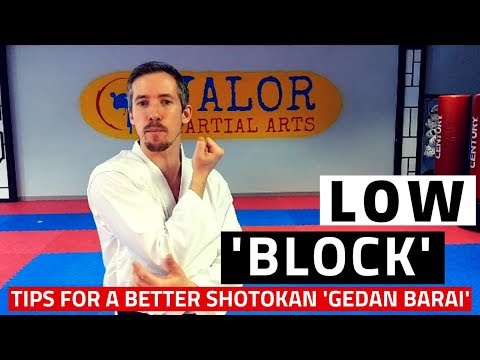
Gedan Barai, or low block is one of the most important blocks of Shotokan karate. You will see it in almost all katas, s…
HOW TO DO A LOW BLOCK (GEDAN BARAI) Basic Tutorial / Breakdown: How to do the Traditional Shotokan Karate Technique Geda…
Shuto gedan barai, commonly called a low block in English, is a sweeping defensive technique rather than a direct impact block. The term 'barai' means to sweep, analogous to ashi barai (foot sweep), emphasizing that the technique deflects incoming attacks downward and to the side rather than meeting them head-on. Karate Playbook notes that this principle prevents arm injury when defending against powerful kicks, as attempting to absorb a leg's momentum directly risks injury; instead, the sweeping motion redirects the attack past the defender's body. Karate Dojo waKu and Karate Playbook agree on the fundamental mechanics: the technique begins in a natural stance (shizentai), with arms crossed and thumbs near the ears, then transitions to front stance (zenkutsu-dachi). Critical execution points include hip rotation—the hips face forward initially, then snap to the side during the block—and wrist rotation at the final moment to generate power and control. Karate Playbook emphasizes that the elbow drives across the body to facilitate hip engagement, while Karate Dojo waKu stresses maintaining a straight head position throughout. Both instructors note that the pulling hand (hikite) is essential: Karate Dojo waKu explains that twisting the hikite increases effectiveness when escaping grabs. Karate Dojo waKu provides multiple bunkai applications: defending against front kicks (mai geri), escaping wrist grabs, and setting up counterattacks. TEAM KI contributes the observation that wrist rotation timing is critical across all blocks and discusses how vertical preparation movements relate to leverage mechanics, though their focus extends to multiple block types.
Synthesized from 4 instructors
No instructional courses yet for this technique.
Sign in to suggest a course.
Risk of injury to the person this technique is applied to
Defensive blocking technique
Skill level needed to execute this technique reliably
Whether this technique is allowed under major competition rule sets
This Is Karate (Oyama, 1965)
description, historyOrigin: sourced from Oyama, M
description, historyOrigin: sourced from Oyama, M
Conditioned forearms
Quick reaction time
Shuto gedan barai (knife hand downward sweep) uses the open hand edge for the downward sweeping block — same trajectory as seiken gedan barai but with the open hand. Used in advanced kata. (Nakayama, Dynamic Karate; karate kata documentation)
Your hips should face straight forward at the start, then snap to the side as you execute the block while keeping your head straight throughout the technique (Karate Dojo waKu — 'The ULTIMATE Tutorial of Gedan Barai').
Position the top thumb behind your ears, use the lower arm as a guideline for the top arm, then slide it down and turn your wrist at the very end to generate drive and twist into the motion (Karate Dojo waKu — 'The ULTIMATE Tutorial of Gedan Barai').
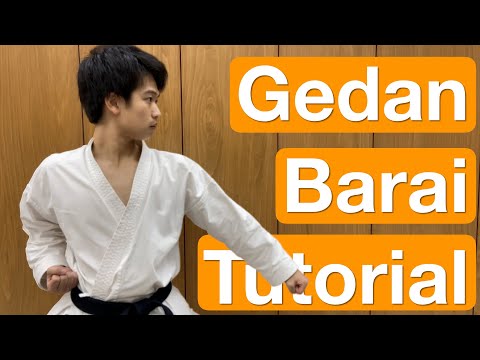
You should sweep the incoming kick down and out of the way rather than try to smash into it directly, since a powerful leg will likely win—instead, take the momentum and push it past you (Karate Playbook — 'Low Block / Gedan Barai Tutorial').
Wrist turning is essential in Shotokan Gedan Barai and helps make the technique strong when combined with directional movement and hip rotation (TEAM KI — 'how to GEDAN BARAI, AGE UKE, SOTO UKE, UCHI UKE').
Shuto Gedan Barai (Lower Knife-Hand Sweep) is a Kyokushin Karate knife-hand sweeping block to the lower level. Mas Oyama taught that every block must also be an attack — the blocking motion itself should cause pain and damage to the attacker's limb.
Shuto Gedan Barai is a fundamental blocking technique in traditional karate, refined in Kyokushin for full-contact effectiveness.
Unified MMA: legal — Legal defensive technique; WBC/Boxing: legal — Legal — blocking and evasion are core boxing skills; WKF: legal — Legal — blocking is a fundamental karate skill; Kyokushin: legal — Legal; WT: legal — Legal; WAKO: legal — Legal; K: legal — 1/GLORY — Legal; IFMA: legal — Legal
Danger rating 2/10. Defensive blocking technique
The standard setup chain: Detect attack → Shuto Gedan Barai → Immediate counter-strike.
Standard counters include: Feint and strike around the block / Double attack / Low-high combination.
Common variants: From front stance; From fighting stance; Stepping back.
Used in Kyokushin full-contact karate tournaments
Top errors to watch for: Blocking too wide / Not rotating the hips / Leaving openings after the block.
The Shuto Gedan Barai is also known as Shuto Gedan Barai, Lower Knife-Hand Sweep, Knife-Hand Downward Block.