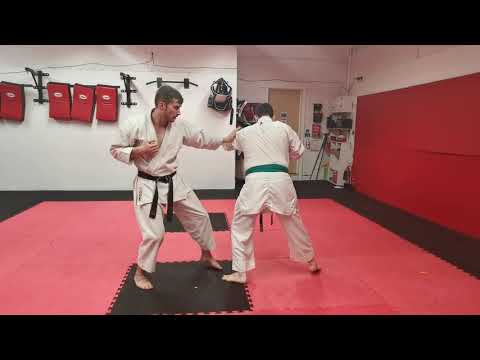
Shuto uke tutorial - 5 Ways to apply shuto uke
0
Shuto Chudan Uke·The Kata Coach
Found this video helpful? If so then please download my FREE course '10 fundamental Skills Every Karate Beginner Needs …
Translation: middle knife-hand block
Shuto Chudan Uke (Middle Knife-Hand Block) is a Kyokushin Karate knife-hand block to the midsection, deflecting punches and strikes with the blade of the hand. [1] Mas Oyama taught that every block must also be an attack — the blocking motion itself should cause pain and damage to the attacker's limb. [1] The technique requires proper body rotation and timing. [1]
Shuto Chudan Uke is a fundamental blocking technique in traditional karate, refined in Kyokushin for full-contact effectiveness. [1]
Trained for real-world blocking effectiveness in Kyokushin's full-contact system. [1]
Traditional Karate → Kyokushin Karate (Oyama). [1]
Used in Kyokushin full-contact karate tournaments
No images yet for this technique.
Sign in to suggest an image.
Found this video helpful? If so then please download my FREE course '10 fundamental Skills Every Karate Beginner Needs …
#KarateTutorial #KarateLessons #KarateTraining #KarateTechniques #KarateDrills #KarateBasics #karatekicks #KaratePunc…
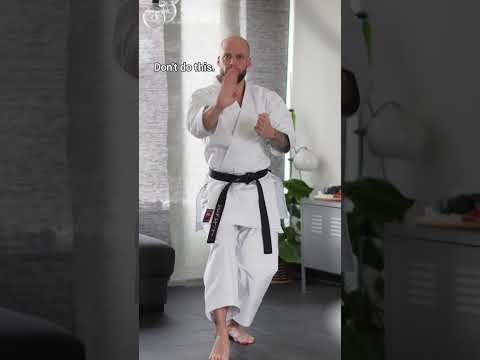
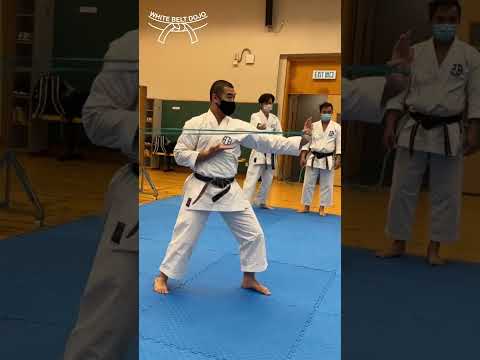
Chudan Shuto Uke #Karate #Karatedo #空手道 #kihon #基本動作 #糸東流 #Osu #Oss #Shito #Shitoryu #Dojo #Whitebelt #tsuki #uke #kata…
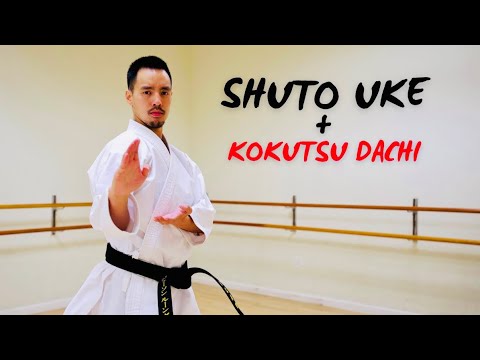
Welcome to Ultimate Karate :) My name is Jason Leung, I am a 4th Dan in Shotokan Karate Do! In today's Karate Lesson we …
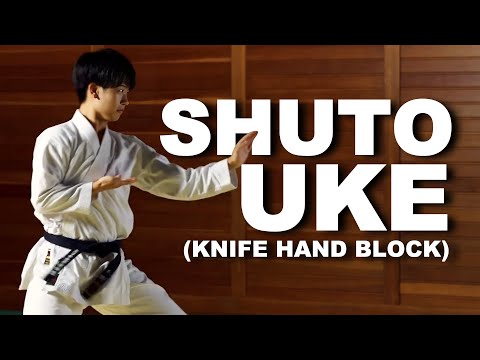
For new students to karate: How to learn to do a basic knife hand block (shuto-uke).
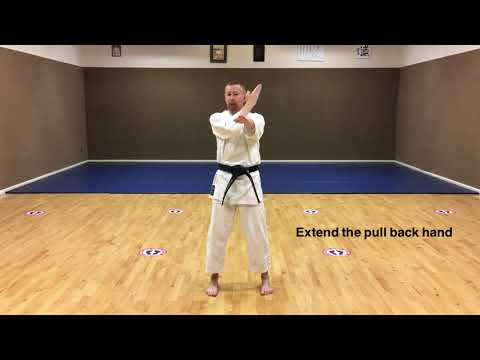
This is a video for Shuto Uke or Knife Hand block The primary purpose of this video is for my students, however if you …
🎓More Karate Secrets On My Video Course 🎓 https://courses.thekarateuniversity.org/courses/hidden-karate-principles-the…
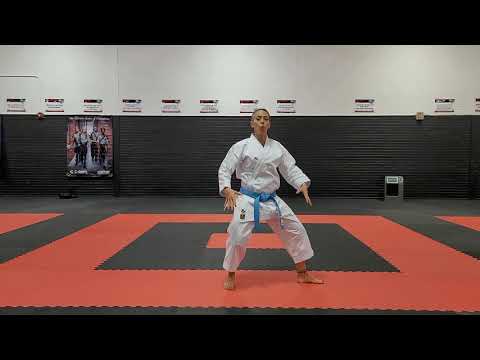
Shuto uke (knife hand block) is a fundamental karate technique performed with an open hand, fingers pressed together and thumb tucked to the side, keeping the wrist straight and aligned with the elbow. According to Ultimate Karate, the technique operates as a two-part movement: the wind-up phase bringing one hand to the ear while the other extends along the center line, followed by execution where the chambered hand swings down with the elbow pointed downward, landing with the pull-back hand at the solar plexus rather than fully retracted. Seamus O'Dowd emphasizes progressive drilling from stationary positions through stepping combinations, stressing that both hands twist simultaneously and the blocking edge contacts along the side of the hand with palms facing outward. Jennifer Allman notes that shuto uke is performed across multiple stances—kokutsu dachi (back stance), neko ashi dachi (cat stance), and moto dachi (front stance)—with the blocking hand creating a slight downward angle as if slicing with a knife, while the chamber hand remains flat on the diaphragm. The Kata Coach demonstrates hip synchronization as essential, with hips snapping sideways during execution while maintaining knee alignment and back muscle tension, and provides five bunkai (practical) applications showing the technique used for parrying jabs, controlling opponents, and transitioning into grappling sequences. All instructors agree on hand position, wrist alignment, and the importance of proper stance integration, though they emphasize different aspects of the movement's mechanics and applications.
Synthesized from 4 instructors
No instructional courses yet for this technique.
Sign in to suggest a course.
Risk of injury to the person this technique is applied to
Defensive blocking technique
Skill level needed to execute this technique reliably
Whether this technique is allowed under major competition rule sets
This Is Karate (Oyama, 1965)
description, historyOrigin: sourced from Oyama, M
description, historyOrigin: sourced from Oyama, M
Conditioned forearms
Quick reaction time
Shuto chudan uke (knife hand middle block) appears in 25 passages under 'shuto uke.' Uses the open hand edge to deflect mid-level attacks. The hand position allows immediate transition to a grab or strike after the block. (25 passages; Nakayama, Dynamic Karate)
Your wrist and hand should be in a straight line with your elbow—avoid tipping your arm or hand to either side. Keep your hand flat rather than cupped or overextended, with the blocking area being the side of the hand and forearm.
Keep your elbow relatively close to your body rather than extended outward. According to Karate Dojo waKu, think of maintaining a small space between your elbow and torso, similar to holding a stability ball, to maintain a strong and controlled position.
The technique has two distinct steps: first, slide your elbow to its designated position close to your body, and second, flick your forearm out. Many students skip the first step and only perform the second, which reduces the technique's power and momentum.
Angle your hips at approximately 45 degrees rather than pulling them fully to the side. When executing the block, snap your hips sideways while keeping your knees straight and your chest pushed out to generate power.
Shuto Chudan Uke (Middle Knife-Hand Block) is a Kyokushin Karate knife-hand block to the midsection, deflecting punches and strikes with the blade of the hand. Mas Oyama taught that every block must also be an attack — the blocking motion itself should cause pain and damage to the attacker's limb.
Shuto Chudan Uke is a fundamental blocking technique in traditional karate, refined in Kyokushin for full-contact effectiveness.
Unified MMA: legal — Legal defensive technique; WBC/Boxing: legal — Legal — blocking and evasion are core boxing skills; WKF: legal — Legal — blocking is a fundamental karate skill; Kyokushin: legal — Legal; WT: legal — Legal; WAKO: legal — Legal; K: legal — 1/GLORY — Legal; IFMA: legal — Legal
Danger rating 2/10. Defensive blocking technique
The standard setup chain: Detect attack → Shuto Chudan Uke → Immediate counter-strike.
Standard counters include: Feint and strike around the block / Double attack / Low-high combination.
Common variants: From front stance; From fighting stance; Stepping back.
Used in Kyokushin full-contact karate tournaments
Top errors to watch for: Blocking too wide / Not rotating the hips / Leaving openings after the block.
The Shuto Chudan Uke is also known as Shuto Chudan Uke, Middle Knife-Hand Block.