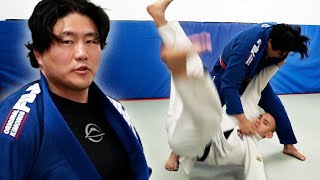
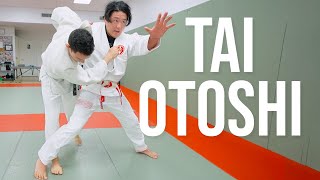
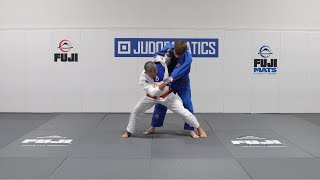
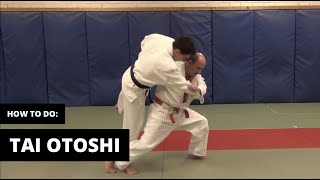
Introduction to Tai Otoshi
Tai Otoshi, meaning "body drop," is a hand-based throwing technique in which the practitioner uses their hands to draw the opponent forward before executing the throw. The primary objective is to position the opponent on a single leg while attacking that leg to complete the technique.
Right-Side Tai Otoshi Setup
In right-versus-right positioning, the instructor pivots to place themselves alongside the opponent's body. The practitioner then shoots their leg across the opponent's shin, positioning the calf against the shin bone. Proper foot placement is critical—the heel and toe must align on the same line to maximize control and power during the throw.
The Elbow Wedge and Framing
To overcome arm resistance, the practitioner releases the initial grip and creates an elbow wedge underneath the opponent's armpit. This frame prevents the opponent from resisting backward and establishes the forward pressure necessary for the technique. A strong wrist position maintains this frame throughout the execution.
Athletic Stance and Torque
After shooting the calf across, the practitioner achieves a strong athletic stance that allows for maximum torque application. From this position, the instructor can powerfully rotate the opponent to the ground in a controlled manner.
Left-Side Tai Otoshi Variation
When the opponent is in an outside grip position, the tai otoshi motion is shorter compared to right-versus-right positioning. The practitioner can employ two methods: bumping the opponent's hip out of the way, or driving them forward onto their lead leg using hand pressure on the chin.
Hip Bump Method
The hip bump variation requires the practitioner to establish elbow wedge control and use their buttocks to bump the opponent's hip out of alignment. This action shifts the opponent's weight onto the lead leg, after which the practitioner executes the tai otoshi finish.
Push-Pull Method
In the push-pull variation, the practitioner applies pressure to the opponent's chin to create tension and drive their weight onto the front leg. Foot-to-foot stepping and crossing completes the tai otoshi throw from this position.
Ouchi Combination
The tai otoshi can be combined with ouchi gari. When the opponent steps away during ouchi, their weight shifts entirely to the front leg, creating an ideal entry point for the tai otoshi throw.
Weight Distribution and Knee Safety
Proper hand positioning is essential to ensure the opponent's weight remains forward rather than directly over the practitioner's knee. If weight transfers onto the supporting leg, serious injury to the ankle or knee can result. The practitioner must maintain forward pressure on the opponent while executing the technique to redirect gravity away from the supporting knee.
Execution and Timing
The key to a successful tai otoshi is precise foot and ankle placement combined with speed of execution. As the practitioner shoots their body across and underneath, they simultaneously bring their knee back and lock it, rotating the opponent over the leg while gravity never applies downward pressure on the supporting knee.
Learn 3 Tai - Otoshi's in 4 Min!
Key Takeaways
- •Introduction to Tai Otoshi
- •Right-Side Tai Otoshi Setup
- •The Elbow Wedge and Framing
- •Athletic Stance and Torque
Shintaro teaches a quick 3 tai otoshis for you to incorporate into your game! more detailed videos deeper in the files tai otoshi in depth https://www.youtube.com/watch?v=zUnU_vyKFss Double tai otoshi https://www.youtube.com/watch?v=UvJ24hyQ7IQ Taiotoshi Judo combination off Tani https://www.youtube.com/watch?v=eQagUq6Fn-4 LINK Tomoe Nage Instructional! OUT NOW https://shintarohigashi.com/judo-courses The cross discipline nature of the Tomoe Nage throw makes this technique a must have in your arsenal! The ability to change levels on your opponent with force and purpose changes the game and tips the scales when transitioning from standing to ground. Tutorials found online tend to get bogged down in the minute details of where and how to grip, this easy to understand breakdown takes the mystery out of the technique! Simplify and Add this attack to your game with this easy to implement concept! CONCISE AND INFORMATIVE Just like his YouTube channel, this video cuts the fat of frivolous explanations that are only applicable to very unique circumstances. Instead, he presents you with a broad, proven and effective approaches that can be utilized across your entire judo system. His in depth explanations remain tailored for the judoka interested in leveling up their game.
Related Techniques
Frequently Asked Questions
What does this video teach about reverse tai otoshi?
This video covers introduction to tai otoshi, right-side tai otoshi setup, the elbow wedge and framing. It provides detailed instruction from Shintaro Higashi.
How long does it take to learn reverse tai otoshi?
The basic mechanics can be understood in a single session, but developing reliable execution requires consistent drilling over weeks of practice. This 10-part breakdown helps structure your training by isolating each phase of the technique.
What are the key details for finishing reverse tai otoshi?
Proper hand positioning is essential to ensure the opponent's weight remains forward rather than directly over the practitioner's knee. If weight transfers onto the supporting leg, serious injury to the ankle or knee can result. The practitioner must maintain forward pressure on the opponent while executing the technique to redirect gravity away from the supporting knee.