Introduction to Tai Otoshi Variations
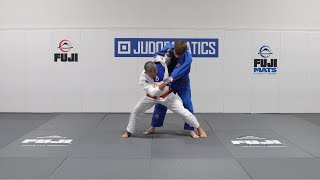
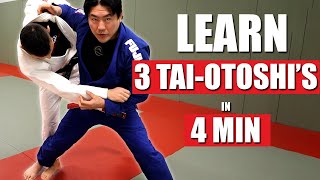
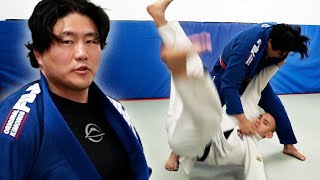
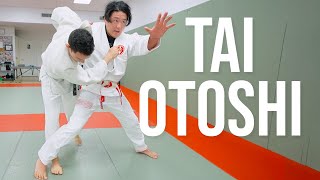
Tai otoshi, or body drop, is a fundamental judo technique with two primary execution styles: one performed with a straight leg and another with a bent leg. The instructor presents the bent-leg variation as the preferred method, offering superior mechanics and injury prevention compared to the conventional flat-footed approach.
Foot Positioning and Flexibility
The instructor contrasts two foot positions: the conventional flat-footed stance with toes pointing forward, and the preferred method with the foot turned to the side and weight on the toes. The bent-knee, toes-aligned position provides greater flexibility and reduces ligament injury risk when the opponent resists, as the knee can flex naturally rather than being locked in a vulnerable position.
Directional Advantage and Leverage
Tai otoshi functions as a forward-moving hand technique, requiring the tori to position slightly ahead of the uke rather than on the same axis. This forward positioning creates superior leverage, increased power generation, and enables successful combinations, whereas positioning too far behind the opponent limits transitional options and reduces throwing effectiveness.
Upper Body Mechanics and Grip
The standard kumikata grip incorporates two primary actions: the hand comes down onto the opponent's armpit, while the wrist lifts upward to break balance and create control. Rather than passively holding the wrist, the tori actively uses wrist movement to manipulate the opponent's balance.
Breaking Balance Through Circular Motion
The instructor emphasizes a circular, sword-drawing motion to break uke's balance in the direction his toes point, then circulate around and into the circle as the body turns. This continuous circular action, combined with hand direction and foot placement shin-to-shin, generates a takuri (floating) effect that coordinates hands, elbows, wrists, legs, and toe positioning for an efficient throw.
Injury Prevention and Technical Efficiency
The bent-leg, toe-forward variation demonstrates the principle of maximum efficiency with minimum effort by reducing reliance on shoulder power and joint stress. Proper positioning and flexibility allow the technique to function with clean, crisp execution while maintaining safety throughout the throw and enabling smooth transitions to follow-up techniques.
How to do Tai Otoshi
Key Takeaways
- •Introduction to Tai Otoshi Variations
- •Foot Positioning and Flexibility
- •Directional Advantage and Leverage
- •Upper Body Mechanics and Grip
In this video Sampson discusses Tai Otoshi in great depth, focusing on the differences between a straight legged and a bent legged Tai Otoshi, and why he prefers the latter. http://www.facebook.com/sampsonjudo http://www.Judoforall.org.uk http://www.sobelljudoclub.com Finger tape: https://amzn.to/2zbqvyh Mizuno Judogi: https://amzn.to/3gasbZz Pre-washed soft black belt: https://amzn.to/2XpNIEK My ultimate technique reference book: https://amzn.to/2LT46Zk Mind over muscle by Jigoro Kano: https://amzn.to/2zeDTSi
Frequently Asked Questions
What does this video teach about tai otoshi?
This video covers introduction to tai otoshi variations, foot positioning and flexibility, directional advantage and leverage. It provides detailed instruction from Sampson Judo.
How long does it take to learn tai otoshi?
The basic mechanics can be understood in a single session, but developing reliable execution requires consistent drilling over weeks of practice. This 6-part breakdown helps structure your training by isolating each phase of the technique.
What are the key details for finishing tai otoshi?
The instructor emphasizes a circular, sword-drawing motion to break uke's balance in the direction his toes point, then circulate around and into the circle as the body turns. This continuous circular action, combined with hand direction and foot placement shin-to-shin, generates a takuri (floating) effect that coordinates hands, elbows, wrists, legs, and toe positioning for an efficient throw.