Tai Otoshi: Full Instructional
0
Reverse Tai Otoshi·Shintaro Higashi
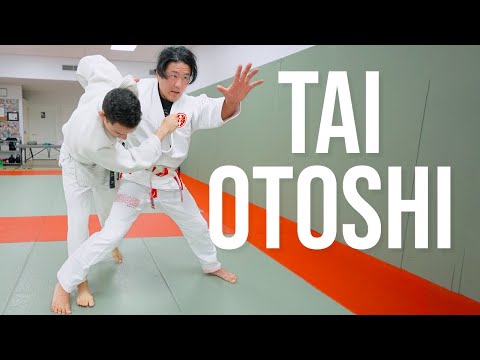
Enjoy this full tai otoshi instructional! Soto Makikomi Instructional Available for Streaming and Download for only $2…
Translation: body drop
Reverse Tai Otoshi is a variation in which the thrower executes the body drop in the opposite direction from the classical form, reversing the rotation and leg placement to throw the opponent to the other side. [1] This variation is used when the opponent's stance, grip, or movement pattern makes the classical direction unfavourable, allowing the thrower to attack by rotating in the unexpected direction. [1],[2] The mechanics remain the same — an extended blocking leg with rotational hand action — but the reversed direction creates a surprise element that catches defenders accustomed to the standard entry. [2],[3]
Reverse tai otoshi developed as a competitive variation when judoka discovered that reversing the direction of the throw could exploit gaps in opponents' defensive positioning. [1] The variant has become more common in modern competition where opponents are well prepared for classical entries. [2],[3]
The reverse tai otoshi applies the body drop in the opposite direction, catching opponents who are retreating or circling away from the standard throw. [1]
Reverse tai otoshi is a variation recognised in the Kodokan system where the blocking leg is placed on the opposite side, creating a different angle of rotation. [1]
Reverse tai otoshi is occasionally scored in IJF competition as a surprise counter. [1]
No images yet for this technique.
Sign in to suggest an image.
Enjoy this full tai otoshi instructional! Soto Makikomi Instructional Available for Streaming and Download for only $2…
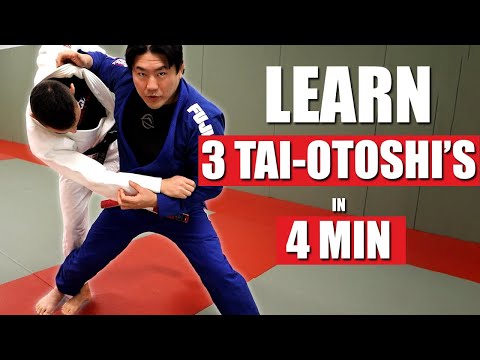
Shintaro teaches a quick 3 tai otoshis for you to incorporate into your game! more detailed videos deeper in the files …
Tai Otoshi Showcase - use this as a basis for some big throws! Uchimata Instructional https://shintarohigashi.com/jud…
The Reverse Tai Otoshi is taught by Shintaro Higashi across three instructional videos as a body-drop hand technique that combines footwork, hand positioning, and hip mechanics to unbalance and throw an opponent over a single leg. The fundamental principle—emphasized consistently—is isolating the opponent's weight onto one leg before executing the throw. Higashi establishes that proper hand technique comes first: the pulling hand maintains a strong wrist with the grip at the ear, while the post hand controls the opponent's chin or lapel to create forward momentum. The stepping mechanics require the thrower to move off the direct center line to achieve proper positioning; stepping to the side ensures the thrower's legs align perpendicular to the opponent's legs, enabling a clean leg placement across the shin. All three videos agree that foot and knee positioning is a matter of preference—either calf-on-shin with toes aligned or knee pointed downward—though the critical factor is proper prior off-balancing to ensure the opponent's weight commits forward, not backward. Higashi stresses that weight differential significantly impacts safety: the technique is most viable against opponents of similar or lighter weight, as larger opponents risk exposing the thrower's leg to excessive pressure. The videos outline three primary variations: right-versus-right (standard), right-versus-left (requiring hip bumping to shift weight), and spinning Tai Otoshi (a more dynamic entry). Common setup issues addressed include opponent arm control, improper entry positioning, and insufficient off-balancing—all remedied through methodical hand-foot coordination and precise timing of the hip rotation.
Synthesized from 3 instructors
No instructional courses yet for this technique.
Sign in to suggest a course.
Risk of injury to the person this technique is applied to
Tai-Otoshi uses body as fulcrum; controlled but high-velocity landing
Skill level needed to execute this technique reliably
Whether this technique is allowed under major competition rule sets
Kodokan Judo — Official Nage-waza Classification
Traditional Judo throwing technique terminology (Kodokan Institute)
Official Kodokan ground technique classification system
Standard Japanese martial arts terminology (kanji/hiragana)
Established Japanese martial arts naming convention — native Japanese term (和語/漢語)
Traditional Judo throwing technique terminology (Kodokan Institute)
coordination, grip strength, hip and core power, balance
athletic build with strong hips and good proprioception
core, hips, legs, grip/forearms
Foot placement is critical because improper positioning can cause your opponent's weight to come down directly on your knee or ankle, potentially causing injury. Shintaro Higashi emphasizes that you want your heel and toe on the same line and your opponent's weight in front of you, not directly over your knee.
You should sidestep rather than stay directly in front, because being directly in front prevents you from turning properly and leaves you skewed. Shintaro Higashi recommends sidestepping so that your leg and your opponent's leg are on the same line, allowing you to shoot your leg through cleanly.
Keep your elbow tucked into your armpit to maintain a strong frame and prevent your body from closing. Shintaro Higashi also recommends wedging your arm underneath your opponent's armpit to create a solid frame for the throw.
Yes—Shintaro Higashi notes it's very difficult to enter if your opponent is controlling your arm, so you may need to release that arm first to reduce resistance before pivoting and wedging underneath their armpit.
Reverse Tai Otoshi is a variation in which the thrower executes the body drop in the opposite direction from the classical form, reversing the rotation and leg placement to throw the opponent to the other side. This variation is used when the opponent's stance, grip, or movement pattern makes the classical direction unfavourable, allowing the thrower to attack by rotating in the unexpected direction.
Reverse tai otoshi developed as a competitive variation when judoka discovered that reversing the direction of the throw could exploit gaps in opponents' defensive positioning. The variant has become more common in modern competition where opponents are well prepared for classical entries.
IJF: legal — Legal throwing technique; IBJJF: legal — Legal at all belt levels; UWW: legal — Legal in both freestyle and Greco-Roman; Unified MMA: legal — Legal throwing technique; ADCC: legal — Legal; FIAS Sport Sambo: legal — Legal; FIAS Combat Sambo: legal — Legal
Danger rating 5/10. High — Tai-Otoshi uses body as fulcrum; controlled but high-velocity landing
The standard setup chain: Grip Setup (Kumi-kata) → Off-Balance (Kuzushi) → Entry (Tsukuri) → Execution (Kake).
Standard counters include: Lower Centre of Gravity — bend knees and drop hips to make the throw harder to execute / Grip Break — deny the thrower their preferred gripping configuration / Stiff-Arm — maintain distance with straight arms to prevent the entry.
Common variants: Standard technique (primary execution from standard grip and positioning); No-gi adaptation (modified without gi grips for submission grappling or MMA); Combination entry (entering from a failed attack or chain of techniques); Counter throw (applied as a direct counter to the opponent's throw or at…).
Reverse tai otoshi is occasionally scored in IJF competition as a surprise counter.
Top errors to watch for: Blocking the same leg as standard tai otoshi — the reverse version specifically targets the rear leg / Not generating backward kuzushi — the opponent must be off-balance to the rear for the reverse version / Confusing reverse tai otoshi with a trip — the hands must drive the throw, not the leg / Stepping too far past the opponent and losing contact.
The Reverse Tai Otoshi is also known as Tai Otoshi, Gyaku Tai Otoshi, Reverse Body Drop, Opposite-Side Tai Otoshi.