Introduction to Tai Otoshi Variations
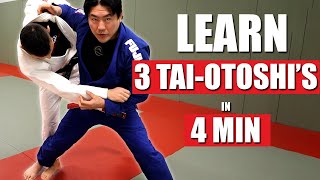
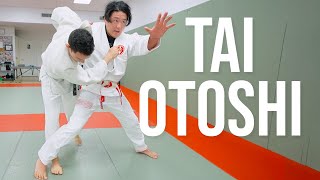
This instructional guide covers three essential Tai Otoshi variations: right versus right, right versus left, and spinning Tai Otoshi. Each variation offers distinct technical applications and strategic advantages in grappling situations. Practitioners will learn the fundamental mechanics, positioning requirements, and safety considerations for executing each technique effectively.
Fundamental Positioning and Footwork
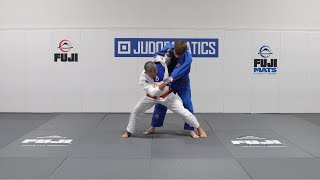
Proper positioning is critical before executing any Tai Otoshi. The practitioner must sidestep perpendicular to the opponent's forward momentum rather than remaining directly in front. This angled positioning allows the attacking leg to sweep through effectively while maintaining proper body mechanics and rotation. Improper alignment severely limits the technique's effectiveness and increases injury risk.
Leg Placement and Safety Considerations
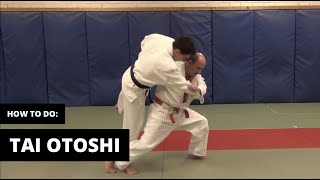
Two primary methods exist for leg positioning: calf-to-shin contact or knee-pointed-downward placement. While knee-pointed positioning is often considered safer, both methods carry potential injury risks depending on opponent response. The most critical factor is establishing proper off-balance before executing the sweep, which significantly reduces the opponent's ability to post weight onto the exposed leg.
Off-Balancing Mechanics
Successful Tai Otoshi execution depends entirely on proper off-balancing. If the opponent's weight remains centered or posterior, they can easily post their knee to prevent the throw. The instructor must pull the opponent forward before sweeping, ensuring their weight transfers onto the front leg. This timing sequence—pull, step, sweep—creates the conditions necessary for controlled rotation and safe completion.
Right Versus Right Tai Otoshi
In right versus right positioning, the practitioner steps laterally while pushing the opponent's hand forward with a strong wrist. The elbow remains tucked into the armpit for structural integrity. Weight distribution remains even throughout the execution. This variation represents the most fundamental Tai Otoshi application and serves as the foundation for more advanced techniques.
Right Versus Left Tai Otoshi
When attacking right versus left, the practitioner must first establish an inside sleeve position to prevent the opponent from framing out. The attacking hand moves to a high post while pulling the opponent's sleeve to rotate their shoulder. The practitioner executes a backstep while tucking the elbow, then uses a hip bump (kuzushi) to place all weight on the opponent's front leg before completing the sweep.
Spinning Tai Otoshi Execution
The spinning variation adds rotational momentum to increase throw effectiveness. Beginning from right versus right positioning, the practitioner extends their sweep across their body while rotating explosively. This technique generates greater force but requires significant practice to execute safely. The spinning motion can transition into additional attacks like Kouchi Gari, providing multiple finishing options from the setup.
Risk Assessment and Weight Differentials
Practitioners facing significantly larger opponents should avoid Tai Otoshi due to the vulnerability of the exposed leg beneath their opponent's full weight. The risk of knee and ankle injury increases substantially when size differences are pronounced. Alternative techniques provide safer options in these situations while maintaining offensive effectiveness.
Can You Do All 3 of These Tai Otoshi Variations?
Key Takeaways
- •Introduction to Tai Otoshi Variations
- •Fundamental Positioning and Footwork
- •Leg Placement and Safety Considerations
- •Off-Balancing Mechanics
Tai Otoshi Showcase - use this as a basis for some big throws! Uchimata Instructional https://shintarohigashi.com/judo-courses The cross discipline nature of the Tomoe Nage throw makes this technique a must have in your arsenal! The ability to change levels on your opponent with force and purpose changes the game and tips the scales when transitioning from standing to ground. Tutorials found online tend to get bogged down in the minute details of where and how to grip, this easy to understand breakdown takes the mystery out of the technique! Simplify and Add this attack to your game with this easy to implement concept! CONCISE AND INFORMATIVE Just like his YouTube channel, this video cuts the fat of frivolous explanations that are only applicable to very unique circumstances. Instead, he presents you with a broad, proven and effective approaches that can be utilized across your entire judo system. His in depth explanations remain tailored for the judoka interested in leveling up their game.
Related Techniques
Frequently Asked Questions
What does this video teach about reverse tai otoshi?
This video covers introduction to tai otoshi variations, fundamental positioning and footwork, leg placement and safety considerations. It provides detailed instruction from Shintaro Higashi.
How long does it take to learn reverse tai otoshi?
The basic mechanics can be understood in a single session, but developing reliable execution requires consistent drilling over weeks of practice. This 8-part breakdown helps structure your training by isolating each phase of the technique.
What are the key details for finishing reverse tai otoshi?
The spinning variation adds rotational momentum to increase throw effectiveness. Beginning from right versus right positioning, the practitioner extends their sweep across their body while rotating explosively. This technique generates greater force but requires significant practice to execute safely. The spinning motion can transition into additional attacks like Kouchi Gari, providing multiple finishing options from the setup.