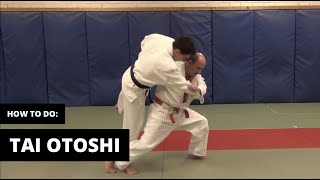
Tai Otoshi Foundation
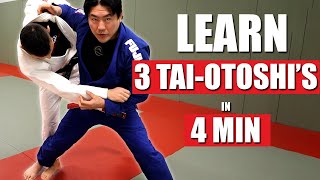
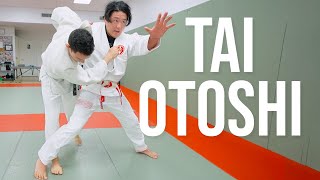
Tai Otoshi is a classical throwing technique that relies on precise body positioning and weight distribution. The fundamental mechanics involve aligning the opponent's center of gravity along a specific line, then displacing it by stepping to the side while maintaining control of their upper body.
Hand and Arm Positioning
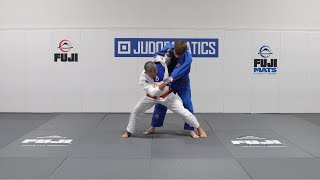
Proper hand placement is universal across Tai Otoshi variations. The pulling hand maintains a strong wrist position elevated toward the opponent's ear, while the other arm tucks the elbow into the armpit to maximize throwing power and control.
Leg Mechanics and Calf Placement
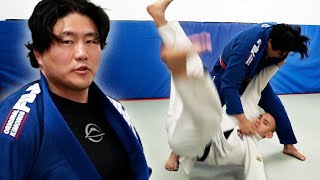
The throwing leg's position depends on opponent weight and personal preference. Optimal execution places the calf against the opponent's shin with toes aligned, then delivers a snapping motion by driving the leg backward to elevate and project the opponent over the supporting leg.
Grip Variations
Modern practitioners employ alternative grips including overhand grip with sleeve control and cross-grip variations. These variations allow flexibility in setup and entry while maintaining the core throwing mechanics of the technique.
Same-Side Stance Execution
When facing an opponent in the same stance, the instructor steps backward to position the feet at 90 degrees, then bumps the opponent's leg away with the hip to shift their weight onto the far leg before executing the throw.
Ouchi Combination Setup
An alternative setup involves using an Ouchi technique to drive the opponent's weight onto the target leg. This combination creates the ideal positioning for seamless transition into Tai Otoshi from either direction.
Feint Strategy in Matching Stances
When the opponent anticipates Tai Otoshi in same-stance positioning, feinting an Ouchi technique forces a defensive weight shift that exposes them to the actual Tai Otoshi attack from the opposite direction.
Elbow Control and Entry
Successful execution requires releasing tension when the opponent pins the attacking elbow. Lifting the arm or repositioning the body creates space for proper elbow clearance and entry into the throwing position.
Tai Otoshi: Full Instructional
Key Takeaways
- •Tai Otoshi Foundation
- •Hand and Arm Positioning
- •Leg Mechanics and Calf Placement
- •Grip Variations
Enjoy this full tai otoshi instructional! Soto Makikomi Instructional Available for Streaming and Download for only $20 Soto Makikomi is a huge full body throw that is uses primarily by heavy weights. Dangerous, explosive and EFFECTIVE! Learn how to do it the proper way, with your and your partner's safety in mind. Enjoy this instructional now, now presented in 4K HD! CONCISE AND INFORMATIVE Just like his YouTube channel, this video cuts the fat of frivolous explanations that are only applicable to very unique circumstances. Instead, he presents you with a broad, proven and effective approaches that can be utilized across your entire judo system. His in depth explanations remain tailored for the judoka interested in leveling up their game.
Related Techniques
Frequently Asked Questions
What does this video teach about reverse tai otoshi?
This video covers tai otoshi foundation, hand and arm positioning, leg mechanics and calf placement. It provides detailed instruction from Shintaro Higashi.
How long does it take to learn reverse tai otoshi?
The basic mechanics can be understood in a single session, but developing reliable execution requires consistent drilling over weeks of practice. This 8-part breakdown helps structure your training by isolating each phase of the technique.
What are the key details for finishing reverse tai otoshi?
When the opponent anticipates Tai Otoshi in same-stance positioning, feinting an Ouchi technique forces a defensive weight shift that exposes them to the actual Tai Otoshi attack from the opposite direction.