Introduction to Open Hand Strikes
Open hand striking forms a core component of Filipino martial arts training and self-defense practice. The instructor emphasizes that open hand techniques offer significant advantages over closed-fist striking, particularly regarding injury prevention and hand durability.
Progressive Power Development and Injury Prevention
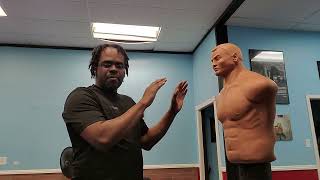
Practitioners should begin with soft striking and gradually increase power over time to identify sustainable force levels without causing hand damage. Proper body mechanics, angle selection, and force distribution are essential technical details that prevent injuries when training bare-knuckle on impact surfaces.
Safety Advantages of Open Hand Striking
Open hand strikes present significantly fewer injury risks compared to closed-fist techniques, eliminating concerns about hand and knuckle damage. This safety profile allows practitioners to focus entirely on technique refinement rather than injury management.
Modified Palm Strike Technique
Traditional palm strikes require extreme wrist hyperextension, which compromises structural integrity and creates injury risk. The instructor advocates angling the strike trajectory rather than driving straight through the target, creating a glancing motion that maintains wrist alignment and mirrors sumo wrestling palm techniques.
Palm Heel Strike Mechanics
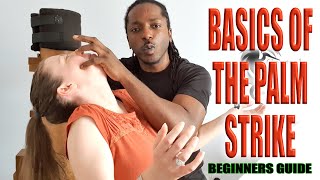
Rather than locking the wrist fully back, the palm heel strike uses the lower palm and wrist junction as the primary contact surface. Practitioners can modify the angle of application—horizontal, vertical, or diagonal—depending on tactical requirements while maintaining structural safety.
Chop Technique and Target Surface
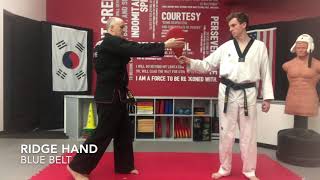
The hand chop utilizes the lateral edge of the hand rather than the fingertips or pinky side, striking with the small wedge-shaped area along the hand's outer edge. This technique shares similar mechanics with palm heel striking but applies force through a different contact surface.
Wedge Technique Integration
The wedge technique combines palm heel striking, chopping, and forearm striking into a unified system that operates across multiple contact surfaces and ranges. This integrated approach allows practitioners to seamlessly transition between different striking surfaces—hand, forearm, and elbow—depending on distance and positioning.
Close-Range Fist Application
At close contact distances where practitioners are near the target, limited fist striking becomes safer because the strike lacks the acceleration and power generation capacity of extended-range techniques. In this context, fist strikes present substantially lower injury risk compared to full-extension punching.
open hand strikes Filipino martial arts
Key Takeaways
- •Introduction to Open Hand Strikes
- •Progressive Power Development and Injury Prevention
- •Safety Advantages of Open Hand Striking
- •Modified Palm Strike Technique
After putting in a couple of months worth of some hard testing on the punching bag.
Related Techniques
Frequently Asked Questions
What does this video teach about fundamental open hand strike?
This video covers introduction to open hand strikes, progressive power development and injury prevention, safety advantages of open hand striking. It provides detailed instruction from wmpyr.
How long does it take to learn fundamental open hand strike?
The basic mechanics can be understood in a single session, but developing reliable execution requires consistent drilling over weeks of practice. This 8-part breakdown helps structure your training by isolating each phase of the technique.
What are the key details for finishing fundamental open hand strike?
The wedge technique combines palm heel striking, chopping, and forearm striking into a unified system that operates across multiple contact surfaces and ranges. This integrated approach allows practitioners to seamlessly transition between different striking surfaces—hand, forearm, and elbow—depending on distance and positioning.