Palm Strike Contact Surface
The palm strike utilizes the base of the palm rather than the center, which is the primary contact point for striking. For control applications, the middle palm can be used to manipulate an opponent's head. The distinction between these surfaces determines whether the technique functions as an offensive strike or a grappling control.
Impact Mechanics and Directional Travel
Effective palm strikes require two distinct phases of movement: an outbound path toward the target and a return path back to the striker's body. This bidirectional motion generates the force necessary for impact. The combination of forward momentum and recoil creates the striking power rather than a slow push.
Angular Variation by Target Height
Palm strike angles adjust based on the striker's position relative to the target, ranging from vertical (12 o'clock) to horizontal (6 o'clock) trajectories. The shift from vertical to horizontal occurs around sternum height to prevent wrist hyperextension when the heel of the palm can no longer lead the strike. At lower angles, the fingers begin to lead, requiring a transition to sideways angles to protect the wrist and engage targets such as the ribs.
Vertical Palm Application and Hip Integration
The vertical palm strike drives upward into targets beneath the jaw with the heel of the hand leading. Hip rotation through the strike multiplies force and allows follow-through past the target point. The thumb should be hooked inward to prevent injury if it contacts the opponent during impact.
Horizontal and Lower-Angle Variations
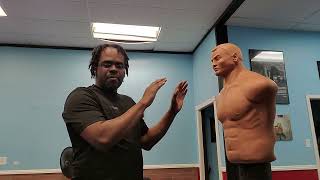
Horizontal palm strikes apply lateral force into the jaw when the striker positions at the opponent's side. The downward 6 o'clock angle drives upward into the jaw from below, particularly effective if the opponent's mouth is open. Each angle requires sufficient follow-through distance and hip rotation toward the target to generate impact.
Push Versus Strike Mechanics
Strike versions emphasize quick retraction of the hand after impact for maximum force, while push versions maintain pressure to control the opponent's position. Push techniques sacrifice some striking power but prevent the opponent from escaping the striker's reach, particularly when combined with grips on other parts of the opponent's body.
Control Transitions and Head Positioning
Continuous pushing may drive the opponent backward until loss of balance or contact with an obstacle, but extended pushing rotates the opponent's head to face upward, limiting further forward motion. Reversing elbow direction converts the pushing action into a pull, allowing the striker to maintain contact and control. The striking hand can transition to a grappling position, shifting from the heel of the palm to the fingers for facial and cranial control.
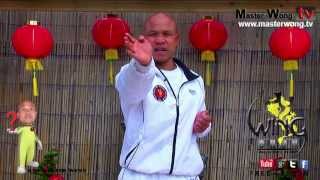
HOW TO PALM STRIKE - Beginners guide
Key Takeaways
- •Palm Strike Contact Surface
- •Impact Mechanics and Directional Travel
- •Angular Variation by Target Height
- •Vertical Palm Application and Hip Integration
This video shows you the basics of how to hit, using the palm strike. This Wing Chun guide is suitable for beginners and non-wing chun practitioners alike demonstrating the basic palm strike technique and concepts, such as which part of the palm to use for striking and the push pull nature of your palm strike. The palm strike is considered a safer option than punching by many in a self defence situation because it reduces the risk of damaging the bones in your fist should you hit the hard bones of the skull by accident, however using a range of strikes to fit the situation is probably the best way to go as each fight situation is unique and you never know which striking or controlling opportunity will present itself. Please hit one of the links below to see Wing Chun techniques used in conjunction with the palm strike. Also suitable for beginners searching for self defence techniques. PALM STRIKES WITH TECHNIQUES A Wing Chun lesson - Basics of the technique https://youtu.be/xDohTgXpLiA A Wing Chun lesson - Pressure testing the technique https://youtu.be/T_BPZzJFdLE ALSO YOU MIGHT LIKE OUR WING CHUN FOR SELF DEFENCE VIDEO. LINK BELOW: https://youtu.be/SCZSStDxfOg
Frequently Asked Questions
What does this video teach about kung fu strike?
This video covers palm strike contact surface, impact mechanics and directional travel, angular variation by target height. It provides detailed instruction from Central Wing Chun.
How long does it take to learn kung fu strike?
The basic mechanics can be understood in a single session, but developing reliable execution requires consistent drilling over weeks of practice. This 7-part breakdown helps structure your training by isolating each phase of the technique.
What are the key details for finishing kung fu strike?
Strike versions emphasize quick retraction of the hand after impact for maximum force, while push versions maintain pressure to control the opponent's position. Push techniques sacrifice some striking power but prevent the opponent from escaping the striker's reach, particularly when combined with grips on other parts of the opponent's body.