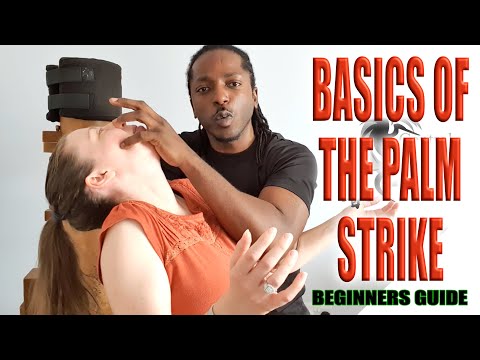
HOW TO PALM STRIKE - Beginners guide
0
Kung Fu Strike·Central Wing Chun
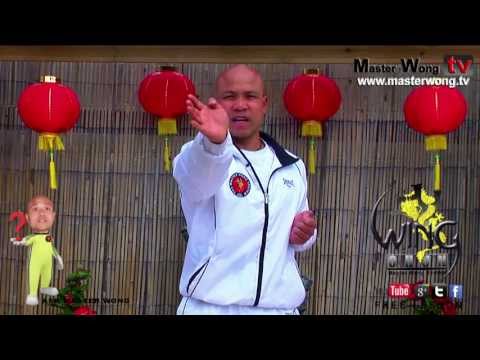
This video shows you the basics of how to hit, using the palm strike. This Wing Chun guide is suitable for beginners a…
Translation: Kung fu strike
The Kung Fu Strike family within the Open Hand Strike group covers open-handed striking techniques from Chinese martial arts systems — the most diverse collection of open-hand formations and striking methods in any martial arts tradition. [1] Chinese martial arts developed an extraordinarily varied array of open-hand formations, each designed for specific targets and applications: tiger claw (hu zhua, raking and gripping), crane beak (he zui, pecking strikes to pressure points), iron palm (tie zhang, devastating palm strikes developed through years of conditioning), and the famous dim mak ('death touch') pressure-point strikes. [1],[2] These techniques reflect the Chinese martial arts philosophy of specialised weapons for specialised targets — rather than a single fist for all situations, Chinese martial artists trained multiple hand formations for maximum effectiveness against different anatomical targets. [2],[3] While many traditional claims about these techniques remain scientifically unverified, the underlying principle of targeting vulnerable anatomical points with appropriate striking surfaces is biomechanically sound. [3]
Chinese martial arts open-hand techniques have been developed over thousands of years across hundreds of kung fu styles, with each style contributing unique hand formations based on animal mimicry, combat philosophy, and empirical testing. [1] The Five Animals of Shaolin (Tiger, Crane, Dragon, Snake, Leopard) each contributed distinct open-hand formations. [1],[2] Iron palm (tie zhang) training was historically conducted by monks, soldiers, and martial artists who could dedicate years to the conditioning process. [2],[3] While many traditional claims about the supernatural effectiveness of these techniques have been challenged by modern martial arts practitioners, the underlying anatomical targeting principles remain valid. [3]
Chinese open-hand techniques offer specialised striking tools that standard boxing does not provide — particularly for self-defence applications where targeting the eyes, throat, and nerve points is appropriate. [1] Iron palm training demonstrably produces hands capable of breaking bricks and boards, validating the conditioning methodology. [2] However, the effectiveness of many traditional techniques against trained, resisting opponents in a fight context remains debated, as they have not been widely tested in modern full-contact competition. [3]
No images yet for this technique.
Sign in to suggest an image.
This video shows you the basics of how to hit, using the palm strike. This Wing Chun guide is suitable for beginners a…
You've seen the hit movie Ip man, now learn how to use wing Chun techniques in the modern world. Master Wong wing Chun t…
No instructional courses yet for this technique.
Sign in to suggest a course.
Risk of injury to the person this technique is applied to
High — tiger claw techniques to the eyes can cause permanent vision damage; throat strikes are potentially lethal; iron palm strikes can cause internal injuries; however, many of these techniques require extensive conditioning to execute effectively, and some traditional claims about their effectiveness are exaggerated
Skill level needed to execute this technique reliably
Whether this technique is allowed under major competition rule sets
Tao of Jeet Kune Do (Bruce Lee, 1975)
Description sources — [1] Five Animals of Shaolin tradition [2] Iron palm conditioning methodology [3] Modern critical analysis of traditional martial arts claims
History sources — [1] The Shaolin Monastery (Shahar, 2008) [2] Chinese martial arts historical traditions [3] Modern martial arts scholarship
Description sources — [1] Five Animals of Shaolin tradition [2] Iron palm conditioning methodology [3] Modern critical analysis of traditional martial arts claims
History sources — [1] The Shaolin Monastery (Shahar, 2008) [2] Chinese martial arts historical traditions [3] Modern martial arts scholarship
hand conditioning (for iron palm), finger strength (for tiger claw and eagle claw), anatomical knowledge (for pressure-point targeting)
strong fingers and forearms, good proprioception, dedication to long-term conditioning
finger flexors (claw techniques), forearm muscles (grip and wrist stability), intrinsic hand muscles (maintaining formations), core (power generation)
Every move, in any martial art, shares a few universal traits. Mix and match below to pinpoint the right tool — or compare equivalents across styles.
The Crane Beak Strike bunches all five fingertips together into a single pointed formation — like the beak of a crane — and drives this concentrated point into vulnerable anatomical targets such as the throat, eyes, temple, solar plexus, and nerve clusters between the ribs. [1] The hand shape is formed by bringing the thumb and all four fingertips together so they touch at a single point, creating a formation that resembles a bird's beak when viewed from the side. [1,2] Unlike the Phoenix Eye Fist (which uses a single knuckle), the Crane Beak uses the soft tissue of the fingertips, making it more versatile but requiring different conditioning: the fingertips must be strengthened through progressive exercises to prevent them from collapsing on impact. [1] The Crane Beak appears across multiple Chinese martial arts systems that incorporate crane-style techniques, most prominently in Fujian White Crane (Bai He Quan), Hop-Gar (which includes Tibetan Crane elements), and Wing Chun (which derives partly from Yongchun White Crane). [1,2] In Japanese karate, the equivalent hand formation is called washide (鷲手, eagle hand) or kakuto (鶴頭, crane head) and appears in several traditional kata. [3] The Crane Beak serves a dual function in traditional kung fu: as an offensive weapon (striking with the pointed fingertips) and as a defensive/trapping tool (the beak formation can hook and redirect an opponent's limbs by catching them in the curved finger formation). [1,2] The technique represents the crane's fighting philosophy: precision over power, targeting vital points rather than delivering concussive force, and using the smallest possible weapon to attack the smallest possible target. [1]
The Iron Palm Strike (鐵砂掌, Tieh Sha Chang) is a Chinese martial arts palm strike that uses internally cultivated chi (qi) energy directed through a conditioned palm rather than relying on muscular force, producing a penetrating impact that appears effortless but can cause devastating internal injury. [1] The technique is distinguished from ordinary palm strikes by the training method used to develop it: the practitioner conditions the palm over months or years by repeatedly striking bags filled with iron sand (later progressing to steel shot and iron pellets), combined with the application of traditional dit da jow (iron-hitting wine) herbal liniment to heal and strengthen the tissue. [1,2] The strike itself is delivered with a completely relaxed arm — no muscular tension is visible or felt by the practitioner — with the Chi (vital energy), stored in the lower tan-tien cavity approximately three inches below the navel, drawn through specific breathing and visualisation techniques into the palm at the moment of impact. [1] In the Hop-Gar (Tibetan White Crane) tradition documented by David Chin, the iron palm practitioner's strike shows no muscular effort or tension, yet produces effects disproportionate to the visible force — including delayed-onset internal injuries that manifest hours or days after the strike. [1] The iron palm represents the convergence of three Chinese martial arts disciplines: the physical conditioning of the hand (external training), the cultivation and direction of Chi (internal training), and the knowledge of vulnerable anatomical targets (dim mak/pressure point theory). [1,2] While modern sports science has not validated the Chi energy model, the conditioning component is well-documented: repeated controlled impact causes bone remodelling (Wolff's Law), increased bone density, callus formation, and desensitisation of pain receptors, producing a legitimately harder and more damage-resistant striking surface. [3]
The Lama Pai Backfist is a wide, sweeping backfist from the Tibetan Lama fighting tradition, using the momentum of a full body turn to deliver devastating force with the back of the fist. [1]
The Tiger Claw Strike is a Chinese martial arts open-hand technique where the fingers are spread wide and curved like a tiger's claws, striking the opponent's face, throat, or body with the fingertips and then raking downward to tear at flesh, or grabbing and squeezing vulnerable targets such as the throat, groin, or inner thigh muscles. [1] The hand formation — all five fingers spread maximally and curved at the middle and distal joints, with the palm hollow — distinguishes the Tiger Claw from all other hand shapes in kung fu: it is neither a fist nor a flat palm, but a predatory grasping weapon designed to gouge, rake, tear, and crush. [1,2] The technique appears across multiple Southern Chinese kung fu systems, most prominently in Hung Gar (Tiger-Crane system), Fu Jow Pai (Tiger Claw system — an entire style built around this hand formation), and Hop-Gar/Lama Pai. [1,2] In traditional training, the Tiger Claw is conditioned through years of finger-strengthening exercises including jar gripping (lifting heavy ceramic jars by their rims with the fingertips), sand grabbing (repeatedly plunging the hand into a bucket of sand and gripping), and iron ball manipulation (rolling heavy iron balls between the fingers). [1,2] The conditioned Tiger Claw can generate crushing grip pressures exceeding 80-100 pounds per square inch at the fingertips, sufficient to tear muscle tissue and crush the trachea. [2] The technique operates on a different tactical principle than closed-fist striking: rather than delivering concussive impact, the Tiger Claw attacks the body's soft tissue vulnerabilities — eyes, throat, groin, nerve clusters — using the mechanical advantage of five pointed fingertips concentrating force on small surface areas. [1] Wong Bil Hong brought the Fu Jow Pai system from Southern China to New York City in the 1960s, where it became one of the most respected Chinatown kung fu schools and the primary lineage for Tiger Claw technique in the West. [2]
Kung fu strikes appear in 918+ passages under 'knife hand,' 222 under 'spear hand,' and hundreds more across Chinese martial arts texts. Chinese striking includes unique hand formations: tiger claw, crane beak, phoenix eye fist, iron palm, and dim mak (pressure point strikes). (200+ books; Chinese martial arts texts in corpus)
You should strike with the base of the palm (the heel of your hand), not your fingers. Central Wing Chun emphasizes that once your fingers start leading the charge, you risk bending your wrist back and causing trauma to it.
Make sure to hook your thumb and keep it tucked inside, protecting it from damage if it catches on something during the strike. Master Wong stresses keeping your fingers and thumb inside when you palm strike.
You should use a 'quick in, quick out' motion while ensuring you have enough space to follow through fully. Central Wing Chun teaches that you should drive straight through the target (like the jaw) by turning your hip through, rather than using weak, short follow-throughs.
Master Wong recommends keeping your body in the center and staying in the proper line first, then practicing the palm motion in and out. Understanding hand position and line is essential—spend time learning the basics well so you have a good foundation.
The Kung Fu Strike family within the Open Hand Strike group covers open-handed striking techniques from Chinese martial arts systems — the most diverse collection of open-hand formations and striking methods in any martial arts tradition. Chinese martial arts developed an extraordinarily varied array of open-hand formations, each designed for specific targets and applications: tiger claw (hu zhua, raking and gripping), crane beak (he zui, pecking strikes to pressure points), iron palm (tie zhang, devastating palm strikes developed through years of conditioning), and the famous dim mak ('death touch') pressure-point strikes.
Chinese martial arts open-hand techniques have been developed over thousands of years across hundreds of kung fu styles, with each style contributing unique hand formations based on animal mimicry, combat philosophy, and empirical testing. The Five Animals of Shaolin (Tiger, Crane, Dragon, Snake, Leopard) each contributed distinct open-hand formations.
Unified MMA: legal — Legal (palm strikes, slaps permitted); WBC/Boxing: banned — Only closed-fist punches permitted; WKF: restricted — Varies by technique — some open-hand strikes legal in kata, generally restric…; Kyokushin: banned — Only closed-fist strikes to body permitted; WT: banned — Prohibited; ITF: restricted — Some knife hand techniques legal; WAKO: banned — Closed fist only; K: banned — 1/GLORY — Closed fist only; IFMA: legal — Legal — palm strikes permitted in Muay Thai
Danger rating 6/10. Moderate-high — tiger claw techniques to the eyes can cause permanent vision damage; throat strikes are potentially lethal; iron palm strikes can cause internal injuries; however, many of these techniques require extensive conditioning to execute effectively, and some traditional claims about their effectiveness are exaggerated
The standard setup chain: Close Distance → Identify Target → Select Formation → Strike → Follow Up → Disengage.
Standard counters include: Boxing Guard — a tight guard protects against most open-hand attacks / Eye Protection — covering the eyes with forearms defeats tiger claw and eye attacks / Distance — many Chinese open-hand techniques are close-range; maintaining boxing distance neutralises them / Wrestling — taking the fight to the ground removes the standing open-hand striking threat.
Common variants: Tiger claw (hu zhua) (spread fingers with bent tips; a raking/gripping attack t…); Crane beak (he zui) (fingertips brought together to a point; a pecking strike …); Iron palm (tie zhang) (heavily conditioned palm used for maximum impact; develop…); Willow palm (liu ye zhang) (soft, whipping palm strike used in internal styles (Tai C…); Eagle claw (ying zhua) (a gripping/seizing hand formation used for joint locks an…); Leopard paw (bao zhua) (half-closed fist striking with the second knuckle ridge; …); Snake strike (extended fingers thrusting to soft targets (throat, eyes)…).
Chinese open-hand techniques are used in wushu demonstrations and sanda competition (limited to palm strikes). Their full application (eye attacks, throat strikes) has not been tested in modern sport competition.
Top errors to watch for: Attempting iron palm without conditioning — striking hard surfaces with an unconditioned palm causes bone bruises and… / Using tiger claw without grip strength — an ineffective tiger claw is just a sloppy slap; the fingers must have real … / Believing in 'death touch' without critical examination — while pressure point strikes can cause pain and dysfunction… / Using these techniques in sport competition — most traditional Chinese open-hand targets are illegal in modern compet….
The Kung Fu Strike is also known as Kanfū Sutoraiku, Chinese Martial Arts Open Hand, Kung Fu Palm Strike, Wushu Open Hand.