The Knife Hand Strike
0
Knife Hand Strike·The Self Defense Company Santa Clarita
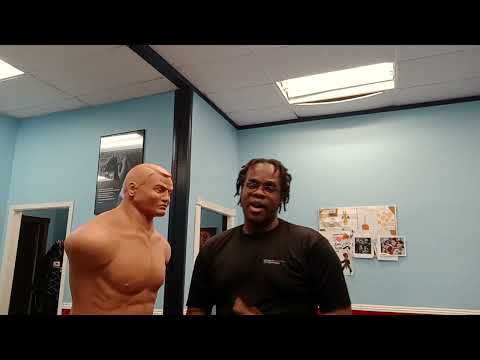
Demonstration of the edge of hand blow in Combatives!
Translation: knife hand strike
The knife hand strike is one of the most iconic techniques in Asian martial arts, using the outer edge of the open hand as a cutting weapon. [1] In Okinawan karate, the knife hand (shuto) was documented as early as the 19th century in the kata brought from China and refined on Okinawa. [2] Funakoshi codified shuto uchi (knife hand strike) and shuto uke (knife hand block) as fundamental techniques in his 1935 Karate-Do Kyohan, establishing them as core Shotokan curriculum. [2] The knife hand became one of the most recognisable martial arts techniques in global popular culture through its use in films and its association with board-breaking demonstrations. [1] In Chinese martial arts, equivalent techniques appear as 'pi zhang' (splitting palm) in various kung fu systems. [3]
The knife hand (shuto) is a fundamental karate technique. [1]
Used in karate competition and MMA. [1]
No images yet for this technique.
Sign in to suggest an image.
Demonstration of the edge of hand blow in Combatives!
No instructional courses yet for this technique.
Sign in to suggest a course.
Risk of injury to the person this technique is applied to
Shuto/karate chop; targets neck, collarbone, temple
Skill level needed to execute this technique reliably
Whether this technique is allowed under major competition rule sets
Karate-Do Kyohan: The Master Text (Gichin Funakoshi, 1935)
Alias sources — [1] Karate-Do Kyohan (Funakoshi, 1935) [2] Karate-Do Kyohan (Funakoshi, 1935) [3] Karate-Do Kyohan (Funakoshi, 1935) [4] Karate-Do Kyohan (Funakoshi, 1935)
History sources — [1] The Art of Striking (Blauer, 2004) [2] Karate-Do Kyohan (Funakoshi, 1935) [3] Best Karate Vol. 3 (Nakayama, 1978)
Official karate technique names (和語/漢語)
Established Japanese martial arts naming convention — native Japanese term (和語/漢語)
Alias sources — [1] Karate-Do Kyohan (Funakoshi, 1935) [2] Karate-Do Kyohan (Funakoshi, 1935) [3] Karate-Do Kyohan (Funakoshi, 1935) [4] Karate-Do Kyohan (Funakoshi, 1935)
History sources — [1] The Art of Striking (Blauer, 2004) [2] Karate-Do Kyohan (Funakoshi, 1935) [3] Best Karate Vol. 3 (Nakayama, 1978)
speed, power generation through kinetic chain, striking surface conditioning
athletic build with fast-twitch muscle fibres
varies by strike — hip rotators, shoulders, core
Every move, in any martial art, shares a few universal traits. Mix and match below to pinpoint the right tool — or compare equivalents across styles.
A knife hand strike using the inner edge (thumb side) of the open hand, the reverse of shuto uchi, targeting the temple or jaw in an inward chopping motion.
A knife hand strike using the outer edge (pinky side) of the open hand, delivered in a chopping motion targeting the neck, collarbone, or temple.
Knife hand (shuto/sudo) appears in 918 passages across 84 books — one of the most documented open-hand techniques. The edge of the hand strikes like a blade. In karate, the shuto uchi is a foundational open-hand technique. (84 books; Nakayama, Dynamic Karate; Funakoshi, Karate-Do Kyohan)
You use the fleshy base of the hand, the edge from the base up to below the fingertips. According to Ervin Burton of The Self Defense Company Santa Clarita, this area works well in self defense because it's a great gross motor movement that you can execute even if you're disoriented or under stress.
Aim for the side of the neck as your primary target. Ervin Burton notes that even if you miss and hit the forehead or other areas, you won't cause significant harm, making this a reliable target in self defense situations.
There are two main directions: horizontal (across the throat from the shoulder) and vertical (down the centerline, targeting the collarbone). According to Ervin Burton, you can also vary the angle of approach, especially if your opponent drops their chin or anticipates the strike.
A strike delivered with the edge of the open hand, using the area between the base of the little finger and the wrist to chop into the target.
The knife hand strike is one of the most iconic techniques in Asian martial arts, using the outer edge of the open hand as a cutting weapon. In Okinawan karate, the knife hand (shuto) was documented as early as the 19th century in the kata brought from China and refined on Okinawa.
Unified MMA: legal — Legal (palm strikes, slaps permitted); WBC/Boxing: banned — Only closed-fist punches permitted; WKF: restricted — Varies by technique — some open-hand strikes legal in kata, generally restric…; Kyokushin: banned — Only closed-fist strikes to body permitted; WT: banned — Prohibited; ITF: restricted — Some knife hand techniques legal; WAKO: banned — Closed fist only; K: banned — 1/GLORY — Closed fist only; IFMA: legal — Legal — palm strikes permitted in Muay Thai
Danger rating 5/10. High — shuto/karate chop; targets neck, collarbone, temple
The standard setup chain: Assume Fighting Stance → Generate Power → Execute Strike → Recover to Guard.
Standard counters include: Block — absorb the strike with a protective guard position / Evasion — move the target out of the strike's path / Counter-Attack — time an offensive response during the recovery phase of the strike.
Common variants: Standard variation (primary execution of the strike from the most common stance); Power variation (modified mechanics for maximum force generation); Speed variation (minimised telegraph for a faster, harder-to-read attack); Counter variation (timed to exploit the opponent's offensive commitment).
Used in karate competition and MMA.
Top errors to watch for: Spreading the fingers during the strike, which weakens the hand structure and risks finger injury / Striking with the fingers instead of the edge of the hand / Using a loose, floppy wrist — the wrist must be locked and the hand rigid / Aiming at hard targets like the forehead or skull where the hand will be damaged.
The Knife Hand Strike is also known as Shutō-uchi, Shuto, Karate Chop, Sudo, Knife Edge.