Foundational Concept: Breaking Posture
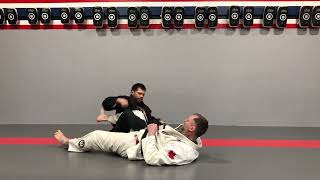
The instructor emphasizes that the primary objective in closed guard offense is to break the opponent's posture by executing a crunch and driving the knees forward. Once posture is compromised, the opponent must establish balance through hand positioning, which dictates the available attacking options.
Hand Position Variations and Balance Recovery
The instructor identifies four primary defensive hand positions the opponent may adopt: both hands on the lapel, both hands on the hips, one high and one low, or both hands on the floor. Understanding these positioning patterns allows the guard player to select appropriate counters rather than pursuing predetermined attacks.
Adaptation-Based Attacking Strategy
Rather than committing to a single attack, the instructor advocates for reading the opponent's defensive grips and adapting the offensive approach accordingly. This reactive methodology prioritizes observation of the opponent's control structure before executing techniques.
Hands-on-Floor Response: Overhook System
When the opponent places both hands on the floor, the guard player can scoot laterally and establish an overhook by pulling the tricep upward. From this position, multiple finishing options become available, including triangle chokes and armbar variations through controlled wrist manipulation.
Double Hip Grip Counters
Against a double hip grip, the guard player can apply a double lapel grip and pull forward to buckle the opponent over their own hands. The resulting compromised posture creates opportunities for floor posts or arm repositioning that lead into subsequent techniques.
High Posture with Tight Elbows: Pummeling and Collar Control
When facing a high posture with tight elbows, the guard player initiates pummeling movements and secures a cross-collar grip. The key detail involves pinning the elbow to the chest while executing a crunch, which prevents the opponent from repummeling and sets up collar chokes or armbar entries.
Cross-Collar Repummel Prevention
After establishing a cross-collar grip with the opponent's elbows down, the guard player maintains control by keeping their elbow pinned to the opponent's chest. This positioning makes repummeling nearly impossible and allows for progressive collar depth while advancing toward submission techniques.
High-Low Hand Configuration: Cross-Sleeve Grip
Against a high-low arm configuration, the guard player employs a cross-sleeve grip by underhooking and securing their own wrist. Applying upward pressure through the body rather than the grip alone buckles the opponent's posture and creates space for follow-up attacks.
Understanding Offense in Closed Guard
Key Takeaways
- •Foundational Concept: Breaking Posture
- •Hand Position Variations and Balance Recovery
- •Adaptation-Based Attacking Strategy
- •Hands-on-Floor Response: Overhook System
Learning to attack from the closed guard is a foundational skill that is a great introduction for understanding how to develop offense from your guard. Closed guard is a very static position so it’s easier to specific train and develop in when you start Jiu Jitsu, yet it can be very difficult when you first start to actually get your first arm bar or triangle in sparring. I find one of the main reasons for this is people focus on the attack they want to do, rather than focusing on which attack is available to them based off of the grips and positioning their opponent is in. In this video I show how I got about picking which attack to build on from closed guard based off of what grips my opponent used to maintain his posture. I hope you liked the video and please like and share this video with a friend if you found it useful, it helps a lot for me growing the channel. Thanks!! ————————————————————————————— Follow on IG for Daily Content IG: JonThomasBJJ
Frequently Asked Questions
What does this video teach about closed guard?
This video covers foundational concept: breaking posture, hand position variations and balance recovery, adaptation-based attacking strategy. It provides detailed instruction from JonThomasBJJ.
How long does it take to learn closed guard?
The basic mechanics can be understood in a single session, but developing reliable execution requires consistent drilling over weeks of practice. This 8-part breakdown helps structure your training by isolating each phase of the technique.
What are the key details for finishing closed guard?
After establishing a cross-collar grip with the opponent's elbows down, the guard player maintains control by keeping their elbow pinned to the opponent's chest. This positioning makes repummeling nearly impossible and allows for progressive collar depth while advancing toward submission techniques.