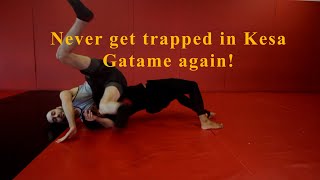
Inside Position Fundamentals
The instructor establishes that effective side control escape requires first achieving inside position, where the defender's limbs are positioned between themselves and the opponent's body. Outside position, where the opponent's arm and knee control the defender's limbs, allows the top player to isolate limbs and attack with submissions like arm locks. Mastering inside position transitions is presented as the foundational solution to escaping side control.
Extracting the Trapped Arm
When the defending arm is trapped outside the opponent's control, the defender bridges while positioning their elbow outside the opponent's knee. This forces the top player to base out and create space, allowing the defender to retract their elbow to inside position. The bridge and base-out combination is fundamental to creating the necessary gap for arm repositioning.
Hand Positioning and Cross-Face Defense
After securing the first arm inside, the defender brings their second hand to inside position to prevent under-hook attacks and neutralize the cross-face control. The instructor emphasizes that controlling the cross-face is critical because it prevents head movement, which restricts the entire body's ability to rotate into the opponent. Establishing a V-grip on the opponent's armpit while bridging slightly allows the defender to position their head underneath the cross-face.
Side Guard Configuration
The side guard is achieved by connecting the defender's knee to their elbow between themselves and the opponent. The defender rotates their body toward the opponent while maintaining this knee-elbow connection. Once established, the side guard transitions the positional dynamic, placing the defender in offensive position with multiple submission options.
Knee Insertion Mechanics
A common error is attempting to drive the knee straight inside without adequate space. The correct technique involves dipping the foot downward first, which creates additional clearance for the knee to slide inside. Once the knee and elbow connect and the defender stomps their own foot, they rotate to a perpendicular T position before turning to achieve parallel alignment with the opponent.
The Power Strip Technique
When an opponent maintains tight control and prevents knee insertion through following the defender's hip movement, the power strip creates a gap too large for the opponent to cover. The defender places their foot on the ground outside their body and uses it as leverage to drag their hips toward their heel, generating sudden separation. This creates the necessary space to insert the knee and establish side guard even against high-level positional control.
Power Strip Execution and Timing
The foot placement for the power strip occurs subtly and outside the opponent's visual attention. The sudden hip drag using this foot leverage forces the opponent to choose between following and losing connection, or remaining in place and allowing the defender knee access. Once space is created, the defender transitions immediately into their breaking sequence and attacks.
Submission Opportunities from Side Guard
Once the side guard is established with inside position secured, the defender transitions from a defensive to offensive posture with multiple attack options. Available submissions from this position include triangles, arm bars, and positional control sequences. The established side guard places the defender in complete control of the engagement.
How I Escape EVERYONES Side Control
Key Takeaways
- •Inside Position Fundamentals
- •Extracting the Trapped Arm
- •Hand Positioning and Cross-Face Defense
- •Side Guard Configuration
I escape everyone’s side control using clean mechanics and high-percentage technique. This video shows my live rounds with commentary so you can see exactly how I frame, create space, and recover guard against skilled training partners. If you struggle getting stuck under side control, this is the breakdown you need.
Related Techniques
Frequently Asked Questions
What does this video teach about side control escape?
This video covers inside position fundamentals, extracting the trapped arm, hand positioning and cross-face defense. It provides detailed instruction from CrashAndFlowBJJ.
How long does it take to learn side control escape?
The basic mechanics can be understood in a single session, but developing reliable execution requires consistent drilling over weeks of practice. This 8-part breakdown helps structure your training by isolating each phase of the technique.
What are the key details for finishing side control escape?
The foot placement for the power strip occurs subtly and outside the opponent's visual attention. The sudden hip drag using this foot leverage forces the opponent to choose between following and losing connection, or remaining in place and allowing the defender knee access. Once space is created, the defender transitions immediately into their breaking sequence and attacks.