How to escape North South efficiently
0
North-South Escape·Simplicity Jiu Jitsu
Email - [email protected] Go to SimplicityJiuJitsu.com right now and get unlimited access to the Technique …
Translation: north-south escape
The North-South Escape family covers techniques for escaping the north-south position, where the opponent controls from head-to-head with their chest on the defender's chest, facing the opposite direction. [1] North-south is a particularly oppressive control position because the opponent's weight is directly on the defender's chest and the position limits hip movement, making the standard shrimp difficult. [1],[2] Primary escapes include shrimping to create angle and reguarding, and inversions that use the defender's flexibility to recover guard. [2],[3]
North-south escapes use framing, turning, and reguarding techniques to escape the north-south pin. [1]
North-south escapes were developed in BJJ as the position became more commonly used. [1]
Used in BJJ and MMA competition. [1]
No images yet for this technique.
Sign in to suggest an image.
Email - [email protected] Go to SimplicityJiuJitsu.com right now and get unlimited access to the Technique …
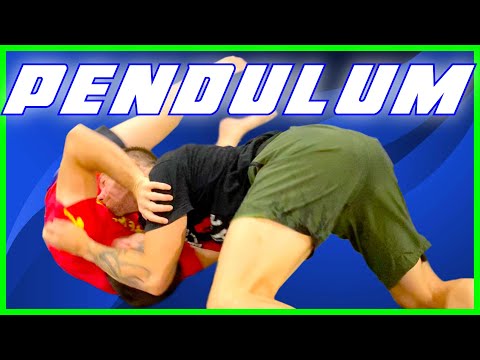
This video is a continuation of our last video on basic north/south escape using the pendulum swing. Check out the deta…
No instructional courses yet for this technique.
Sign in to suggest a course.
Risk of injury to the person this technique is applied to
Bottom escapes from mount/side control; bridge and hip escape mechanics (Ribeiro 2008)
Skill level needed to execute this technique reliably
Whether this technique is allowed under major competition rule sets
Mastering Jujitsu (Renzo Gracie & John Danaher, 2003)
Alias sources — [1] Kodokan Judo (Kano, 1986) [2] Jiu-Jitsu University (Ribeiro, 2008)
Effectiveness sources — [1] Jiu-Jitsu University (Ribeiro, 2008)
Standard Japanese martial arts terminology (kanji/hiragana)
Established Japanese martial arts naming convention — native Japanese term (和語/漢語)
Alias sources — [1] Kodokan Judo (Kano, 1986) [2] Jiu-Jitsu University (Ribeiro, 2008)
Effectiveness sources — [1] Jiu-Jitsu University (Ribeiro, 2008)
hip mobility, explosive bridge/shrimp power, timing
flexible hips and strong glutes for escape movements
glutes, hip flexors, core, triceps (framing)
Every move, in any martial art, shares a few universal traits. Mix and match below to pinpoint the right tool — or compare equivalents across styles.
The Inversion North-South Escape uses an inversion — rolling onto the upper back and elevating the hips — to recover guard from the north-south position. [1] The inversion exploits the fact that the opponent's weight is on the chest, which means the defender's hips have relatively more freedom to elevate. [1,2] By inverting and bringing the legs over, the defender can hook the opponent's body or arms with the legs and recover a guard position. [2,3]
The Shrimp North-South Escape uses hip escape movement to create enough angle and distance to recover guard from the north-south position. [1] The shrimp from north-south is more challenging than from side control because the opponent's weight distribution pins the chest directly, making initial hip movement difficult. [1,2] The escape requires creating initial space through framing and bridging, then executing the hip escape to create the angle needed to reinsert the legs for guard recovery. [2,3]
North-south escapes rely on creating space by framing on the opponent's hips and bridging to create angles for turning into guard. One of the more difficult escapes because the opponent's weight is directly on the chest/face. (Ribeiro, Jiu-Jitsu University)
According to Simplicity Jiu Jitsu, your shoulders are extremely important—think of them as two nodes that need to be offset so your opponent can't flatten you out. By offsetting your shoulders and creating wedges with your arms, you create a stronger frame that makes the escape much harder to defend.
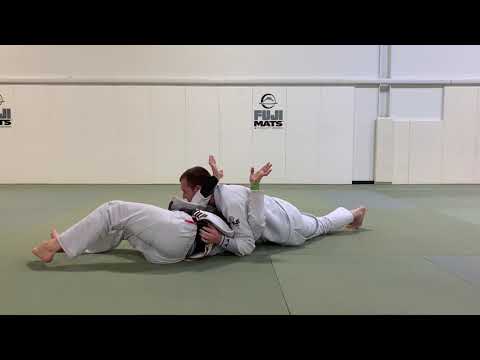
Simplicity Jiu Jitsu teaches that with an over-under grip, you rock your body, pull your shoulder back, and switch your hips to create frames. Once your shoulder gets away from their control, you can start the pendulum motion to work your escape and get back to guard.
According to Simplicity Jiu Jitsu, with double-unders you block your opponent's head and use a pendulum motion with your legs, rocking side to side. You can choose whichever side is easier—always escape toward the direction your head is already facing, since rocking the opposite way won't work.
Coach Brian at TeachMeGrappling notes that this escape is very old and was the predominant way to escape North-South in the mid-1990s, so it's a time-tested fundamental rather than a new invention.
The North-South Escape family covers techniques for escaping the north-south position, where the opponent controls from head-to-head with their chest on the defender's chest, facing the opposite direction. North-south is a particularly oppressive control position because the opponent's weight is directly on the defender's chest and the position limits hip movement, making the standard shrimp difficult.
North-south escapes were developed as the position gained recognition as a control and submission platform in BJJ competition. The position's restrictive nature drove the development of specific escape techniques distinct from side control escapes.
Unified MMA: legal — Legal defensive/transitional technique; IBJJF: legal — Legal; IJF: legal — Legal; ADCC: legal — Legal; UWW: legal — Legal; FIAS Sport Sambo: legal — Legal
Danger rating 3/10. Moderate — bottom escapes from mount/side control; bridge and hip escape mechanics (Ribeiro 2008)
The standard setup chain: Create Space → Disrupt Control → Execute Escape → Recover Position.
Standard counters include: Maintain Pressure — keep consistent weight distribution to limit escape space / Anticipate Direction — read escape attempt direction and block early / Transition — flow to a new position when the current one is threatened.
Common variants: Standard escape (primary escape mechanic using frames, bridges, or hip mov…); Combination escape (chaining two escape directions or methods); Counter escape (using the opponent's attack attempt to create the escape …); Competition variation (modified for rule-set optimisation).
Used in BJJ and MMA competition.
Top errors to watch for: Lying flat without framing — the opponent will flatten and control you; immediate framing is required / Pushing upward instead of framing on the hips — hip frames create the space needed for the shrimp / Not using the legs — your legs are free in north-south; use them to hook, push, and create angles / Trying to bench-press the opponent off you — this wastes energy; technical frames and shrimps are more effective.
The North-South Escape is also known as Nanboku Nige, Kami Shiho Gatame Escape, North South Escape.