Calf Kick Foundation
The calf kick is executed as a diagonal ascending strike targeting the lower leg muscle rather than the knee. The practitioner aims toward the opponent's opposite shoulder while making contact with the instep, similar to a traditional roundhouse kick but directed downward to the calf.
Execution Mechanics
The kick employs a sweeping upward motion from outside or inside the leg, striking the calf root with the foot's instep. Unlike a traditional sweep designed to disrupt balance, this technique prioritizes inflicting pain through a concentrated shock wave that travels up the leg.
Target Precision and Effect
The strike targets the calf muscle itself, not the knee, producing a jolt sensation that intensifies when the opponent's weight is planted on the leg. The shock wave effect is more pronounced against a grounded opponent.
Weight Distribution Setup
To maximize effectiveness, the practitioner should manipulate the opponent into placing weight on the target leg through footwork and hand combinations. Circular movement and committed striking prompts the opponent to step and stabilize on the desired leg.
Feint and Counter Setup
A three-strike pattern can be used to position the opponent: two committed shots followed by a feint on the third, causing the opponent to move backward directly into the calf kick. This setup relies on the opponent's defensive reaction to hand techniques.
Inside Leg Application
The calf kick can be applied to the inside of the opponent's leg as well. This variation creates opportunity for immediate follow-up hand combinations.
Hand Combination Integration
After executing the low calf kick, the practitioner exploits the opening with a follow-up combination, typically beginning with a one-two and concluding with a hook punch (kagi zuki). The initial kick causes sufficient disruption to create space for these hand strikes.
Combination Sequence
A practical combination flow consists of an initial low kick, a repositioning movement, followed by a one-two punch and a hook punch from the side. This sequence maintains offensive pressure while the opponent recovers from the initial leg strike.
How To Calf Kick (PAINFUL)
Key Takeaways
- •Calf Kick Foundation
- •Execution Mechanics
- •Target Precision and Effect
- •Weight Distribution Setup
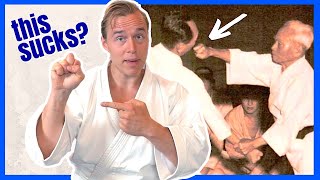
Conor McGregor was defeated by this simple kick at UFC 257! Learn the low calf kick as performed by MMA fighters and UFC athletes. This kicking technique is originally from Okinawa - the birthplace of Karate, but is frequently used in Mixed Martial Arts too. The biomechanics are different from a regular low kick in many aspects, so pay attention to the details. You want the opponent to feel a jolt of pain when done right. This gives you the opportunity to combine striking combinations together with the calf kick in many interesting ways. Good luck! Visit http://www.karatebyjesse.com to learn more. #MMA #Karate #UFC
Related Techniques
Frequently Asked Questions
What does this video teach about kick?
This video covers calf kick foundation, execution mechanics, target precision and effect. It provides detailed instruction from Jesse Enkamp.
How long does it take to learn kick?
The basic mechanics can be understood in a single session, but developing reliable execution requires consistent drilling over weeks of practice. This 8-part breakdown helps structure your training by isolating each phase of the technique.
What are the key details for finishing kick?
After executing the low calf kick, the practitioner exploits the opening with a follow-up combination, typically beginning with a one-two and concluding with a hook punch (kagi zuki). The initial kick causes sufficient disruption to create space for these hand strikes.