How to Block a Headbutt in a Fight
0
Headbutt·SORUDO - Self Defense
Learn how to block a headbutt in a fight and stay protected. These simple yet effective tips will help you counter this …
頭突き(Zutsuki)
TraditionalTranslation: headbutt
The Headbutt group encompasses all striking techniques in which the fighter uses the skull — particularly the hard frontal bone above the brow ridge — as an impact weapon to strike the opponent. [1] The human frontal bone is one of the thickest and most structurally dense bones in the body, capable of withstanding substantial impact forces, making it a naturally resilient weapon when directed against softer facial structures such as the nose, orbital bones, or cheekbones. [1],[2] Headbutts are prohibited in virtually all modern regulated combat sports including boxing, MMA under the Unified Rules, and kickboxing, but they remain important techniques in self-defence systems, military combatives, and certain traditional arts. [2],[3] Historically, headbutts were legal in early Vale Tudo and no-holds-barred events, where they proved to be brutally effective at close range, particularly from clinch and ground positions. [3],[4] The group is organised by the direction of the headbutt: forward, rear, and side, each targeting different areas and used in distinct tactical situations. [4]
Headbutting as a combat technique predates recorded martial arts history and appears in fighting traditions worldwide. [1] In European folk wrestling and bare-knuckle boxing, headbutts were a common if unsavoury tactic — the practice of 'nutting' an opponent was documented in British and Irish street-fighting traditions from the 18th century onward. [1],[2] In Southeast Asian martial arts, Lethwei (Burmese boxing) is notable for being the only major combat sport that still permits headbutts under its full-contact rules, viewing the head as a legitimate weapon alongside fists, elbows, knees, and feet. [2],[3] Early UFC events (1993-1996) permitted headbutts, and they were used effectively by fighters such as Mark Coleman in ground-and-pound exchanges before being banned under the evolving Unified Rules in 2001. [3],[4]
Headbutts use the hardest part of the skull (forehead) to strike the opponent. [1]
Headbutts are found in traditional martial arts and street fighting; they are banned in most modern combat sports. [1]
Headbutts are illegal in modern MMA, boxing, and most combat sports. [1]
No images yet for this technique.
Sign in to suggest an image.
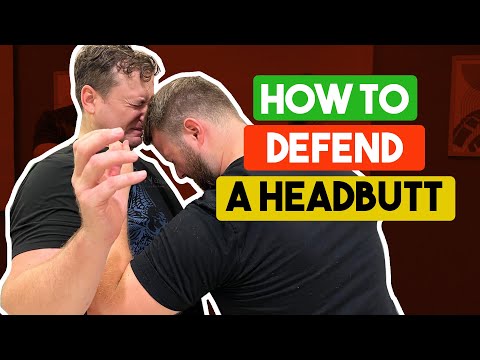
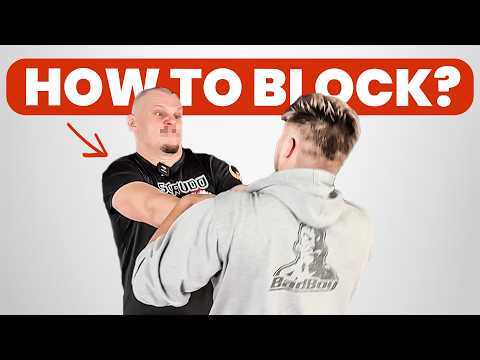
Learn how to block a headbutt in a fight and stay protected. These simple yet effective tips will help you counter this …
How to Defend a Headbutt Hope you will find our tips useful. JOIN AND SUPPORT this channel to get access to perks: https…
No instructional courses yet for this technique.
Sign in to suggest a course.
Risk of injury to the person this technique is applied to
Headbutts cause severe lacerations and concussions to both fighters
Skill level needed to execute this technique reliably
Whether this technique is allowed under major competition rule sets
Dirty Boxing for Mixed Martial Arts (Anderson Silva, 2012)
Alias sources — [1] Boxing Mastery (Hatmaker, 2004) [2] Boxing Mastery (Hatmaker, 2004) [3] Boxing Mastery (Hatmaker, 2004)
Effectiveness sources — [1] Comprehensive Asian Fighting Arts (Draeger & Smith, 1969)
Official karate technique names (和語/漢語)
Established Japanese martial arts naming convention — native Japanese term (和語/漢語)
Alias sources — [1] Boxing Mastery (Hatmaker, 2004) [2] Boxing Mastery (Hatmaker, 2004) [3] Boxing Mastery (Hatmaker, 2004)
Effectiveness sources — [1] Comprehensive Asian Fighting Arts (Draeger & Smith, 1969)
strong neck stabilisation, explosive forward drive, short range comfort
thick frontal bone, strong neck muscles
neck flexors, trapezius, core, legs (for drive)
The Forward Headbutt family covers headbutt strikes delivered in a forward direction, where the striker drives the frontal bone of the skull into the opponent's face, typically targeting the nose, brow ridge, or orbital area. [1] The forward headbutt is the most common and naturally instinctive headbutt technique, utilising a sharp forward thrust of the neck and upper torso to accelerate the hardest part of the skull into a vulnerable target. [1,2] Effective execution requires the striker to tuck the chin slightly and strike with the hairline area of the forehead, which provides maximum bone density and minimises the risk of self-injury. [2,3]
The Rear Headbutt family covers headbutt strikes directed backward, where the striker drives the back of the skull (the occipital bone) into the face of an opponent positioned behind them. [1] The rear headbutt is a defensive or escape technique, used when an opponent secures a rear clinch, bear hug, or choking position, and the striker uses a sharp backward snap of the head to impact the attacker's nose, teeth, or orbital area. [1,2] The occipital bone at the back of the skull is extremely dense and provides a hard striking surface against the more fragile facial bones of the attacker. [2,3]
The Side Headbutt family covers headbutt strikes delivered laterally, where the striker drives the temporal or parietal region of the skull sideways into an opponent positioned beside them. [1] Side headbutts are situational techniques used when the striker and opponent are positioned side by side, such as in certain clinch configurations, or when the attacker approaches from a flanking angle. [1,2] The lateral motion is less powerful than a forward headbutt due to limited hip involvement, but it can still deliver significant force to the opponent's temple, ear, or jaw. [2,3]
The headbutt group encompasses forward, rear, and side headbutts. Headbutt appears in 127 passages across 27 books. Banned in all modern sport combat (UFC banned headbutts after UFC 15 in 1997) but a standard technique in military combatives and self-defense. The skull's frontal bone is the hardest striking surface on the human body. (27 books; military combatives manuals; MMA rules history)
London Self Defence Academy emphasizes that you should never allow someone to walk up to you in the first place, and you should always keep your hands out of your pockets and maintain distance control. If someone gets close enough to headbutt you, you've already lost positional awareness.
SORUDO Self Defense recommends three immediate steps: first, maintain your balance and keep your hands ready; second, put your head down so if they headbutt, their face hits the harder top of your head rather than your face; and third, control one of their arms so they can't pull back to strike effectively.
SORUDO Self Defense explains that when your head is down and they headbutt the top of your head, they damage their own face (broken nose, lost teeth) while you remain relatively unharmed, giving you a tactical advantage—they'll be disoriented while you stay aware.
SORUDO Self Defense stresses that you must immediately address their hands and break their grip, because they can still strike you. After neutralizing the headbutt threat, go straight to controlling or breaking their hold rather than focusing on counterstriking.
The Headbutt group encompasses all striking techniques in which the fighter uses the skull — particularly the hard frontal bone above the brow ridge — as an impact weapon to strike the opponent. The human frontal bone is one of the thickest and most structurally dense bones in the body, capable of withstanding substantial impact forces, making it a naturally resilient weapon when directed against softer facial structures such as the nose, orbital bones, or cheekbones.
Headbutting as a combat technique predates recorded martial arts history and appears in fighting traditions worldwide. In European folk wrestling and bare-knuckle boxing, headbutts were a common if unsavoury tactic — the practice of 'nutting' an opponent was documented in British and Irish street-fighting traditions from the 18th century onward.
Unified MMA: banned — Headbutts prohibited; WBC/Boxing: banned — Prohibited; WKF: banned — Prohibited; Kyokushin: banned — Prohibited; WT: banned — Prohibited; ITF: banned — Prohibited; WAKO: banned — Prohibited; K: banned — 1/GLORY — Prohibited; IFMA: banned — Prohibited; FIAS Combat Sambo: legal — Legal — headbutts permitted in combat sambo
Danger rating 8/10. Very High — headbutts cause severe lacerations and concussions to both fighters
The standard setup chain: Assume Fighting Stance → Generate Power → Execute Strike → Recover to Guard.
Standard counters include: Check (Shin Block) — raise the shin to intercept the kick before it lands / Catch and Sweep — catch the kicking leg and sweep the standing leg / Step Inside — close distance inside the kick's effective range to smother it.
Common variants: Standard variation (primary execution of the strike from the most common stance); Power variation (modified mechanics for maximum force generation); Speed variation (minimised telegraph for a faster, harder-to-read attack); Counter variation (timed to exploit the opponent's offensive commitment).
Headbutts are illegal in modern MMA, boxing, and most combat sports.
Top errors to watch for: Striking with the crown or top of the head instead of the forehead — high risk of cervical spine compression / Headbutting forehead-to-forehead, which injures both fighters equally / Closing the eyes during delivery — you must see the target to hit it accurately / Using the neck as the sole power source, creating a whiplash-like motion that risks self-injury.
The Headbutt is also known as Zutsuki, Head Strike, Head Clash, Coup de Tete.