Open Hand and Elbow Techniques
0
Open Hand Strike·Franz Karate Dojo
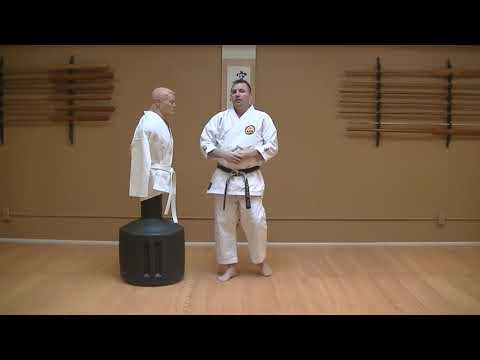
Open Hand strikes and Elbow techniques. This includes many of the Kihon (basic) Waza for training our curriculum at Fran…
Translation: open hand strike
Open hand strikes are among the most ancient and universally distributed striking techniques across world martial arts, predating the development of the closed fist punch. [1] Historical evidence suggests that open hand techniques were preferred in many traditional systems because they reduced the risk of hand fractures that frequently occur with closed-fist striking against hard targets. [2] In Okinawan and Japanese karate, open hand strikes (kaishu waza) form a major category of techniques, with Funakoshi documenting numerous open hand forms in his 1935 Karate-Do Kyohan. [3] Chinese martial arts systems — particularly Wing Chun, Baguazhang, and various Shaolin styles — developed extensive repertoires of palm strikes, knife hand strikes, and finger thrusts. [1] In Western combatives, open hand strikes were taught as practical self-defence techniques, with W.E. Fairbairn and E.A. Sykes incorporating palm strikes and chops into their World War II close-combat manuals. [4]
Open hand strikes are used in MMA, karate competition, and self-defence contexts. [1]
No images yet for this technique.
Sign in to suggest an image.
Open Hand strikes and Elbow techniques. This includes many of the Kihon (basic) Waza for training our curriculum at Fran…
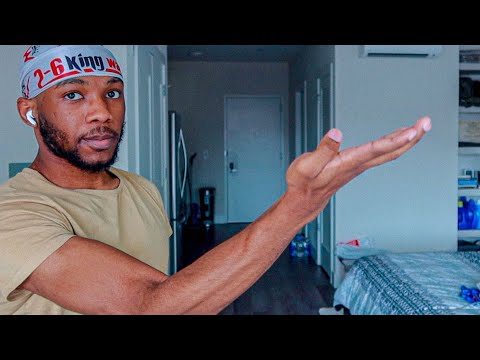
guys be really careful when practicing these 3 deadly open hand strikes.
No instructional courses yet for this technique.
Sign in to suggest a course.
Risk of injury to the person this technique is applied to
Open hand strikes have lower fracture risk than fists but can still concuss
Skill level needed to execute this technique reliably
Whether this technique is allowed under major competition rule sets
The Essence of Okinawan Karate-Do (Shoshin Nagamine, 1976)
Alias sources — [1] Karate-Do Kyohan (Funakoshi, 1935) [2] Karate-Do Kyohan (Funakoshi, 1935) [3] Karate-Do Kyohan (Funakoshi, 1935)
History sources — [1] The Art of Striking (Blauer, 2004) [2] Biomechanics of Striking Arts, in Martial Arts Medicine (Kordi et al., 2009) [3] Karate-Do Kyohan (Funakoshi, 1935) [4] Get Tough! (Fairbairn, 1942)
Official karate technique names (和語/漢語)
Established Japanese martial arts naming convention — native Japanese term (和語/漢語)
Alias sources — [1] Karate-Do Kyohan (Funakoshi, 1935) [2] Karate-Do Kyohan (Funakoshi, 1935) [3] Karate-Do Kyohan (Funakoshi, 1935)
History sources — [1] The Art of Striking (Blauer, 2004) [2] Biomechanics of Striking Arts, in Martial Arts Medicine (Kordi et al., 2009) [3] Karate-Do Kyohan (Funakoshi, 1935) [4] Get Tough! (Fairbairn, 1942)
speed, power generation through kinetic chain, striking surface conditioning
athletic build with fast-twitch muscle fibres
varies by strike — hip rotators, shoulders, core
Every move, in any martial art, shares a few universal traits. Mix and match below to pinpoint the right tool — or compare equivalents across styles.
A downward or diagonal striking motion using the edge of the hand, similar to a knife hand but delivered with a heavier, more committed chopping trajectory.
The Fundamental Open Hand Strike family covers striking techniques delivered with an open hand rather than a closed fist — including palm strikes, knife-hand strikes (shuto/chop), ridge-hand strikes, and hammer-edge strikes that appear across karate, kung fu, Krav Maga, and other martial arts. [1] Open-hand strikes offer several advantages over closed-fist punches: they significantly reduce the risk of hand injuries (broken metacarpals, boxer's fractures), they can effectively target soft tissue areas (throat, eyes, ears), and the palm heel provides a broad, hard striking surface backed by the wrist and forearm bones. [1,2] In self-defence systems like Krav Maga, palm strikes are preferred over punches because they are effective without wrapping or gloves and can be delivered by untrained individuals with less risk of self-injury. [2,3] The knife-hand strike (shuto uchi/karate chop) became one of the most iconic martial arts techniques in popular culture. [3]
A strike delivered with the bottom of the closed fist (the ulnar side), swinging the fist in a downward or horizontal arc like a hammer.
A strike delivered with the edge of the open hand, using the area between the base of the little finger and the wrist to chop into the target.
The Krav Maga Strike family covers striking techniques from the Israeli self-defence system designed specifically for real-world combat situations — emphasising maximum damage through gross motor movements that work under extreme stress with zero sporting restrictions. [1] Krav Maga strikes prioritise palm-heel strikes, hammer fists, eye gouges, throat strikes, groin kicks, and other techniques that target the body's most vulnerable areas — techniques that are illegal in every combat sport but essential for self-defence. [1,2] The system was developed by Imi Lichtenfeld for the Israeli Defence Forces (IDF) and is designed to work for soldiers and civilians without extensive martial arts training, using natural body movements that function under the adrenaline dump and fine-motor-skill degradation of a real attack. [2,3] Krav Maga striking philosophy is fundamentally different from sport striking: the goal is to neutralise the threat as quickly as possible through aggressive, pre-emptive attacks to vulnerable targets. [3]
The Kung Fu Strike family within the Open Hand Strike group covers open-handed striking techniques from Chinese martial arts systems — the most diverse collection of open-hand formations and striking methods in any martial arts tradition. [1] Chinese martial arts developed an extraordinarily varied array of open-hand formations, each designed for specific targets and applications: tiger claw (hu zhua, raking and gripping), crane beak (he zui, pecking strikes to pressure points), iron palm (tie zhang, devastating palm strikes developed through years of conditioning), and the famous dim mak ('death touch') pressure-point strikes. [1,2] These techniques reflect the Chinese martial arts philosophy of specialised weapons for specialised targets — rather than a single fist for all situations, Chinese martial artists trained multiple hand formations for maximum effectiveness against different anatomical targets. [2,3] While many traditional claims about these techniques remain scientifically unverified, the underlying principle of targeting vulnerable anatomical points with appropriate striking surfaces is biomechanically sound. [3]
Strikes delivered with an open hand, grouping the traditional striking surfaces of Okinawan and Japanese karate — the spear hand (nukite), palm heel (shotei / teisho), bent wrist (kakuto), arc hand (koken / keito), bear hand (kumade), and eagle hand (washide). [1] Each surface concentrates impact on a different rigid structure of the open hand, allowing the practitioner to reach soft-tissue targets a closed fist cannot strike effectively — the throat, eyes, and small pressure points — while reducing the metacarpal fracture risk associated with closed-fist striking. [1,2]
A strike delivered with the heel or base of the open palm, driving the hand forward in a thrusting motion to impact the face, chin, or body without risking hand fractures.
A strike delivered with the inner edge of the hand (thumb side), swinging the hand inward in a horizontal arc to target the temple, jaw, or neck.
A thrusting strike using the extended fingertips held rigidly together, targeting soft tissue areas such as the throat, eyes, or solar plexus.
Open hand strikes include palm strikes (220 hits/45 books), knife hands (918/84), spear hands (222/24), hammer fists (156/39), ridge hands (76/23), and chops (1,079/200). These techniques use the open hand rather than the fist — lower self-injury risk and access to targets (eyes, throat) that fists cannot effectively strike. (200+ books; Nakayama, Dynamic Karate; martial arts texts)
Keep your thumb tucked tightly inside so your hand is flat, and curl your fingers inward rather than leaving them pointed out. Sensei Berny emphasizes making sure your thumb is in and tight, and that you're curling your fingers inside to avoid injury.
For speed techniques, strike with the ridge hand to the upper target areas. If you want power or knockout ability, strike with the forearm instead, according to Franz Karate Dojo.
No—your ridge hand should not be thrown with a wide arching motion, as this develops poor technique. Franz Karate Dojo notes that people often do this from breaking practice, but it should not be used in self-defense or street fighting situations.
The side of the neck and collarbone area are effective targets. Sensei Berny explains that striking the soft muscle area below the collarbone with the edge of your hand is effective because there are no bones there to injure your own hand, but it will cause significant pain to your opponent.
Don't wind up excessively or use a large chamber position—generate power by rotating your hips instead. Sensei Berny advises that advanced practitioners should keep the technique compact and quick so the opponent doesn't see it coming from a mile away.
Strikes delivered with an open hand using the palm, edge of the hand, fingertips, or bottom of the fist, common in traditional martial arts and self-defense systems.
Open hand strikes are among the most ancient and universally distributed striking techniques across world martial arts, predating the development of the closed fist punch. Historical evidence suggests that open hand techniques were preferred in many traditional systems because they reduced the risk of hand fractures that frequently occur with closed-fist striking against hard targets.
Unified MMA: legal — Legal (palm strikes, slaps permitted); WBC/Boxing: banned — Only closed-fist punches permitted; WKF: restricted — Varies by technique — some open-hand strikes legal in kata, generally restric…; Kyokushin: banned — Only closed-fist strikes to body permitted; WT: banned — Prohibited; ITF: restricted — Some knife hand techniques legal; WAKO: banned — Closed fist only; K: banned — 1/GLORY — Closed fist only; IFMA: legal — Legal — palm strikes permitted in Muay Thai
Danger rating 4/10. Moderate — open hand strikes have lower fracture risk than fists but can still concuss
The standard setup chain: Assume Fighting Stance → Generate Power → Execute Strike → Recover to Guard.
Standard counters include: Block — absorb the strike with a protective guard position / Evasion — move the target out of the strike's path / Counter-Attack — time an offensive response during the recovery phase of the strike.
Common variants: Standard variation (primary execution of the strike from the most common stance); Power variation (modified mechanics for maximum force generation); Speed variation (minimised telegraph for a faster, harder-to-read attack); Counter variation (timed to exploit the opponent's offensive commitment).
Open hand strikes are used in MMA, karate competition, and self-defence contexts.
Top errors to watch for: Limp wrist on palm strikes — the wrist must be locked to prevent hyperextension on impact / Hitting with the fingers instead of the palm heel, causing jammed or broken fingers / Slapping rather than striking — the motion should be linear or arcing with hip drive, not a loose swing / Keeping the hand too relaxed through impact, which dissipates force across the whole hand.
The Open Hand Strike is also known as Kaishu-uchi, Hand Strike, Te Waza, Open-Palm Technique.