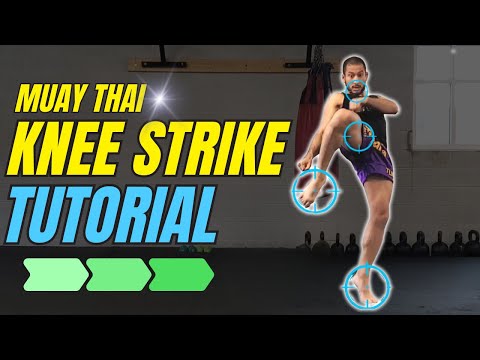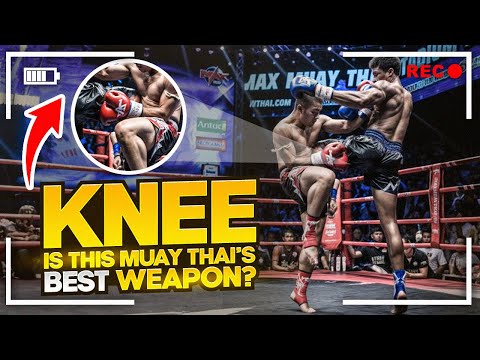
How To Do The Perfect Muay Thai Knee Strike!
0
Knee Strike·Kingdom Martial Arts Academy
Muay Thai Knee Technique Tutorial to develop more Power, Speed and Balance . Pro Tips and Drills that are easy to unders…
膝蹴り(Hiza-geri)
TraditionalTranslation: knee strike
Knee strikes are among the oldest documented striking techniques in human combat, with depictions appearing in ancient Greek pankration pottery from the 6th century BCE and in Southeast Asian temple carvings dating to the Khmer Empire (9th-15th centuries). [1] In Thailand, knee techniques became the defining weapons of Muay Boran, the precursor to modern Muay Thai, where the knees were considered the most devastating close-range weapons alongside the elbows. [2] Kraitus and Rennehan document that knee strikes were central to battlefield Muay Boran, where soldiers trained specifically in clinch-and-knee fighting for close-quarters combat. [3] Japanese karate preserved knee strikes as hiza-geri, though they received less emphasis than in Thai systems. [4] The modern codification of knee techniques accelerated with the formalisation of Muay Thai stadium rules in the 1920s-1930s, which permitted full-power knee strikes in the clinch. [2]
Knee strikes are a significant source of finishes in MMA and Muay Thai. [1]
No images yet for this technique.
Sign in to suggest an image.
Muay Thai Knee Technique Tutorial to develop more Power, Speed and Balance . Pro Tips and Drills that are easy to unders…
Muay Thai KNEE STRIKE Tutorial - STEP BY STEP! JOIN Channel & Access SUPER FAN perks: https://www.youtube.com/channel/U…
No instructional courses yet for this technique.
Sign in to suggest a course.
Risk of injury to the person this technique is applied to
Knees generate massive force at close range; liver/head KO risk
Skill level needed to execute this technique reliably
Whether this technique is allowed under major competition rule sets
Muay Thai: The Art of Fighting (Yod Ruerngsa, Khun Kao Charuad & James Cartmell, 2002)
Alias sources — [1] Muay Thai: The Art of Fighting (Kraitus & Kraitus, 1988) [2] Dynamic Karate (Nakayama, 1966) [3] Muay Thai: The Art of Fighting (Kraitus & Kraitus, 1988)
History sources — [1] Combat Sports in the Ancient World (Poliakoff, 1987) [2] Muay Boran: The Ancient Art of Muay Thai (Rebac, 2008) [3] Muay Thai: The Art of Fighting (Kraitus & Rennehan, 2002) [4] Dynamic Karate (Nakayama, 1966)
Official karate technique names (和語/漢語)
Established Japanese martial arts naming convention — native Japanese term (和語/漢語)
Alias sources — [1] Muay Thai: The Art of Fighting (Kraitus & Kraitus, 1988) [2] Dynamic Karate (Nakayama, 1966) [3] Muay Thai: The Art of Fighting (Kraitus & Kraitus, 1988)
History sources — [1] Combat Sports in the Ancient World (Poliakoff, 1987) [2] Muay Boran: The Ancient Art of Muay Thai (Rebac, 2008) [3] Muay Thai: The Art of Fighting (Kraitus & Rennehan, 2002) [4] Dynamic Karate (Nakayama, 1966)
hip flexion power, clinch control ability, close-range comfort
long thigh for greater leverage, strong hip flexors
hip flexors, quadriceps, core, grip (for clinch)
Knee strikes delivered along a diagonal or horizontal trajectory, attacking from angles that bypass the opponent's frontal guard.
A knee strike delivered while jumping or leaping toward the opponent, using the entire body's airborne momentum to drive the knee into the target with devastating force.
Knee strikes delivered to a grounded opponent or while in a ground position, commonly used in ground-and-pound situations from top control.
A knee strike driven directly upward or forward in a linear path, typically targeting the midsection, solar plexus, or face.
Knee strikes are the close-range weapons of Muay Thai's 'art of eight limbs.' Flying knee appears in 215 passages across 20 books. The straight knee from the clinch (khao trong) is one of the most damaging close-range techniques. Jorge Masvidal's flying knee KO (5 seconds, UFC 239) is the fastest finish in UFC history. (20+ books; Kraitus, Muay Thai: The Art of Fighting; UFC records)
Kingdom Martial Arts Academy emphasizes that stepping out opens your hips, which is essential for generating power and proper distance. If you're too close, you're in a bad position for both kicks and knees, so stepping outside the line allows you to set up the strike correctly.
According to Ironboy Experience, hip extension is critical—you must drive your hips forward as you burst upward on the ball of your foot. Without hip involvement, the knee strike will lack power and look weak; the power comes from using your legs and hips together to extend through the target.
Ironboy Experience recommends stepping back to your fighting stance to maintain balance and control of your body weight. Learning to return with balance allows you to dictate the fight rather than falling forward; once you master this, stepping forward with control becomes easier.
Kingdom Martial Arts Academy stresses that you must finish how you start and maintain the ability to block, lean back, or throw a follow-up combination immediately after the knee lands. If you can't do these things from your recovery position, your technique needs adjustment.
Strikes delivered using the knee as the primary impact surface, leveraging close-range body mechanics and clinch control to generate devastating force.
Knee strikes are among the oldest documented striking techniques in human combat, with depictions appearing in ancient Greek pankration pottery from the 6th century BCE and in Southeast Asian temple carvings dating to the Khmer Empire (9th-15th centuries). In Thailand, knee techniques became the defining weapons of Muay Boran, the precursor to modern Muay Thai, where the knees were considered the most devastating close-range weapons alongside the elbows.
Unified MMA: restricted — Knees to standing opponent legal, knees to head of grounded opponent banned; WBC/Boxing: banned — All knee strikes prohibited; WKF: banned — Prohibited in sport karate; Kyokushin: legal — Legal to body; WT: banned — Prohibited; ITF: banned — Prohibited; WAKO: banned — Prohibited in most formats; K: restricted — 1/GLORY — One clinch knee allowed before referee break; IFMA: legal — Legal — knees are a core Muay Thai weapon, clinch knees highly scored
Danger rating 7/10. Very High — knees generate massive force at close range; liver/head KO risk
The standard setup chain: Clinch or Frame → Pull Opponent In → Drive the Knee.
Standard counters include: Hip Check — push the opponent's hips away to create distance and kill the knee angle / Clinch Control — control the opponent's head and posture to prevent knee generation / Step Back — create distance to escape the knee's effective range.
Common variants: Straight knee (driving the knee straight upward into the body or head); Curved knee (round knee) (swinging the knee from the side in a circular path); Flying knee (leaping forward and driving the knee at the apex of the jump); Clinch knee (pulling the opponent into the knee from Muay Thai plum po…).
Knee strikes are a significant source of finishes in MMA and Muay Thai.
Top errors to watch for: Kneeing with a flat foot on the support leg — limits hip drive and reduces power significantly / Pulling the opponent down without actually driving the knee up, turning it into a weak bump / Leaning back too far when kneeing, which takes your weight off the strike and compromises balance / Clinching the neck without inside position on the biceps — opponent easily swims out.
The Knee Strike is also known as Hiza-geri, Knee, Hiza Geri, Khao.