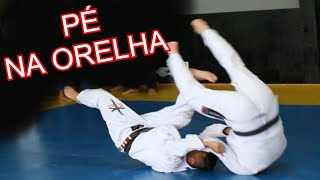
Introduction to Tawara Gaeshi
Tawara Gaeshi, also known as the bale throw, is one of judo's oldest techniques with continued practical relevance in modern grappling. The name derives from 'tawara' (a bale or sack) and 'gaeshi' (reversal or counter movement executed backward). Though prohibited in IJF competition, the technique remains effective in submission grappling and other combat sports.
Primary Application Against Double-Leg Takedowns
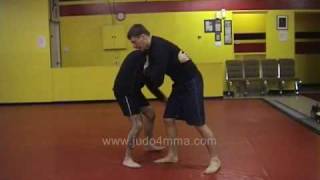
Tawara Gaeshi serves as an effective counter to double-leg tackles and shooting entries. When an opponent initiates a double-leg attack, the defender responds by rolling backward while maintaining control of the attacker's legs and positioning. Proper foot placement between the opponent's legs is essential for executing a successful throw rather than simply allowing body weight to accomplish the reversal.
Butterfly Guard Variation with Flared Knees
An advanced variation employs a butterfly guard position with the knees flared outward and feet positioned inward to maintain superior leg control. This stance provides multiple advantages: it increases rotational momentum for the throw, prevents the opponent from achieving a pinning position, and creates a defensive barrier that the opponent must overcome. If the throw stalls midway, the defender can roll the opponent to the side and separate.
Execution Mechanics with Foot Control
When executing Tawara Gaeshi with foot control, the defender secures the opponent's shoulders and armpits while pulling back with the base leg, then sits down while flaring the knees outward. This creates a compact, rounded position that prevents the opponent from settling onto the defender's midsection. The controlled foot placement generates a stronger throw than momentum alone, while maintaining the option to roll the opponent aside if the initial reversal is incomplete.
Scoring and Referee Considerations
The technique qualifies as a counter technique when the defender maintains active foot and leg control throughout the reversal, ultimately controlling the opponent on top in a pinning position. Proper execution requires the defender to complete a full rotation to establish top position and may benefit from a strong vocal expression to emphasize the counter nature of the technique to referees. Attribution of points depends on demonstrating control rather than simply falling backward.
Alternative Variations: One-Foot and Waiter Techniques
Tawara Gaeshi has multiple execution styles, including a one-foot variation and a 'waiter' approach that differ in leg positioning and mechanics. Each variation maintains the same fundamental principle of using the defender's body and legs to reverse a bent-over opponent into a throw. These alternatives accommodate different entry angles and attacking styles while producing the same defensive outcome.
Application Against Passive or Non-Attacking Opponents
Tawara Gaeshi remains effective even when an opponent is simply bent over without actively engaging or shooting a takedown. The technique can be applied to any opponent who lowers their posture and fails to maintain vertical alignment. This makes it a practical defense in situations where an opponent has poor positioning regardless of their offensive intent.
Historical Context and Modern Adaptation
Tawara Gaeshi originates from early jiu-jitsu techniques incorporated into judo during the 1880s-1890s, making it one of the foundational throws in the art. Modern practitioners have adapted the technique for contemporary grappling sports, refining the mechanics and applications to maximize effectiveness against modern shooting styles. The technique's longevity demonstrates its fundamental soundness despite its age.
Basic Setup: Upper Body Control
The fundamental setup for Tawara Gaeshi begins when the opponent shoots a double-leg takedown with good penetration. The defender responds by grasping the opponent's upper body in a hugging position, locking the hands together without finger-lacing. This simple embrace controls the opponent's base while positioning the defender to execute the reversal mechanics.
TAWARA GAESHI Bale Throw
Key Takeaways
- •Introduction to Tawara Gaeshi
- •Primary Application Against Double-Leg Takedowns
- •Butterfly Guard Variation with Flared Knees
- •Execution Mechanics with Foot Control
Tawara Gaeshi (Bale Reverse Direction Throw) is an old throwing technique that continues to be effective and useful. This video shows three effective variations of Tawara Gaeshi. The first looks like a Butterfly Sweep. The second is similar to Uki Waza (Floating Technique) and the third looks like Hikkomi Gaeshi (Pull Down Reverse Direction Throw). There are other good variations than the three shown in this video, so experiment in practice to see which works best for you. Go to www.amazon.com or www.ymaa.com to get Steve Scott's books THE JUDO ADVANTAGE and JUJI GATAME ENCYCLOPEDIA. Our channel was started in 2010 as an extension of our program at Welcome Mat. Welcome Mat was founded in 1969 by Steve Scott in Kansas City, Missouri, USA and has produced thousands of successful students, athletes and coaches in a variety of grappling sports. View over a thousand videos on the subjects of judo, freestyle judo, Shingitai Jujitsu, sambo, submission grappling and sport jujitsu on our Youtube channel. Browse through our playlists to see what we have on our channel. If a video is listed as "private" is it because that video is still in development or scheduled for later viewing. You can subscribe for free to our channel at http://youtube.com/user/welcomematstevescott. We strive to provide fundamentally sound and technically innovative skills and information on a variety of grappling sports. We appreciate your support! Please tell others about our channel. You can help support our channel by going to our online store and purchasing items. Go to http://www.WelcomeMatStore.com. We have a variety of books, shirts and other items for sale. Music for the Freestyle Judo show provided by YouTube Copyright Free Audio featuring "Fiend" by Sting and performed by the Jingle Punks and "All This Down Time" by Sting and performed by the Jingle Punks. Visit our club web site at http://www.WelcomeMatJudoClub. For information on the Judo Black Belt Association, go to http://www.judoblackbelt.com. Thank you for watching our video. Please tell others about our channel. Our videos are all original material and are copyrighted. Reproduction or showing these videos without the specific permission of Steve Scott is prohibited.
Related Techniques
Frequently Asked Questions
What does this video teach about tawara gaeshi?
This video covers introduction to tawara gaeshi, primary application against double-leg takedowns, butterfly guard variation with flared knees. It provides detailed instruction from welcomematstevescott.
How long does it take to learn tawara gaeshi?
The basic mechanics can be understood in a single session, but developing reliable execution requires consistent drilling over weeks of practice. This 9-part breakdown helps structure your training by isolating each phase of the technique.
What are the key details for finishing tawara gaeshi?
Tawara Gaeshi originates from early jiu-jitsu techniques incorporated into judo during the 1880s-1890s, making it one of the foundational throws in the art. Modern practitioners have adapted the technique for contemporary grappling sports, refining the mechanics and applications to maximize effectiveness against modern shooting styles. The technique's longevity demonstrates its fundamental soundness despite its age.