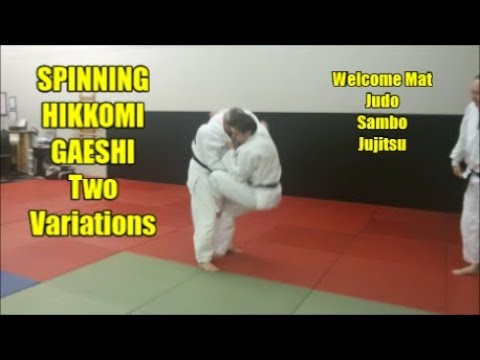
SPINNING HIKKOMI GAESHI
0
Hikkomi Gaeshi·welcomematstevescott
Hikkomi Gaeshi (Pulling Reverse Direction Throw) is a popular and effective throw. This video shows two variations using…
Translation: pulling-in reversal
Hikkomi Gaeshi is a rear sacrifice throw where the attacker pulls the opponent forward while falling backward, then uses the feet against the opponent's body to launch them overhead. [1] The attacker falls to their back while gripping the opponent, places one or both feet on the opponent's midsection, and uses the falling momentum plus leg extension to flip them over. [1] Similar to Tomoe Nage but with a pulling entry rather than a direct frontal attack. [1]
Classified in the Kodokan Judo syllabus. [1]
Kodokan judo lineage: Jigoro Kano (1860–1938) systematized this technique as part of the Kodokan judo curriculum. Transmitted through the Kodokan instructor system to judo federations worldwide. Adopted into BJJ through Mitsuyo Maeda → Carlos Gracie → the Gracie family lineage. [1]
Recognized Kodokan judo technique but rarely seen in modern IJF competition due to rule changes favoring forward-throwing techniques. Occasionally appears in kata demonstrations and regional tournaments. [1]
No images yet for this technique.
Sign in to suggest an image.
Hikkomi Gaeshi (Pulling Reverse Direction Throw) is a popular and effective throw. This video shows two variations using…
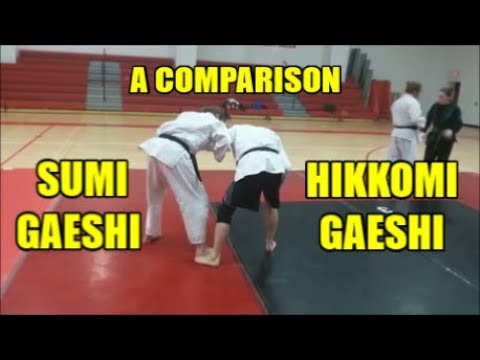
Sumi Gaeshi (Corner Reverse Roll) and Hikkomi Gaeshi (Pull Down Reverse Roll) are similar throws but there are some dist…
No instructional courses yet for this technique.
Sign in to suggest a course.
Risk of injury to the person this technique is applied to
Moderate.
Skill level needed to execute this technique reliably
Whether this technique is allowed under major competition rule sets
Kano, J. Kodokan Judo. Kodansha International.
[1] Kano, J. Kodokan Judo. Kodansha International.
Official Kodokan ground technique classification system
Standard Japanese martial arts terminology (kanji/hiragana)
Established Japanese martial arts naming convention — native Japanese term (和語/漢語)
[1] Kano, J. Kodokan Judo. Kodansha International.
strong grip for pulling, core strength for controlled falling, leg power for launch
latissimus dorsi (pulling), hip flexors (foot placement), quadriceps (launch)
Hikkomi gaeshi (pulling reversal) is a rear sacrifice throw where the attacker sits back and pulls the opponent over using the legs. A sutemi-waza (sacrifice technique) that requires committing the body to the ground. (Kano, Kodokan Judo)
The word 'Gaeshi' means rolling backward or reversing, like a rear somersault. Hikkomi Gaeshi is a counter movement where you throw your opponent backward across your back in a counterbalanced motion, rather than throwing them forward.
You need to close your opponent's body to yours—this is critical. The left hand on the lapel traps and rolls the shoulder while anchoring and pulling them into you; you must hug them close with a shorter grip on the shoulders rather than pulling up and stepping away.
Pull your opponent in, step and jam them close to your body, then drop under them and roll them over you while kicking back. The movement is very round and flowing, making it hard to counter.
Having no body space between you and your opponent is essential to the technique's effectiveness and makes the throw much harder to defend against.
Hikkomi Gaeshi is a rear sacrifice throw where the attacker pulls the opponent forward while falling backward, then uses the feet against the opponent's body to launch them overhead. The attacker falls to their back while gripping the opponent, places one or both feet on the opponent's midsection, and uses the falling momentum plus leg extension to flip them over.
Classified in the Kodokan Judo syllabus.
IJF Judo: Legal: legal — Kodokan classified technique; IBJJF: Legal {src:IBJJF Rules Book v6.0, June 2024|/sources/IBJJF: legal — Rules-v6.0-June-2024.pdf}; Unified MMA: Legal {src:Unified Rules of MMA, August 2025|/sources/Unified: legal — MMA-Rules-August-2025.pdf}; FIAS Sambo: Legal {src:FIAS International Sambo Competition Rules|/sources/FIAS: legal — Sambo-Rules.pdf}
Danger rating 5/10. Moderate.
The standard setup chain: Opponent pushes forward → absorb and pull → Hikkomi Gaeshi → Guard pull → butterfly hooks → immediate Hikkomi Gaeshi sweep → Grip fight → snap down → pull into Hikkomi Gaeshi as opponent resists.
Standard counters include: Sprawl — drop hips back to prevent the pull / Post hands on the mat — prevent being pulled over / Grab the legs — prevent the foot placement.
Common variants: Butterfly guard sweep version (from seated guard with butterfly hooks); Double foot placement (both feet on the hips); Single foot placement (one foot on the hip, one on the thigh).
Recognized Kodokan judo technique but rarely seen in modern IJF competition due to rule changes favoring forward-throwing techniques. Occasionally appears in kata demonstrations and regional tournaments.
Top errors to watch for: Falling backward without pulling the opponent — they stay standing while you're on your back / Feet placed too high on chest — opponent can posture up and escape / Not extending legs explosively — opponent bases and passes guard / Releasing grip during the throw — uncontrolled landing.
The Hikkomi Gaeshi is also known as Hikkomi Gaeshi, Hikkomi-Gaeshi, Pulling Reversal, Hikkomigaeshi.