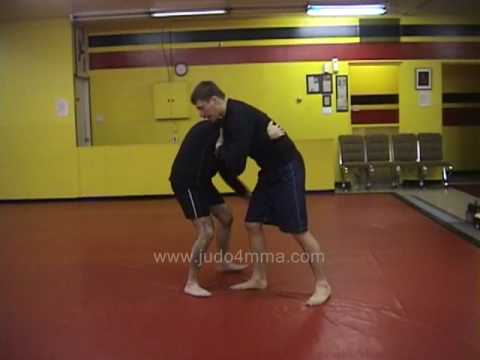
TAWARA GAESHI Bale Throw
0
Tawara Gaeshi·welcomematstevescott
Tawara Gaeshi (Bale Reverse Direction Throw) is an old throwing technique that continues to be effective and useful. Thi…
Translation: rice bale reversal
Tawara Gaeshi is a rear sacrifice throw where the attacker wraps both arms around the opponent's waist like carrying a rice bale, then falls backward and rolls the opponent over using the gripping momentum. [1] The name comes from the resemblance to lifting and throwing a tawara (straw rice bale). [1] It requires close body contact and strong gripping to execute effectively. [1]
Classified in the Kodokan Judo syllabus. [1]
Kodokan judo lineage: Jigoro Kano (1860–1938) systematized this technique as part of the Kodokan judo curriculum. Transmitted through the Kodokan instructor system to judo federations worldwide. Adopted into BJJ through Mitsuyo Maeda → Carlos Gracie → the Gracie family lineage. [1]
Recognized Kodokan judo technique but rarely seen in modern IJF competition due to rule changes favoring forward-throwing techniques. Occasionally appears in kata demonstrations and regional tournaments. [1]
No images yet for this technique.
Sign in to suggest an image.
Tawara Gaeshi (Bale Reverse Direction Throw) is an old throwing technique that continues to be effective and useful. Thi…
Judo for MMA (http://judo4mma.com) - How to do Tawara Gaeshi - Rice Bale/Bag Reversal. This method of Tawara Gaeshi is …
No instructional courses yet for this technique.
Sign in to suggest a course.
Risk of injury to the person this technique is applied to
Moderate.
Skill level needed to execute this technique reliably
Whether this technique is allowed under major competition rule sets
Kano, J. Kodokan Judo. Kodansha International.
[1] Kano, J. Kodokan Judo. Kodansha International.
Official Kodokan ground technique classification system
Standard Japanese martial arts terminology (kanji/hiragana)
Established Japanese martial arts naming convention — native Japanese term (和語/漢語)
[1] Kano, J. Kodokan Judo. Kodansha International.
strong gripping/squeezing power, willingness to sacrifice position, core strength for the roll
forearms (grip), latissimus dorsi (squeezing), core (rolling)
Tawara gaeshi (rice bale reversal) is a rear sacrifice throw used to counter an opponent who is driving forward — the attacker falls backward and throws the opponent over like tossing a rice bale. Named after the large bales of rice that were a common item in Japanese daily life. (Kano, Kodokan Judo)
Tawara Gaeshi is a very good counter to double leg tackles and double leg rotary carrying techniques. According to Judo4MMA, it's particularly useful if your opponent is executing a successful double leg attack.
Welcome Mat Steve Scott recommends rolling more over your shoulder and back in a backward shoulder roll rather than falling flat on your back, as this reduces the chances of being scored against and makes the technique more effective.
You want to have good control of your feet with knees out in a wedge position, stepping in as much as you can before going straight down. Both legs should be hooked into your opponent's inner thighs to assist with the lift and throw.
Yes, according to Judo4MMA, Tawara Gaeshi can be done aggressively so that you end up with a nice choke at the end of it, rather than just defensively countering an incoming attack.
Tawara Gaeshi is a rear sacrifice throw where the attacker wraps both arms around the opponent's waist like carrying a rice bale, then falls backward and rolls the opponent over using the gripping momentum. The name comes from the resemblance to lifting and throwing a tawara (straw rice bale).
Classified in the Kodokan Judo syllabus.
IJF Judo: Legal: legal — Kodokan classified technique; IBJJF: Legal {src:IBJJF Rules Book v6.0, June 2024|/sources/IBJJF: legal — Rules-v6.0-June-2024.pdf}; Unified MMA: Legal {src:Unified Rules of MMA, August 2025|/sources/Unified: legal — MMA-Rules-August-2025.pdf}; FIAS Sambo: Legal {src:FIAS International Sambo Competition Rules|/sources/FIAS: legal — Sambo-Rules.pdf}
Danger rating 5/10. Moderate.
The standard setup chain: Body lock from clinch → opponent defends the throw → Tawara Gaeshi sacrifice → Double underhooks → bear hug → Tawara Gaeshi → Opponent sprawls on your takedown → wrap waist → Tawara Gaeshi from the ground.
Standard counters include: Break the grip — pry the hands apart / Widen stance — make it harder to roll you / Posture up — stand tall to prevent the backward fall.
Common variants: Over-the-shoulder Tawara Gaeshi (rolling the opponent over your shoulder); Side Tawara Gaeshi (falling to the side instead of straight back); Standing Tawara Gaeshi (lifting and throwing without falling).
Recognized Kodokan judo technique but rarely seen in modern IJF competition due to rule changes favoring forward-throwing techniques. Occasionally appears in kata demonstrations and regional tournaments.
Top errors to watch for: Loose grip — opponent escapes during the fall / Falling without pulling opponent close — they post and don't roll / Not committing to the backward fall — half-attempts stall / Landing flat on your back without the roll — you end up on bottom with no advantage.
The Tawara Gaeshi is also known as Tawara Gaeshi, Tawara-Gaeshi, Rice Bale Throw, Tawaragaeshi.