TOMOE NAGE JUDO
0
Tomoe Nage·FEU BJJ
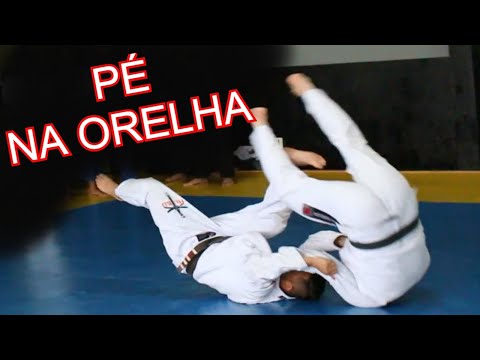
A MELHOR FORMA DE ENSINAR UM TÉCNICA DE TOMOE NAGE TOMA PÉ NA ORELHA SAIBA MAIS EM https://www.feubjj.com.br/ https://…
Translation: circle throw
Tomoe Nage, the circle throw or stomach throw, is one of judo's most iconic sacrifice techniques, in which tori falls backward, places a foot on uke's lower abdomen or hip, and uses a circular pulling motion combined with leg extension to launch uke directly overhead in a somersaulting arc. [1],[2] The name 'tomoe' refers to the circular trajectory uke follows during the throw. [1] Tomoe nage is classified as a ma sutemi waza in the Kodokan gokyo and is widely practised across judo, BJJ, and sambo. [2],[3] The technique is a high-percentage counter-throw against opponents who push forward aggressively, as their own momentum is redirected vertically. [3],[4]
Tomoe nage has been part of the Kodokan curriculum since its inception and features prominently in the 1895 gokyo no waza. [1] The technique became a signature move in international judo competition and later gained widespread popularity in Brazilian jiu-jitsu as a guard-pull-to-sweep entry. [2],[3]
Tomoe nage is a high-frequency technique in IJF competition, particularly among lighter weight competitors. [1]
No images yet for this technique.
Sign in to suggest an image.
A MELHOR FORMA DE ENSINAR UM TÉCNICA DE TOMOE NAGE TOMA PÉ NA ORELHA SAIBA MAIS EM https://www.feubjj.com.br/ https://…
No instructional courses yet for this technique.
Sign in to suggest a course.
Risk of injury to the person this technique is applied to
Ma-Sutemi-Waza; tori falls backward pulling uke over; spinal compression risk
Skill level needed to execute this technique reliably
Whether this technique is allowed under major competition rule sets
Kodokan Judo — Official Nage-waza Classification
Traditional Judo throwing technique terminology (Kodokan Institute)
Official Kodokan ground technique classification system
Standard Japanese martial arts terminology (kanji/hiragana)
Established Japanese martial arts naming convention — native Japanese term (和語/漢語)
Traditional Judo throwing technique terminology (Kodokan Institute)
hip rotation speed, core strength, lower back stability
strong hips and core, good flexibility for turning entry
hip rotators, core, quadriceps, latissimus dorsi
Every move, in any martial art, shares a few universal traits. Mix and match below to pinpoint the right tool — or compare equivalents across styles.
Tomoe nage (circle throw/stomach throw) appears in 9 passages across 6 books. A sacrifice throw where the attacker places a foot on the opponent's stomach and rolls backward, launching them overhead. Spectacularly effective when timed correctly — a favorite of judo showmen. (Kano, Kodokan Judo; multiple book references)
The entry should be realistic and accurate—jump in and place your foot precisely on your opponent's stomach rather than just collapsing. The Fédération Malagasy de Judo emphasizes that proper foot placement is as significant as the throwing motion itself.
Focus on using your opponent's weight against them rather than relying on force. The Fédération Malagasy de Judo recommends rolling yourself down gradually and taking time with the technique to develop this weight-transfer principle.
Tomoe Nage, the circle throw or stomach throw, is one of judo's most iconic sacrifice techniques, in which tori falls backward, places a foot on uke's lower abdomen or hip, and uses a circular pulling motion combined with leg extension to launch uke directly overhead in a somersaulting arc. The name 'tomoe' refers to the circular trajectory uke follows during the throw.
Tomoe nage has been part of the Kodokan curriculum since its inception and features prominently in the 1895 gokyo no waza. The technique became a signature move in international judo competition and later gained widespread popularity in Brazilian jiu-jitsu as a guard-pull-to-sweep entry.
IJF: legal — Legal throwing technique; IBJJF: legal — Legal at all belt levels; UWW: legal — Legal in both freestyle and Greco-Roman; Unified MMA: legal — Legal throwing technique; ADCC: legal — Legal; FIAS Sport Sambo: legal — Legal; FIAS Combat Sambo: legal — Legal
Danger rating 6/10. High — Ma-Sutemi-Waza; tori falls backward pulling uke over; spinal compression risk
The standard setup chain: Grip Setup (Kumi-kata) → Off-Balance (Kuzushi) → Entry (Tsukuri) → Execution (Kake) → Fall (Sutemi).
Standard counters include: Lower Centre of Gravity — bend knees and drop hips to make the throw harder to execute / Block the Hip — post hand on the thrower's hip to prevent loading / Step Around — circle away from the throw direction to avoid being loaded / Grip Break — deny the thrower their preferred gripping configuration.
Common variants: Standard hip throw (full turn-in with hip below the opponent's centre of gravity); No-gi hip throw (adapted without gi grips, using overhook and collar tie); Drop hip throw (dropping to one knee to lower the fulcrum point); Combination hip throw (chaining from a failed foot technique or hand technique).
Tomoe nage is a high-frequency technique in IJF competition, particularly among lighter weight competitors.
Top errors to watch for: Placing the foot on uke's stomach instead of the hip crease — too high means less mechanical advantage / Sitting down without pulling uke forward — they simply stand over you / Releasing the grips during the roll — you lose all control of uke's trajectory / Not extending the throwing leg fully — the leg must straighten to launch uke over.
The Tomoe Nage is also known as Circle Throw, Stomach Throw, Tomoe Nage, Overhead Throw, Brosok Cherez Golovu (бросок через голову).