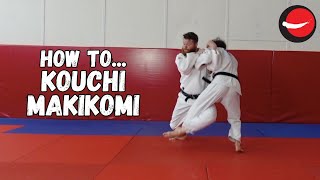
Introduction to Ko Uchi Makikomi
Dave Loesch demonstrates a combination technique transitioning from Ippon Seoi Nage to Ko Uchi Gari. This is described as a common and effective judo technique that addresses defensive counters during the initial throw attempt.
Lapel Grip Setup
The technique begins with a lapel grip on one side, either a cross lapel or standard lapel control. The instructor establishes this grip as the foundational position for executing the throwing sequence.
Ippon Seoi Nage Entry and Defense Recognition
The practitioner initiates an Ippon Seoi Nage throw, but if the opponent anticipates and blocks the technique, they will resist backward. Recognizing this defensive response is critical for transitioning to the follow-up technique.
Transition to Ko Uchi Gari Setup
When blocked during the Ippon Seoi Nage attempt, instead of continuing the circular motion, the practitioner moves only halfway into position while maintaining the pulling action. This partial entry maintains momentum while setting up the leg attack.
Ko Uchi Gari Execution
From the halfway position, the practitioner wraps their leg around the opponent's inside leg and drops backward onto their hip while pulling downward. This coordinated leg sweep combined with upper body pulling completes the technique.
Timing and Feint Application
The instructor emphasizes using head movement and feinting to draw the opponent's blocking response before committing to the leg attack. The transition occurs immediately after the opponent's defensive block, exploiting their weight distribution.
Detailed Breakdown with Slower Tempo
The technique is demonstrated at reduced speed, showing the blocking response and the subsequent transition from upper body control to the leg sweep execution. The instructor details the positioning of the head, hips, and wrapping leg throughout the movement.
How To Do Ko Uchi Makikomi (in 2023)
Key Takeaways
- •Introduction to Ko Uchi Makikomi
- •Lapel Grip Setup
- •Ippon Seoi Nage Entry and Defense Recognition
- •Transition to Ko Uchi Gari Setup
🥋This is a judo technique instructed by David Loshelder. Dave was a former #1 ranked Judo player in USA in his respective weight class in the 1990s and the author of three books. 🥋 #judobasics #judoismylife 🥋Here are the basic steps for performing Ko-uchi-makikomi🥋 Setup: Stand in a natural Judo stance, with your opponent facing you. You should have a firm grip on your opponent's sleeve and lapel (kumi kata). Your opponent will likely have a similar grip on you. Off-balancing Your Opponent: Before executing Ko-uchi-makikomi, it's crucial to off-balance your opponent to make them vulnerable to the throw. You can do this by pulling them forward or to the side slightly. Entry: As you off-balance your opponent, step forward with your lead leg (usually your left if you're right-handed, or right if you're left-handed) and position it to the outside of your opponent's lead leg. Your foot should make contact with your opponent's ankle or lower shin. Leg Action: Once your foot is in position, use a sweeping motion with your leg to sweep your opponent's leg out from under them. This is the "Ko-uchi" part of the technique, as it involves hooking your leg behind your opponent's leg. Body Movement: Simultaneously with your leg sweep, you will lower your body and wrap your arm around your opponent's waist, pulling them down and forward. Your body will move in the direction of the throw. Throw: As you lower your body and sweep your opponent's leg, continue the motion to roll them over your leg and onto the mat. The throw should be executed with control to ensure both you and your opponent land safely. Follow Through: After the throw, maintain control over your opponent, and transition into a pin or hold-down technique if possible to secure a win in a Judo match. Remember that Ko-uchi-makikomi requires precise timing, balance, and technique. It's essential to practice this technique under the supervision of a qualified Judo instructor to ensure that you execute it correctly and safely. Judo throws can be dangerous if not performed correctly, so safety should always be a top priority. Dave's books: ✔️ The MindCoach System: A Scientifically Proven 7-Step Process To Unlock Your Peak Potential (paperback, audio, Kindle versions) https://tinyurl.com/4avvacnh ✔️ Take Care Of #1 So You Don't Step In #2: https://tinyurl.com/3zytrmrw ✔️ Protect Yourself: Top 10 Lifesaving Self-Defense Techniques https://tinyurl.com/mtuzvbwt ✔️ Dadbod Leadership Mastery Course for Martial Art Instructors (online course) https://mindcoach-system.groovepages.... Judo is not only a martial art but also a popular competitive sport. Judo matches take place on a mat and involve throwing an opponent onto their back, pinning them for a designated time, or submitting them through joint locks or strangles. Matches are scored based on the control, force, and execution of techniques. Judo's worldwide popularity led to its inclusion in the Olympic Games, where it has been a competitive event since 1964. In summary, judo is a martial art that focuses on using an opponent's energy and techniques to gain advantage. It combines throwing, grappling, and ground-based techniques, emphasizing both physical and mental development. Whether pursued for self-defense, sport, or personal growth, judo offers a comprehensive approach to martial arts training.
Related Techniques
Frequently Asked Questions
What does this video teach about uchi makikomi?
This video covers introduction to ko uchi makikomi, lapel grip setup, ippon seoi nage entry and defense recognition. It provides detailed instruction from DadBod Judo .
How long does it take to learn uchi makikomi?
The basic mechanics can be understood in a single session, but developing reliable execution requires consistent drilling over weeks of practice. This 7-part breakdown helps structure your training by isolating each phase of the technique.
What are the key details for finishing uchi makikomi?
The instructor emphasizes using head movement and feinting to draw the opponent's blocking response before committing to the leg attack. The transition occurs immediately after the opponent's defensive block, exploiting their weight distribution.