Overview and Foundational Importance
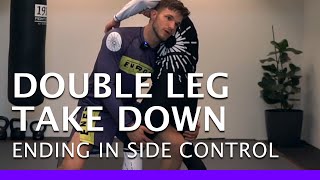
The double leg takedown is presented as one of the most fundamental techniques across wrestling, grappling, and fighting disciplines. The instructor prioritizes teaching it early because it builds accessible foundational concepts about distance management and level changes, even though other techniques may suit different body types but require longer learning curves.
Entry Mechanics and Penetration Step
The shooter executes a deep penetration step between the opponent's legs while maintaining chest-over-knee positioning with elbows disciplined to the sides. The lead leg's knee drives over the toe as the chest rises, followed by the trail leg posting to the side rather than straight ahead, with proper head position maintained at chest height.
Hand Positioning and Grip Options
The preferred grip is a monkey paw grip with hands locked behind the opponent, though gable grip and S grip are viable alternatives. If the opponent sprawls and the shooter cannot achieve a hand lock, proper skeletal structure—head up, hips in, straight back—allows completion through body positioning rather than grip strength.
Drive Mechanics and Hip Positioning
After posting with the trail leg, the shooter pushes off to achieve a position on both feet before driving, maximizing power generation. The head leads the movement while elbows pull inward during the drop, with hips positioned directly under the shoulders rather than extended behind.
Setup Against Standing Opponents
When the opponent is in an active stance, the shooter uses a blast double setup by reaching toward the face to provoke an upward hand response, then swooping underneath. The objective is to knock the opponent back onto their heels through shoulder pressure while executing three sequential level changes: down, in, and across.
Guillotine Defense During Finish
Shoulder shrugging throughout the entry prevents guillotine submissions. If caught in a guillotine, the shooter circles their hips to the opposite side of their head while continuing to drive, potentially finishing with a pin (bone lock) if the opponent maintains the position.
Depth and Back Angle Mechanics
The shooter penetrates deeply under the opponent's hands while maintaining a straight back position, visualizing passing under a low barrier while grazing the back upward. No hip hinging occurs; instead, the shooter pulls the opponent's legs inward during the drive while circling their legs to the opposite side of their head.
Relationship to Blast Double and Opponent Movement
The traditional double leg and blast double are taught sequentially because they commonly transition into one another depending on opponent reaction. If the opponent circles during a blast double attempt, it becomes a traditional double, and vice versa; training both techniques increases finishing success against defensive opponents.
Lift Finish Against Defensive Opponents
Against opponents with excellent balance who resist the drive, the shooter steps the lead leg around to the far leg and pops the hips while tilting shoulders, using head and arm coordination to drive the opponent horizontal. This lift technique flares the opponent's legs and removes both posts from the mat.
Beginner's Guide to the Double Leg
Key Takeaways
- •Overview and Foundational Importance
- •Entry Mechanics and Penetration Step
- •Hand Positioning and Grip Options
- •Drive Mechanics and Hip Positioning
🔥 Jiu Jitsu Practitioners, Ready to Finally Feel Confident on Your Feet? 🔥 FREE COURSE: The 2 takedowns you should focus on, regardless of age or skill level, when you’re not experiencing consistent success on your feet AND a unique way to drill so you can actually hit them live. 👉 Just tell us where to send it… https://www.wrestling.university/FREECOURSE
Related Techniques
Frequently Asked Questions
What does this video teach about high double leg?
This video covers overview and foundational importance, entry mechanics and penetration step, hand positioning and grip options. It provides detailed instruction from Wrestling University - Takedowns for Jiu Jitsu.
How long does it take to learn high double leg?
The basic mechanics can be understood in a single session, but developing reliable execution requires consistent drilling over weeks of practice. This 9-part breakdown helps structure your training by isolating each phase of the technique.
What are the key details for finishing high double leg?
The traditional double leg and blast double are taught sequentially because they commonly transition into one another depending on opponent reaction. If the opponent circles during a blast double attempt, it becomes a traditional double, and vice versa; training both techniques increases finishing success against defensive opponents.