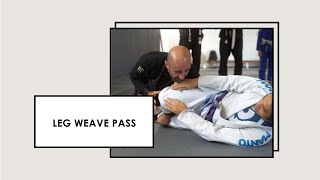
Entry and Setup Recognition
The over-under pass typically begins after establishing a belt or pants grip. When the defender attempts to pummel their arm in front of the passer's arm, this presents an ideal opportunity to transition into the over-under position. The passer circles while gripping the leg and keeping their head forward.
Head Positioning and Early Stage Mechanics
During the early stage of the over-under pass, the passer keeps their head back rather than crossing it over prematurely, which would expose the arm to submissions like a kimura or triangle. The objective is to first collect the knee line by bringing the passer's knee past the defender's knee before transitioning to the final head position.
Leg Control and Knee Line Management
The passer works underneath one leg while attaching to the hip, then steps over the top while gripping the pants cuff. Rather than relying on strength to punch the leg down, the passer uses their right leg to hook and stretch the defender's leg by walking backwards, pulling the knee away from the chest and allowing the passer's knee to pass without danger.
Head Transition and Arm Placement
Once the passer's knee crosses the knee line, they transition their head to the opposite side. The passing arm is placed deep to maximize control and prevent the defender from executing a triangle escape. The passer may fold the arm through or maintain the grip depending on positioning.
Hip Control and Back Exposure
The passer walks the defender sideways while lifting their hips off the mat, exposing the back and enabling the passer to establish back control. From here, the passer drives their head forward and turns the defender's hips, transitioning into a smash pass position to finish the guard pass.
Defending Against Leg Lifts and Hip Escapes
To prevent the defender from stepping out and hip escaping, the passer pulls against the thigh with their forearm while gripping the pants. As the passer turns the defender, placing the free hand out to the side prevents the defender from posting their foot to the mat and regaining leverage.
Responding to High Frame Defense
When the defender frames the passer's shoulder with their leg positioned high, they prevent the passer from dropping their shoulder into position. However, this forces the defender's arm away from blocking escape routes, allowing the passer to circle back underneath and attack alternative passes like the far-side lapel grip or single-under position.
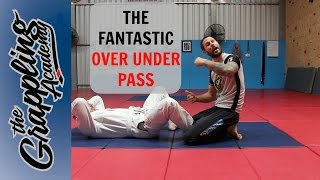
Over under pass (Lachlan Giles)
Key Takeaways
- •Entry and Setup Recognition
- •Head Positioning and Early Stage Mechanics
- •Leg Control and Knee Line Management
- •Head Transition and Arm Placement
Related Techniques
Frequently Asked Questions
What does this video teach about over-under pass?
This video covers entry and setup recognition, head positioning and early stage mechanics, leg control and knee line management. It provides detailed instruction from Absolute MMA St Kilda - Melbourne.
How long does it take to learn over-under pass?
The basic mechanics can be understood in a single session, but developing reliable execution requires consistent drilling over weeks of practice. This 7-part breakdown helps structure your training by isolating each phase of the technique.
What are the key details for finishing over-under pass?
To prevent the defender from stepping out and hip escaping, the passer pulls against the thigh with their forearm while gripping the pants. As the passer turns the defender, placing the free hand out to the side prevents the defender from posting their foot to the mat and regaining leverage.