A Fantastic PASS - The OVER UNDER Pass!
0
Over-Under Pass·The Grappling Academy
SALE SALE SALE OVER 50% OFF – BOX SET – ALL 4 COURSES 50% OFF CLICK HERE – https://bit.ly/2lAOHmp • The Blue Belt Sup…
Not yet documented
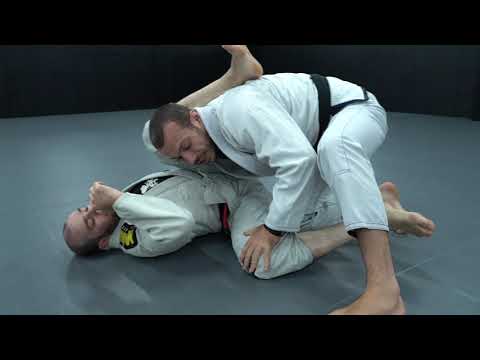
The Over-Under Pass is the signature pressure pass where the passer secures one arm OVER the opponent's far leg and one arm UNDER the near leg, clasps the hands, and drives heavy chest pressure to flatten and advance past the guard — the technique that defined Bernardo Faria's 5x World Championship career. [1] The over-under configuration creates a split in the guard player's leg defence, with each arm controlling one leg in a different direction, making it impossible for the guard player to use both legs defensively. [1],[2] This is the quintessential 'grinding' pass — slow, methodical, heavy, and nearly inescapable when properly applied. [2],[3]
Systematised by Bernardo Faria (5x IBJJF World Champion). [1]
Bernardo Faria won 5 IBJJF World Championships primarily with the over-under pass. [1]
No images yet for this technique.
Sign in to suggest an image.
SALE SALE SALE OVER 50% OFF – BOX SET – ALL 4 COURSES 50% OFF CLICK HERE – https://bit.ly/2lAOHmp • The Blue Belt Sup…
No instructional courses yet for this technique.
Sign in to suggest a course.
Risk of injury to the person this technique is applied to
The over-under pass maintains constant heavy contact, minimising the guard player's offensive options
Skill level needed to execute this technique reliably
Whether this technique is allowed under major competition rule sets
Pressure Passing (Bernardo Faria, BJJ Fanatics)
Description sources — [1] Bernardo Faria's competition career [2] Pressure passing methodology
Standard katakana transliteration of Western martial arts terminology (外来語) — used in Japanese MMA, boxing, and BJJ communities
Description sources — [1] Bernardo Faria's competition career [2] Pressure passing methodology
heavy chest pressure, grip endurance, patience
heavy bodyweight, wide shoulders, strong core
chest (pressure), forearms (clasp grip), core (hip switching)
Every move, in any martial art, shares a few universal traits. Mix and match below to pinpoint the right tool — or compare equivalents across styles.
The over-under pass uses one arm over and one arm under the opponent's legs — creating an asymmetric pressure that is very difficult to defend. Bernardo Faria's over-under system is considered the gold standard. (Faria, instructional series)
Keep your head in front and circle while gripping the leg. If the space is locked off and you can't go forward with your knee, step over the leg to start getting into the over-under position, as Lachlan Giles explains in his instructional.
Use your forearm to pull back against the thigh to stop your opponent from stepping their foot to the mat or escaping. By preventing their leg from touching the ground, you make it harder for them to turn and hip escape, according to Lachlan Giles.
Drop your shoulder and hip to get maximum distance and reach for the far lapel, as this prevents your arm from getting blocked. Once you have control there, you can walk up into side control, finishing from a smash pass position.
You want this arm pretty deep to avoid giving your opponent a triangle opportunity. Once positioned deeply, it becomes easier to move forward or pull through, and you can upgrade your grip when needed to complete the pass.
The Over-Under Pass is the signature pressure pass where the passer secures one arm OVER the opponent's far leg and one arm UNDER the near leg, clasps the hands, and drives heavy chest pressure to flatten and advance past the guard — the technique that defined Bernardo Faria's 5x World Championship career. The over-under configuration creates a split in the guard player's leg defence, with each arm controlling one leg in a different direction, making it impossible for the guard player to use both legs defensively.
The over-under pass was systematised by Bernardo Faria, whose 5 IBJJF World Championship titles were built on this single passing technique.
IBJJF: legal — Legal, guard pass scores 3 points; IJF: legal — Legal — transitioning past opponent's legs is part of newaza; ADCC: legal — Legal, guard pass scores 3 points; Unified MMA: legal — Legal; FIAS Sport Sambo: legal — Legal
Danger rating 2/10. Low — the over-under pass maintains constant heavy contact, minimising the guard player's offensive options
The standard setup chain: Break Guard → Thread Over-Under Grips → Clasp Hands → Drop Chest Pressure → Hip Switch to Advance → Consolidate Side Control.
Standard counters include: Frame and Shrimp — creating distance / Underhook from bottom — fighting for the underhook / Inversion — going upside down to recover guard / Leg pummel — fighting the legs free from the over-under.
Common variants: Standard over-under (clasped hands with chest pressure [1]); Over-under to mount (advancing directly to mount instead of side control); Over-under with head position variations (head inside vs outside changes the passing angle); Over-under to leg drag (transitioning to leg drag when the standard pass is defen…).
Bernardo Faria won 5 IBJJF World Championships primarily with the over-under pass.
Top errors to watch for: Hips too high — creates space for the guard player / Rushing — the over-under is slow by design / Not clasping hands — loose grips lose control / Head on the wrong side — head position determines the passing angle.
The Over-Under Pass is also known as Over Under, Over-Under Hook Pass.