Mindset for Mount Escape
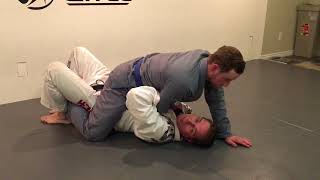
Being trapped in mount position indicates the opponent possesses superior skill or the bottom player made a tactical error. Successful escape requires multiple sequential techniques rather than relying on a single movement, necessitating constant active work from the bottom position.
Shrimp Motion and Initial Distance Creation
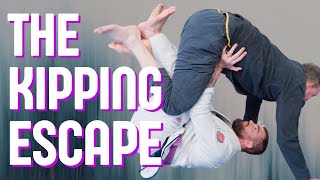
The escape begins by identifying the opponent's hip position, which occupies critical space. The first shrimp motion creates distance between the opponent's feet while moving the hips laterally, with elbow pressure providing additional space during the movement.
Knee Insertion and Sequential Shrimping
After the initial shrimp, the bottom player inserts their knee through the gap created between the opponent's legs. A second shrimp follows from the opposite side to free the second leg, requiring less explosive movement since initial separation is established.
Eggbeater Leg Configuration
Once a leg is freed but remains trapped under the opponent's weight, lateral hip movement alone is insufficient. The bottom player must move their hips backward at approximately 45 degrees to create enough space to tuck the heel toward their own buttocks before rotating the leg out.
Bridge and Pull Mechanics from Underneath
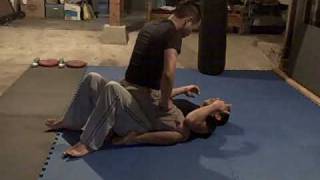
When the opponent is standing or sitting upright with weight concentrated through their knee, the bottom player uses a bridge and pull motion by gripping the opponent's belt or hips without extending the elbows. The head positioning dictates hip direction—turning the head right causes the hips to move left.
Frame Development and Elbow Placement
As the bridge-pull creates space, the bottom player establishes an inside-elbow frame while moving their hips laterally. The knee is driven through in front of the elbow position, followed by the 45-degree hip rotation and heel-tuck eggbeater motion.
Responding to Opponent Leg Positioning
The opponent may reactively kick out either leg during escape attempts, removing their weight from that side. If the opponent lifts a leg, the bottom player gains additional space for knee insertion and can transition into a butterfly guard sweep by establishing hooks.
Butterfly Guard Sweep Setup
When the bottom player achieves a 45-degree hip escape with one leg free, they can establish butterfly guard hooks—an under-hook on one side and a hook under the opponent's leg. This position allows for a splay sweep that can separate and unbalance the opponent.
Transitional Guard Options
If the opponent maintains their leg position, preventing butterfly sweep setup, the bottom player can maintain their knee position or pull into closed guard. The escape hierarchy prioritizes achieving half guard first, then closed guard, then butterfly guard, with sweeps representing the optimal outcome.
Progressive Escape Goals
Successful mount escape is measured by progressive improvements in position rather than achieving a single optimal result. Transitioning from mount to any guard position—half guard, closed guard, or butterfly guard—constitutes forward progress, with sweeps representing the pinnacle outcome.
Mount Escape | Shrimp Escape
Key Takeaways
- •Mindset for Mount Escape
- •Shrimp Motion and Initial Distance Creation
- •Knee Insertion and Sequential Shrimping
- •Eggbeater Leg Configuration
Kris Kim, Brazilian Jiu Jitsu Black Belt under Tony Passos. Head Instructor for Yongsan BJJ at Trent Warrior Fitness Center, U.S. Army Garrison Yongsan, Seoul, Korea. Kris is also the BJJ coach for Team Posse MMA, Body and Seoul Martial Arts and United Forces BJJ, Republic of Korea. https://www.facebook.com/groups/kriskimbjj/ Associations https://www.facebook.com/groups/YongsanGrappling/ https://www.facebook.com/groups/OsanBJJ/ https://www.facebook.com/groups/K6.BJJ/
Related Techniques
Frequently Asked Questions
What does this video teach about shrimp mount escape?
This video covers mindset for mount escape, shrimp motion and initial distance creation, knee insertion and sequential shrimping. It provides detailed instruction from BJJ Joe.
How long does it take to learn shrimp mount escape?
The basic mechanics can be understood in a single session, but developing reliable execution requires consistent drilling over weeks of practice. This 10-part breakdown helps structure your training by isolating each phase of the technique.
What are the key details for finishing shrimp mount escape?
If the opponent maintains their leg position, preventing butterfly sweep setup, the bottom player can maintain their knee position or pull into closed guard. The escape hierarchy prioritizes achieving half guard first, then closed guard, then butterfly guard, with sweeps representing the optimal outcome.