Trap & Roll Basics
0
Trap And Roll·Grapplers Elite
Learn important details of how to escape mount.
Translation: Trap and roll
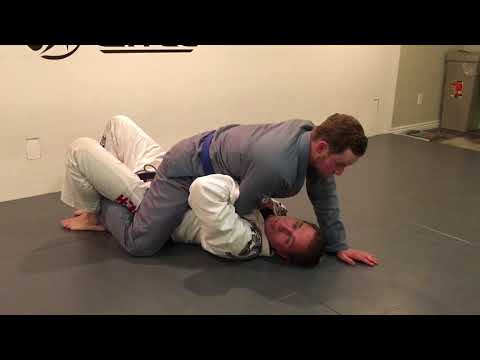
The Trap and Roll (also known as Upa or Bridge and Roll) is the most fundamental mount escape in BJJ — the bottom fighter traps one of the mounted opponent's arms and the same-side foot, then bridges explosively at a 45-degree angle to roll the opponent over, ending in their closed guard. [1] This is typically the first mount escape taught to every BJJ beginner because it is mechanically simple, requires no flexibility, and works against opponents of all sizes when executed with proper timing. [1],[2] The technique exploits a fundamental principle: if the opponent cannot post with their hand AND cannot base with their foot on one side, a powerful bridge in that direction will roll them over regardless of their weight. [2],[3] The trap and roll is most effective when the mounted opponent reaches for a submission or pushes off the chest, creating the arm-trapping opportunity. [3]
The trap and roll is performed at every level of BJJ and MMA competition. [1]
No images yet for this technique.
Sign in to suggest an image.
Learn important details of how to escape mount.
I decided to try clubs and this is a compilation of all the best doable ideas I had in one year of practice. Most of the…
No instructional courses yet for this technique.
Sign in to suggest a course.
Risk of injury to the person this technique is applied to
Very low — the trap and roll is one of the safest techniques in BJJ; the movements are controlled ground-based rolling with minimal impact
Skill level needed to execute this technique reliably
Whether this technique is allowed under major competition rule sets
Jiu-Jitsu University (Saulo Ribeiro, 2008)
Description sources — [1] Jiu-Jitsu University (Ribeiro, 2008) [2] Gracie self-defence curriculum [3] Biomechanical analysis
Description sources — [1] Jiu-Jitsu University (Ribeiro, 2008) [2] Gracie self-defence curriculum [3] Biomechanical analysis
explosive bridging power, arm-trapping grip
strong glutes (bridging), grip strength
glutes (bridge), core (rolling), forearms (arm trap), legs (foot hook)
Every move, in any martial art, shares a few universal traits. Mix and match below to pinpoint the right tool — or compare equivalents across styles.
The Half Upa is a variation of the trap and roll where the defender traps only the opponent's arm (without trapping the foot) and bridges to create enough disruption to transition to a shrimp or reguard rather than completing a full roll reversal. [1] The half upa is used when the opponent protects their feet from being trapped, making a complete roll impossible — the bridge still disrupts the opponent's balance and creates the space needed for a secondary escape. [1,2] The half upa demonstrates the principle of chaining escapes — using one technique to set up another. [2,3]
The Standard Upa (trap and roll) traps the opponent's wrist and hooks the same-side ankle with the foot, then bridges explosively by driving the hips toward the ceiling while turning to the trapped side, rolling the opponent over. [1] The bridge must be powerful and committed — the hips drive straight up, then the body turns toward the trapped side in one continuous motion. [1,2] The defender follows the roll to end up in the opponent's closed guard in top position, completing the reversal. [2,3]
According to Grapplers Elite, a common mistake is trying to simply roll the opponent over without proper setup. The key is that you can't roll them effectively if their weight is still on you and you don't have a post forward—you need to use your legs and hips to lift and knock their weight forward so they can't catch themselves.
Grapplers Elite emphasizes keeping your elbows down to your opponent's thighs while trapping the ankle, and make sure you're using the same side (e.g., left side hooking right side). After trapping the ankle, your knee should angle slightly outward as you set up the roll.
The defender should prevent you from getting up on their ribs by applying pressure and scooting down while keeping their elbows tight to your thighs. They should also be careful not to leave their hand posted too far out wide, as this exposes their wrist and fingers to being rolled during the trap.
Grapplers Elite shows that you can grab the sleeve or the gi, and if your opponent's hands aren't on you, you can hook with your thigh to knock them forward. You can also support and hook the ankle while maintaining a nice arch in your hips for different entry angles.
The Trap and Roll (also known as Upa or Bridge and Roll) is the most fundamental mount escape in BJJ — the bottom fighter traps one of the mounted opponent's arms and the same-side foot, then bridges explosively at a 45-degree angle to roll the opponent over, ending in their closed guard. This is typically the first mount escape taught to every BJJ beginner because it is mechanically simple, requires no flexibility, and works against opponents of all sizes when executed with proper timing.
The trap and roll (upa) is one of the original Gracie BJJ self-defence techniques, taught as the primary mount escape since the earliest Gracie academy curricula. Hélio Gracie developed it as a technique that works regardless of the size difference between fighters.
Unified MMA: legal — Legal defensive/transitional technique; IBJJF: legal — Legal; IJF: legal — Legal; ADCC: legal — Legal; UWW: legal — Legal, escape scores 1 point (freestyle), reversal scores 1 point; FIAS Sport Sambo: legal — Legal; NCAA Folkstyle: legal — Legal, escape scores 1 point, reversal scores 2 points
Danger rating 1/10. Very low — the trap and roll is one of the safest techniques in BJJ; the movements are controlled ground-based rolling with minimal impact
The standard setup chain: Wait for Opportunity → Trap the Arm → Trap the Foot → Bridge Explosively → Follow Through → Establish Top Position.
Standard counters include: When mounted: post the hand on the mat to prevent the roll / Base the foot wide to resist the bridge / Grapevine the legs to neutralise the bridge / Transition to high mount where the arm and foot are harder to trap.
Common variants: Standard trap and roll (trapping arm and foot, bridging to the trapped side [1]); Trap and roll with headlock arm (trapping the arm that is in a headlock position); Trap and roll against cross-collar attempt (trapping the arm reaching for the collar); Trap and roll to back take (if the opponent resists the roll, transitioning to take t…); Trap and roll with foot hook variations (different foot hooks (ankle, instep, heel) for trapping [2]).
The trap and roll is performed at every level of BJJ and MMA competition.
Top errors to watch for: Bridging straight up instead of at a 45-degree angle — straight bridges are ridden; angle the bridge toward the trapp… / Not trapping the foot — without the foot trap, the opponent bases and the roll fails / Loose arm trap — the arm must be hugged tight against the chest; a loose trap lets them post / Feet too far from hips — feet extended out = no bridging power.
The Trap And Roll is also known as Torappu Ando Rōru, Upa, Bridge and Roll, Trap and Roll Escape.