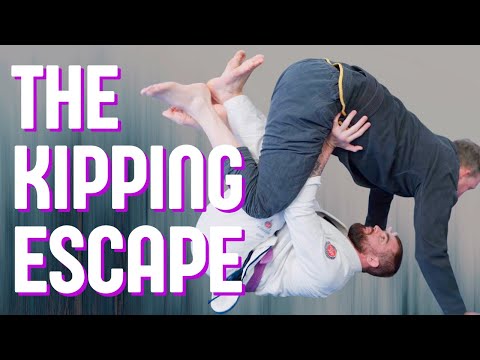
The Kipping Escape From Mount
0
Kipping Escape·The Grapple Lab
The Kipping Escape from mount is one of the most effective ways to escape a tightly controlled mount. We start this vide…
Translation: kipping escape
The Kipping Escape subfamily covers mount escape techniques that use a sharp hip thrust (kip) to explosively create space, disrupting the opponent's base and enabling escape or reversal. [1] The kipping motion drives the hips upward in a sharp, explosive buck that momentarily elevates the opponent, creating a window of opportunity to insert the knee for half guard or to execute a shrimp. [1],[2] The kipping escape is an explosive technique that relies on timing and power rather than gradual positional improvement. [2],[3]
The kipping escape uses a kipping/bridging motion to create explosive space from mount. [1]
Developed in BJJ as a dynamic mount escape. [1]
Used in BJJ competition. [1]
No images yet for this technique.
Sign in to suggest an image.
The Kipping Escape from mount is one of the most effective ways to escape a tightly controlled mount. We start this vide…
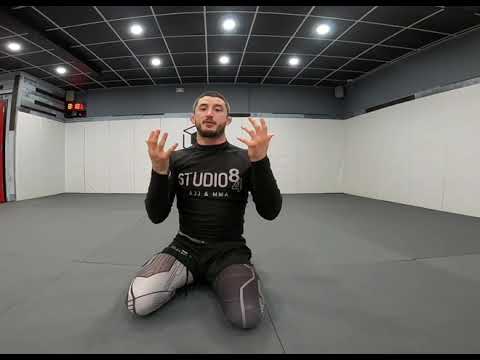
John Combs at studio 84 going over the Kipping escape
No instructional courses yet for this technique.
Sign in to suggest a course.
Risk of injury to the person this technique is applied to
Bottom escapes from mount/side control; bridge and hip escape mechanics (Ribeiro 2008)
Skill level needed to execute this technique reliably
Whether this technique is allowed under major competition rule sets
Jiu-Jitsu University (Saulo Ribeiro, 2008)
Alias sources — [1] Jiu-Jitsu University (Saulo Ribeiro, 2008) [2] Mastering Jujitsu (Renzo Gracie & John Danaher, 2003) [3] Gracie Jiu-Jitsu (Gracie & Gracie, 2001)
Effectiveness sources — [1] Jiu-Jitsu University (Ribeiro, 2008)
Standard katakana transliteration of Western martial arts terminology (外来語) — used in Japanese MMA, boxing, and BJJ communities
Alias sources — [1] Jiu-Jitsu University (Saulo Ribeiro, 2008) [2] Mastering Jujitsu (Renzo Gracie & John Danaher, 2003) [3] Gracie Jiu-Jitsu (Gracie & Gracie, 2001)
Effectiveness sources — [1] Jiu-Jitsu University (Ribeiro, 2008)
explosive hip bridge power, shrimping ability, timing
strong glutes and hip extensors for powerful bridges
glutes, hip extensors, core, quadriceps
Every move, in any martial art, shares a few universal traits. Mix and match below to pinpoint the right tool — or compare equivalents across styles.
According to Machettefreddy, you need to frame with your elbow connected to your body to keep your opponent's center of mass away from you. This frame prevents them from staying tight to your chest.
Yes—Machettefreddy recommends doing a solo drill first to understand the mechanics before applying the escape from mount position against a partner.
The Grapple Lab notes that after the initial hip bump, if you can't get your legs or frames inside, you can use a swing of the legs to adjust and continue the escape.
The Grapple Lab emphasizes that you need to straighten your legs and kick your partner back, which allows their weight to help pull you up as well.
The Kipping Escape subfamily covers mount escape techniques that use a sharp hip thrust (kip) to explosively create space, disrupting the opponent's base and enabling escape or reversal. The kipping motion drives the hips upward in a sharp, explosive buck that momentarily elevates the opponent, creating a window of opportunity to insert the knee for half guard or to execute a shrimp.
The kipping escape combines elements of the traditional bridge with hip thrusting mechanics, developed as an explosive mount escape option for situations where incremental escapes are being shut down. It is taught as an alternative explosive escape in BJJ training programmes.
Unified MMA: legal — Legal defensive/transitional technique; IBJJF: legal — Legal; IJF: legal — Legal; ADCC: legal — Legal; UWW: legal — Legal; FIAS Sport Sambo: legal — Legal
Danger rating 3/10. Moderate — bottom escapes from mount/side control; bridge and hip escape mechanics (Ribeiro 2008)
The standard setup chain: Create Space → Disrupt Control → Execute Escape → Recover Position.
Standard counters include: Maintain Pressure — keep consistent weight distribution to limit escape space / Anticipate Direction — read escape attempt direction and block early / Transition — flow to a new position when the current one is threatened.
Common variants: Bridge and roll (upa) (explosive bridge trapping arm and leg to reverse position); Elbow-knee escape (framing and shrimping to recover guard); Foot drag escape (dragging the opponent's foot with the heel to create spac…); Combination escape (bridging to force a reaction, then shrimping when the opp…).
Used in BJJ competition.
Top errors to watch for: Kipping too gently — the kip must be sharp and explosive; a slow hip bump doesn't create enough space / Not inserting the knee immediately after the kip — the space exists for less than a second; timing is everything / Kipping with straight legs — plant the feet and drive through the legs for maximum upward force / Using the kip as a standalone escape — the kip creates space; you must combine it with a guard recovery.
The Kipping Escape is also known as Kippingu Esukēpu, Hip Buck Escape, Kip Up Escape, Explosive Buck.