Introduction to Kipping Escape
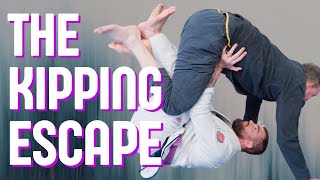
The kipping escape is a fundamental Brazilian Jiu-Jitsu technique for escaping mount position. The instructor demonstrates this escape through solo drilling before applying it against a live opponent.
Initial Position and Elbow Control
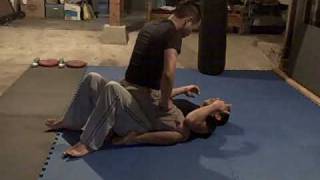
The defender begins by pulling both elbows tight to the body, creating a compact defensive frame. If the top player is postured up with hands off the mat, the defender executes a single-leg bridge by driving one leg up with flared toes to bring the opponent down.
Hip Contact and Directional Bridge
From the compressed position, the defender places both hands on the opponent's hips and performs a bridge in any direction to displace the opponent's center of mass away from their body. One elbow remains framed against the defender's torso to maintain distance and prevent the opponent from flattening them out.
Knee Placement and Setup
The defender positions their bottom knee to contact the opponent's tailbone just behind the sacrum, then plants both feet on the mat. This creates a stable foundation for the kipping motion that follows.
The Kipping Motion
The kipping action involves rapid, successive hip lifts performed in a rhythmic pattern, creating upward momentum through the feet, knees, and hips. This motion elevates the opponent's hips just enough to allow the defender to insert their legs underneath their body.
Leg Insertion and Position Transition
As the opponent's hips rise from the kipping motion, the defender slides their legs through, positioning one knee under the opponent's hips. Once the defender achieves this position, they can transition to attacking the opponent's leg position or work toward the saddle position.
Responding to Opponent Movement
If the opponent turns away from the defender, an outside heel attack becomes available. If the opponent turns toward the defender, the defender frames the shoulder to create distance and transitions their feet to attack by bringing the opponent's hips over their head into the saddle position.
Core Principles Summary
The escape's success depends on displacing the opponent's center of mass, positioning the bottom knee underneath their hips, and using rhythmic hip thrusts to create enough elevation for leg insertion. These coordinated movements allow the defender to progress from mount position toward leg attack opportunities.
Kipping escape
Key Takeaways
- •Introduction to Kipping Escape
- •Initial Position and Elbow Control
- •Hip Contact and Directional Bridge
- •Knee Placement and Setup
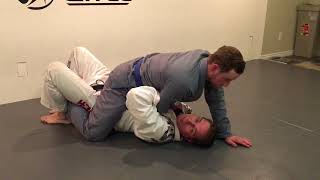
John Combs at studio 84 going over the Kipping escape
Related Techniques
Frequently Asked Questions
What does this video teach about kipping escape?
This video covers introduction to kipping escape, initial position and elbow control, hip contact and directional bridge. It provides detailed instruction from Machettefreddy.
How long does it take to learn kipping escape?
The basic mechanics can be understood in a single session, but developing reliable execution requires consistent drilling over weeks of practice. This 8-part breakdown helps structure your training by isolating each phase of the technique.
What are the key details for finishing kipping escape?
If the opponent turns away from the defender, an outside heel attack becomes available. If the opponent turns toward the defender, the defender frames the shoulder to create distance and transitions their feet to attack by bringing the opponent's hips over their head into the saddle position.