Introduction to Knee-Based Guard Passing
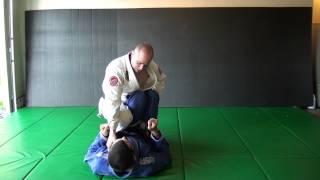
While passing from a standing position offers height advantage, knee-based passing provides a tighter, more controlled approach. The instructor presents three distinct passing methods applicable when the guard player is seated or supine. Each technique addresses different defensive scenarios and spacing conditions.
Side Body Lock Pass: Setup and Control
The side body lock begins with the passer approaching on their knees while maintaining a forward head position. The passer moves the opponent's knees inward by applying pressure through their hands—one on the inside, one on the outside of the opponent's knee. A controlled push shifts the opponent's weight back, making their leg lighter and easier to collapse across the body.
Side Body Lock Pass: Finishing Position
Once the opponent's knees are turned outward, the passer locks their hands and drives their chest against the outside leg while walking their knees forward to close the gap. From this compressed position, the passer clears the opponent's knee line, climbs the body upward, and secures a cross-side position at the top of the guard.
Over-Under Pass: Entry and Hip Pressure
The over-under pass is deployed when the opponent resists knee movement or when increased spacing exists. The passer uses their forearm to tip the opponent's knee downward, preventing triangle vulnerability, while simultaneously driving through with both hands. The passer then establishes shoulder pressure on the opponent's belly and drives their heel toward the opponent's buttock with their hip and knee.
Over-Under Pass: Knee Line Clearance and Finish
Critical to completing the over-under pass is clearing the opponent's knee line by stepping over it rather than passing with it in front of the passer's hip. From this position, the passer can establish half-guard control or immediately switch hips to free their leg. The passer then climbs to the opponent's hip and secures a cross-side position.
Double Scoop Pass: Setup and Engagement
When the opponent reclines defensively into a supine position, the double scoop pass becomes effective. The passer slides their hands underneath the opponent's body and immediately closes the distance by bringing their own hips to the opponent's hips rather than maintaining extended arm leverage. The passer cups one hand on the opponent's hip and cuts with the other hand.
Double Scoop Pass: Stacking and Climb
From the double scoop position, the passer drives their head upward while walking with their hips to place the opponent's weight onto their shoulders. As the opponent pushes away, the passer brings their head inside and secures an underhook. The passer then climbs their body through the space, clears the opponent's leg, and achieves a cross-side position.
Summary of Three Knee-Based Guard Passes
The three techniques presented—side body lock, over-under, and double scoop passes—provide comprehensive coverage for knee-based guard passing scenarios. Each method addresses specific defensive postures and spacing conditions encountered in no-gi Brazilian Jiu-Jitsu. These foundational passes serve as reliable options when the passer maintains a closed distance from their guard-playing opponent.
Passing Butterfly Guard: THREE (3) Guard Passes from the Knees (No Gi BJJ)
Key Takeaways
- •Introduction to Knee-Based Guard Passing
- •Side Body Lock Pass: Setup and Control
- •Side Body Lock Pass: Finishing Position
- •Over-Under Pass: Entry and Hip Pressure
Today we're going to look at three passes we can do on our knees when faced with the butterfly guard. Most of the time we prefer to pass from standing, with a height advantage, where we're standing up and our partners seated or supine. But there will be times when you’ll want (or need) to pass from a closer, tighter position. The first one is a variation on the bodylock, where we begin on our knees and tip our partner’s knees to the inside position to we can lock our hands. The second one takes place when we’re not able to move their knees and there’s too much space to cover with our arms. We’ll move our body to the inside, pinning a leg, and heading into the over-under pass. Using shoulder pressure we can keep our partner where they are until we pass the kneeline. The third is where there’s a little more space and they go supine - a good opportunity to attack with the double scoop pass. ⭐ ➡️ MY BIO (by John Danaher): https://bit.ly/3gUMU5R === Like this video? Please subscribe! === 🚨 INSTAGRAM: http://www.instagram.com/bzglick 🚨 FACEBOOK: http://www.facebook.com/bzglick 🥋 SHOYOROLL: https://shoyoroll.com/ 🙇🏻 BROOKLYN BJJ: https://www.brooklynbjj.com
Frequently Asked Questions
What does this video teach about butterfly pass?
This video covers introduction to knee-based guard passing, side body lock pass: setup and control, side body lock pass: finishing position. It provides detailed instruction from Brian Glick.
How long does it take to learn butterfly pass?
The basic mechanics can be understood in a single session, but developing reliable execution requires consistent drilling over weeks of practice. This 8-part breakdown helps structure your training by isolating each phase of the technique.
What are the key details for finishing butterfly pass?
From the double scoop position, the passer drives their head upward while walking with their hips to place the opponent's weight onto their shoulders. As the opponent pushes away, the passer brings their head inside and secures an underhook. The passer then climbs their body through the space, clears the opponent's leg, and achieves a cross-side position.
Related videos
Butterfly Guard Guide In Gi & Nogi | BJJ Fundamentals
Jordan Teaches Jiujitsu
What's The Best Way to Pass Butterfly Guard in BJJ ?
Chewjitsu
1/2 Butterfly Pass - Add this to your game!
Brian Glick
A BJJ Butterfly Guard Pass So Smooth But Surprisingly Simple
Chewjitsu
BJJ Vault - Butterfly Pass & Omoplata Techniques
BJJ Vault