A Slick Armlock and Useful Blueprint for BJJ Submission Setups
0
Mike Pyle Special·Chewjitsu
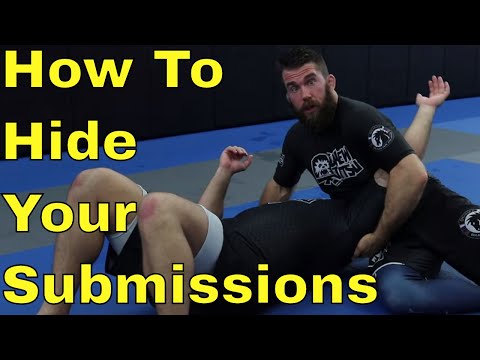
In this video I share an armbar submission I've been working on during my BJJ rolling sessions. It's a super slick arm l…
Translation: mike pyle special
The Mike Pyle Special is a guard pass named after UFC veteran Mike Pyle, combining wrestling-based pressure with a specific leg threading movement to bypass the open guard. [1]
Mike Pyle Special is a technique documented in BJ Penn's comprehensive MMA system. [1]
Proven in UFC-level competition by BJ Penn and training partners. [1]
Modern MMA methodology; BJ Penn / Greg Jackson lineage. [1]
Used in UFC and professional MMA competition
No images yet for this technique.
Sign in to suggest an image.
In this video I share an armbar submission I've been working on during my BJJ rolling sessions. It's a super slick arm l…
Mike “Quicksand” Pyle shows an effective Gi grip to pass the guard...
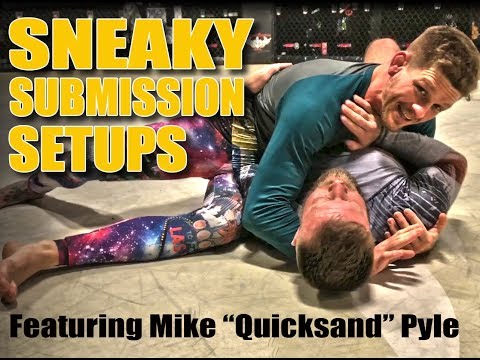
Here are a couple of slick and sneaky submission setups from side control as shown by my friend and UFC fighter, Mike Py…
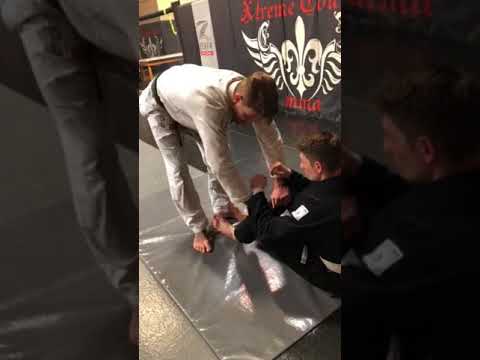
The Mike Pyle Special is a guard-passing technique executed from a standing position against butterfly guard, emphasizing ankle control to neutralize the opponent's offensive options. Code 4 Concepts (Chad Lyman) provides the foundational guard-pass methodology: rather than posting on the knees—which invites loop guard attacks and sweep vulnerability—the passer pins both feet at the ankles by gripping the pants low, maintains downward pressure, and steers the opponent to side control. This positioning prevents the opponent from threading an inside or outside loop guard. Lyman demonstrates live application showing how maintaining ankle pressure allows smooth directional control during the pass. Knight Jiu-Jitsu features Mike Pyle himself demonstrating submission setups from the resulting side-control position, where he steps his foot over the opponent's body to provoke a defensive push, then exploits that reaction to secure an armlock finish. Pyle also shows a variation where foot placement near the neck triggers similar defensive responses, enabling quick armlock transitions. While Lyman focuses on the guard-pass mechanics and positional control, Pyle emphasizes the submission opportunities created once side control is achieved, showing how the initial pass creates openings for high-percentage finishes. Both instructors agree on the efficiency of the technique's directional control and its effectiveness in preventing common guard-retention strategies.
Synthesized from 3 instructors
No instructional courses yet for this technique.
Sign in to suggest a course.
Risk of injury to the person this technique is applied to
Positional technique
Skill level needed to execute this technique reliably
Whether this technique is allowed under major competition rule sets
Mixed Martial Arts: The Book of Knowledge (Penn, Cordoza & Krauss, 2007)
description, historyOrigin: sourced from Penn, B
description, historyOrigin: sourced from Penn, B
MMA-specific body control and pressure
From north-south, get a hold of the opponent's arms and separate them to create control. Mike Pyle then steps his foot over the top, which typically triggers a defensive push that opens up the opportunity to sneak your head down, catch the grip, slide over, and finish the armlock.
If the opponent defends by bringing their hands together or pushing your leg away, you can transition to a paper cutter, wrist lock, triangle, or restart your armlock setup from the position. This makes it a versatile submission entry point from dominant positions.
As soon as you establish the passing position, pin the opponent's feet down by the ankles and grab the pants low. This prevents them from creating space or escaping before you complete the pass.
The Mike Pyle Special is a guard pass named after UFC veteran Mike Pyle, combining wrestling-based pressure with a specific leg threading movement to bypass the open guard.
Mike Pyle Special is a technique documented in BJ Penn's comprehensive MMA system.
IBJJF: legal — Legal, guard pass scores 3 points; IJF: legal — Legal — transitioning past opponent's legs is part of newaza; ADCC: legal — Legal, guard pass scores 3 points; Unified MMA: legal — Legal; FIAS Sport Sambo: legal — Legal
Danger rating 3/10. Positional technique
The standard setup chain: Engagement → Mike Pyle Special → Advance position.
Standard counters include: Guard retention / Frame and escape / Submission counter.
Common variants: Standard Mike Pyle Special; Modified Mike Pyle Special.
Used in UFC and professional MMA competition
Top errors to watch for: Losing base / Not maintaining control / Poor transitions.
The Mike Pyle Special is also known as Mike Pyle Special, Pyle Pass, Wrestling Guard Pass.