Introduction to Butterfly Pass Fundamentals
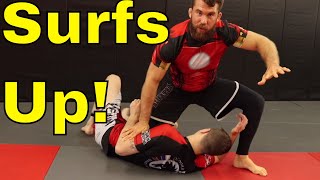
Brad Jackson demonstrates the butterfly pass, a fundamental guard passing technique used when the opponent has established hooks from their back position. This technique is particularly effective against opponents attempting hook sweeps, as it neutralizes their primary attacking angles through strategic hip and leg positioning.
Controlling the Opponent's Mobility
The first principle involves pinching the knees together while bringing the opponent's ankles close, then driving the hips forward into their body. This dual-control method prevents the opponent from sitting up or creating the necessary angles to execute a hook sweep, establishing immediate positional dominance.
Establishing Grips and Pressure
The practitioner secures the opponent's collar with one hand while gripping their leg with the other, maintaining knee pressure against the torso. These grips work synergistically to trap the opponent and prevent escape, setting up the transition to the passing sequence.
Knee Positioning and Hip Rotation
The instructor steps with the right foot, turning the knee into the opponent's rib cage to slot their leg. As downward pressure is applied to the stomach, the practitioner rotates around the opponent's hip joint while backstopping the rear leg, creating space for the final position.
Transitioning to Knee-on-Belly
From the rotated position, the practitioner switches into a knee-on-belly control, which allows multiple finishing options and prevents guard recovery. This transition concludes the butterfly pass sequence with the opponent pinned and controlled.
Omoplata Setup and Collar Control
Sean Roberts introduces the omoplata sequence, beginning with proper collar grip placement between the legs to shift pressure from the opponent's shoulder to their neck. This grip prevents the opponent from standing and shaking out, establishing the foundation for the sweeping mechanics.
Managing the Opponent's Jump-Over Defense
When the opponent jumps over the omoplata to escape, the practitioner releases the collar grip, hugs the leg, and executes a sweep by sitting up and rolling. This counter-response transforms a defensive jump-over into a positional advantage.
Defending Against Leg Crosses
After sweeping, the opponent may attempt to throw their leg over or cross their feet to trap the practitioner. The immediate response is pinning the leg down to prevent crossing, establishing control before advancing the pass.
Completing the Guard Pass Sequence
The practitioner drives their far leg over the opponent's body, grabs the far lapel, and hooks the foot inside to secure side control. The foot placement—tucked rather than extended—prevents the opponent from opening the leg and transitioning to a 50/50 guard.
Consolidating Side Control Pressure
The final position emphasizes heavy pressure applied through proper weight distribution in side control, with particular attention to maintaining the leg hook to prevent escape or guard recovery. This stable control position concludes the omoplata-to-side-control passing sequence.
BJJ Vault - Butterfly Pass & Omoplata Techniques
Key Takeaways
- •Introduction to Butterfly Pass Fundamentals
- •Controlling the Opponent's Mobility
- •Establishing Grips and Pressure
- •Knee Positioning and Hip Rotation
Brad Jackson show some very effective ways to counter the butterfly guard. Sean Roberts shows some omoplata techniques that will make you feel more comfortable using omoplatas.
Frequently Asked Questions
What does this video teach about butterfly pass?
This video covers introduction to butterfly pass fundamentals, controlling the opponent's mobility, establishing grips and pressure. It provides detailed instruction from BJJ Vault.
How long does it take to learn butterfly pass?
The basic mechanics can be understood in a single session, but developing reliable execution requires consistent drilling over weeks of practice. This 10-part breakdown helps structure your training by isolating each phase of the technique.
What are the key details for finishing butterfly pass?
The practitioner drives their far leg over the opponent's body, grabs the far lapel, and hooks the foot inside to secure side control. The foot placement—tucked rather than extended—prevents the opponent from opening the leg and transitioning to a 50/50 guard.
Related videos
Butterfly Guard Guide In Gi & Nogi | BJJ Fundamentals
Jordan Teaches Jiujitsu
What's The Best Way to Pass Butterfly Guard in BJJ ?
Chewjitsu
1/2 Butterfly Pass - Add this to your game!
Brian Glick
Passing Butterfly Guard: THREE (3) Guard Passes from the Knees (No Gi BJJ)
Brian Glick
A BJJ Butterfly Guard Pass So Smooth But Surprisingly Simple
Chewjitsu