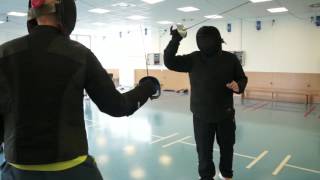
Introduction to Tierce Parry and Repost
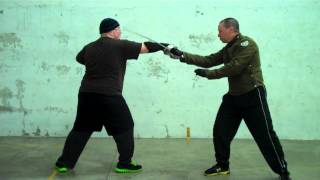
The tierce parry and repost form a fundamental defensive-offensive combination in sabre fencing. This technique involves deflecting an opponent's attack in tierce (the third parrying position) and immediately launching a counterattack. The instructor demonstrates both narrow and wide variations of this parry.
Hand Position and Arm Mechanics
The primary distinction between tierce parry variations lies in hand positioning and arm placement. The thumb should never align with the body's edge, as this compromises structural integrity. The wrist should remain flexible enough to rotate the hand outward while maintaining proper blade contact.
Narrow vs. Wide Parries: Strategic Advantages
Narrow parries maintain the arm close to the body, allowing rapid disengagement and swift transitions to alternate lines of attack. Wide parries create greater distance and space for expansive cutting movements but require longer recovery time. The choice between these variations depends on individual fencing style and tactical preference.
Blade Contact and Edge Alignment
Proper tierce parry technique requires contact using the blade's edge rather than the flat. The opponent's blade slides down the defender's edge and across the flat, creating a natural deflection. This edge-to-blade contact distributes impact forces more effectively than flat parries.
Tierce Parry Execution
The tierce parry begins by rotating the hand outward and lifting the tip toward the high line. The wrist executes a controlled twist to achieve proper blade alignment. This compact motion positions the defender to respond immediately to the opponent's attack.
Advanced Repost Techniques
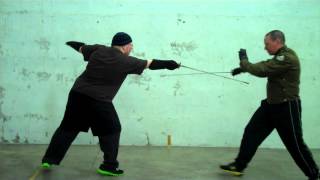
Beyond conventional lunges, fencers may employ aggressive three-step repost variations that compress distance and time. These techniques sacrifice range for speed, covering approximately half the distance in one-quarter the time. This approach proves effective when landing fast, committed attacks.
Biomechanics Over Muscular Force
Effective parrying relies on skeletal alignment and structural positioning rather than muscular tension or percussive force. Creating a straight line through the arm transfers impact directly through the skeleton, allowing the defender to withstand heavier attacks without exhaustion. Excessive muscular tension slows recovery and subsequent movements.
Parrying Against Heavier Weapons
When defending against heavier swords, the advantages of wider parries increase proportionally. Heavier weapons cannot change direction as quickly or execute effective feints, making wide parries both safer and more effective for displacing such attacks. However, skeletal alignment remains more important than parry width for actually stopping incoming blows.
06 reposting tierce thrust Thrusting sabre livesteam 20 05 2020
Key Takeaways
- •Introduction to Tierce Parry and Repost
- •Hand Position and Arm Mechanics
- •Narrow vs. Wide Parries: Strategic Advantages
- •Blade Contact and Edge Alignment
How to repost with thrusts from the parry of tierce. If you want more livestream lessons check out our facebook page at https://www.facebook.com/theoldswordclub And if you want to support us financially consider buying an online course at https://www.theoldswordclub.com/courses/
Frequently Asked Questions
What does this video teach about parry of tierce?
This video covers introduction to tierce parry and repost, hand position and arm mechanics, narrow vs. wide parries: strategic advantages. It provides detailed instruction from The Old Sword Club.
How long does it take to learn parry of tierce?
The basic mechanics can be understood in a single session, but developing reliable execution requires consistent drilling over weeks of practice. This 8-part breakdown helps structure your training by isolating each phase of the technique.
What are the key details for finishing parry of tierce?
Effective parrying relies on skeletal alignment and structural positioning rather than muscular tension or percussive force. Creating a straight line through the arm transfers impact directly through the skeleton, allowing the defender to withstand heavier attacks without exhaustion. Excessive muscular tension slows recovery and subsequent movements.