Parry of Quarte Overview
The parry of quarte is a fundamental defensive movement in classical fencing that protects the inside line of the body. This parry is executed by positioning the blade between the opponent's weapon and the fencer's torso, with the hand held at chest height. Mastering quarte is essential for developing a solid defensive foundation.
Hand Position and Grip
The sword hand must be held at approximately chest level with the palm facing slightly inward. The grip remains firm but relaxed, allowing for fluid movement and quick transitions to offensive actions. Proper hand positioning ensures maximum blade coverage and optimal leverage for deflecting incoming attacks.
Blade Alignment
The blade is angled diagonally across the body, creating a protective barrier on the inside line. The tip should point toward the opponent's shoulder or slightly upward to prevent ripostes over the top. Correct blade alignment maximizes defensive coverage while minimizing exposure.
Weight Distribution and Stance
The fencer maintains their standard en garde position with weight evenly distributed between both legs. The parrying motion originates from the wrist and forearm rather than gross body movement. This allows the fencer to execute the parry while preserving balance and readiness for immediate counterattack.
Execution and Timing
The parry is executed by meeting the opponent's blade with a controlled deflecting motion as it approaches. The movement should be economical and precise, using only the necessary force to redirect the threat. Proper timing requires anticipation and awareness of the opponent's attack pattern.
Transition to Riposte
Immediately after successfully parrying, the fencer is positioned advantageously to launch a riposte. A direct riposte on the same line requires minimal blade movement, creating a swift and efficient counterattack. The parry and riposte should flow together as a continuous, coordinated response.
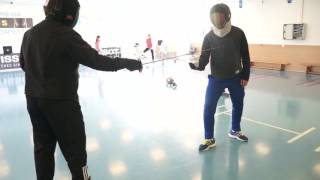
Parry 4 (quarte)
Key Takeaways
- •Parry of Quarte Overview
- •Hand Position and Grip
- •Blade Alignment
- •Weight Distribution and Stance
Fencing - how to do parry 4 (aka quarte)
Frequently Asked Questions
What does this video teach about parry of quarte?
This video covers parry of quarte overview, hand position and grip, blade alignment. It provides detailed instruction from WaltonSean.
How long does it take to learn parry of quarte?
The basic mechanics can be understood in a single session, but developing reliable execution requires consistent drilling over weeks of practice. This 6-part breakdown helps structure your training by isolating each phase of the technique.
What are the key details for finishing parry of quarte?
The parry is executed by meeting the opponent's blade with a controlled deflecting motion as it approaches. The movement should be economical and precise, using only the necessary force to redirect the threat. Proper timing requires anticipation and awareness of the opponent's attack pattern.
Related videos

Learn to Fence: Lesson 3 - Intermediate Footwork & Parry Quarte Riposte
Paul Beasley

Counter, parry quarte riposte keeping distance
Beth Speedy
Sabre parry quarte with step back
Beth Speedy
![How to Think About Parry 4 | Fencing Tutorial [Bladework] (Foil, Epee)](https://img.youtube.com/vi/hQ8Tfj_6lIo/mqdefault.jpg)
How to Think About Parry 4 | Fencing Tutorial [Bladework] (Foil, Epee)
S-Class

Bladework 2, part 1 Yielding parry
Alex Freeman