Introduction to Parry of Quarte
The parry of quarte is a fundamental defensive movement in foil and épée fencing. This technique protects the upper inside line of the body by positioning the blade to intercept incoming attacks. Understanding the mechanics and applications of quarte is essential for developing a solid defensive foundation.
Blade Positioning and Alignment
In quarte, the fencer's blade is positioned with the hand at waist level and the blade angled to cover the inside upper line. The guard remains perpendicular to the ground, creating a barrier between the fencer's torso and the opponent's weapon. Proper alignment ensures maximum coverage while maintaining balance and mobility.
Hand and Arm Mechanics
The parrying motion originates from controlled movement of the hand and forearm rather than large arm movements. The fencer maintains a relaxed shoulder while using finger and wrist flexibility to adjust blade angle as needed. This economical movement allows for quick transitions to counterattacks.
Footwork Integration
Defensive positioning in quarte must be coordinated with proper footwork and distance management. The fencer maintains en garde stance while executing the parry, allowing for immediate ripostes or retreats. Footwork stability ensures the parry remains effective even when the opponent presses the attack.
Practical Application and Timing
The parry of quarte is most effective against attacks targeting the inside line at high velocity. Fencers must develop timing to meet the incoming blade at the optimal moment for maximum control. Regular drills build the reflexive response necessary for consistent defensive success in competitive situations.
How to Think About Parry 4 | Fencing Tutorial [Bladework] (Foil, Epee)
Key Takeaways
- •Introduction to Parry of Quarte
- •Blade Positioning and Alignment
- •Hand and Arm Mechanics
- •Footwork Integration
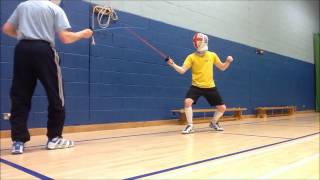
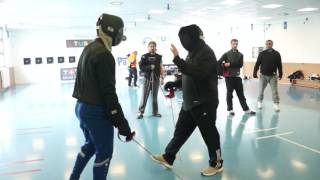
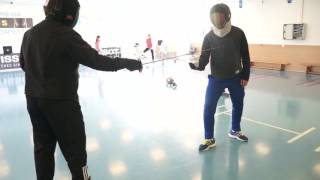
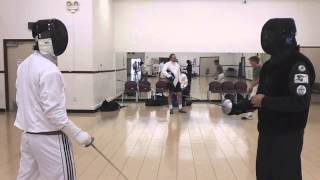
Hi All, Sorry for the huge delay in posting. We've been really busy working on a ton of projects, which we can't wait to share with you! In the meantime, please enjoy this Mr. Miagi-style video showing good parry 4 technique versus bad technique. With a good parry 4, we defend away from ourselves, deflecting the opponent's blade while leaving their target with our tip. With a bad parry 4, we actually help the opponent score by cradling their blade into our target! Please keep in mind, everyone has their own preferences with how they 'take the blade,' and there are definitely some situations that call for the backwards motion of the hand. In general, though, we recommend keeping one's hand in front of themselves, even when we parry or threaten the opponent's target. Please let us know your thoughts and feel free to send us videos of you trying out this exercise! [email protected] Take care, S-class Fencing ////////////////////// Patreon: https://www.patreon.com/SchenkelBros GoFundMe: gf.me/u/vu3sqb Radical 10% Discount Code: Enter "SCHENKEL10" at checkout Cyrus of Chaos: https://www.youtube.com/user/CyrusofC…
Frequently Asked Questions
What does this video teach about parry of quarte?
This video covers introduction to parry of quarte, blade positioning and alignment, hand and arm mechanics. It provides detailed instruction from S-Class.
How long does it take to learn parry of quarte?
The basic mechanics can be understood in a single session, but developing reliable execution requires consistent drilling over weeks of practice. This 5-part breakdown helps structure your training by isolating each phase of the technique.
What are the key details for finishing parry of quarte?
Defensive positioning in quarte must be coordinated with proper footwork and distance management. The fencer maintains en garde stance while executing the parry, allowing for immediate ripostes or retreats. Footwork stability ensures the parry remains effective even when the opponent presses the attack.