Introduction to Inside Defense
Inside defense is a fundamental technique for neutralizing straight punch attacks by intercepting the opponent's arm before full extension. This method allows the defender to control the aggressor's limb while simultaneously moving to a safer position. Mastering this technique provides both immediate protection and the foundation for effective counterattacks.
Stance and Positioning
The defender assumes a balanced, athletic stance with feet shoulder-width apart and knees slightly bent. Weight distribution should be neutral, allowing for quick lateral or forward movement. The hands are kept at mid-chest level with elbows close to the body for optimal defensive coverage.
Threat Recognition
Early detection of the incoming straight punch relies on observing the aggressor's shoulder rotation and hand acceleration. The defender maintains visual focus on the opponent's center mass while remaining aware of hand movement in peripheral vision. This awareness triggers the defensive response before the punch reaches its target.
The Inside Block Mechanics
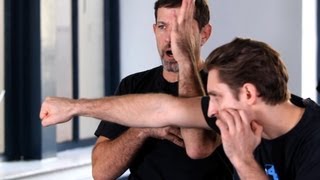
As the punch travels toward the centerline, the defender raises the forearm to intercept the incoming arm at approximately mid-distance. The blocking arm moves along the inside trajectory of the punch, using the forearm bone to make contact rather than the hand. This inside placement prevents the punch from reaching the torso while keeping the defender's hands in controlling position.
Simultaneous Footwork
Effective inside defense requires synchronized footwork to move off the line of attack while executing the block. The defender takes a small step laterally, typically 6-12 inches, creating additional distance and angle advantage. This combination of arm and foot movement compounds defensive effectiveness and limits the aggressor's follow-up options.
Controlling the Opponent's Arm
After making contact with the incoming punch, the defender maintains control by keeping the blocked arm pressed against their body. This positional dominance prevents the aggressor from retracting quickly or executing secondary attacks. The defender can use this controlled state to either escape or launch their own counterattack from a position of advantage.
Counterattack Opportunities
The inside defense creates multiple openings for immediate response while the aggressor's arm remains committed and controlled. Common counterattack options include straight punches, palm strikes, or elbow strikes directed at the opponent's exposed centerline. The defender's close proximity and superior positioning make these counters high-percentage techniques.
Practice Progression and Drills
Training begins with slow, cooperative repetitions to develop muscle memory and proper mechanics before advancing to full speed. Progressive drills should introduce variations in punch angles, speed, and timing to build adaptive defensive skills. Regular partner practice under controlled conditions ensures the technique becomes automatic under stress.
Self Defense - Inside Defense Against a Straight Punch
Key Takeaways
- •Introduction to Inside Defense
- •Stance and Positioning
- •Threat Recognition
- •The Inside Block Mechanics
How to do an inside defense against a straight punch in Krav Maga If you like the video, please consider making a bitcoin donation. bc1qwg8chpj44vfz2x0eeh7a6ynsnugy6kasgx40gp Disclaimer: These video's are made as a personal reference en should be viewed as such. Don't attempt to perform these techniques without the supervision of a certified professional. This channel nor it's creator is responsible for any consequences that may arise if you choose to ignore this notion. This video will go into detail on how to do an inside defense against a straight punch in Krav Maga. This variant of the inside defense is covered in most basic Krav Maga courses and is performed from a half passive stance. The body defense (stepping out of the line of the attack) is very important. There are variants of the straight punch in which the hand defense is performed with the palm. This method is good to start with for beginners. When using your entire forearm to deflect the attack there's a smaller chance you miss as opposed to using only the palm of your hand. Counterattacking is a very important aspect in eliminating the attacker. This video show's multiple counterattacks to the head but you can use your imagination on this part. Finally scanning your surroundings is crucial. If it's clear, run home. Check out www.kravmaga-animation.com for more and read the disclaimer before you attempt any of the techniques.
Related Techniques
Frequently Asked Questions
What does this video teach about inside defense?
This video covers introduction to inside defense, stance and positioning, threat recognition. It provides detailed instruction from Krav Maga Animation.
How long does it take to learn inside defense?
The basic mechanics can be understood in a single session, but developing reliable execution requires consistent drilling over weeks of practice. This 8-part breakdown helps structure your training by isolating each phase of the technique.
What are the key details for finishing inside defense?
The inside defense creates multiple openings for immediate response while the aggressor's arm remains committed and controlled. Common counterattack options include straight punches, palm strikes, or elbow strikes directed at the opponent's exposed centerline. The defender's close proximity and superior positioning make these counters high-percentage techniques.
Related videos

Inside Defense v. Straight Punch
John Whitman

Inside Defense against Punches, Part 2 | Krav Maga Defense
Howcast
Inside Defense against Punches, Part 1 | Krav Maga Defense
Howcast

How to Fight Inside Like a Pro in Boxing | Close Range Fighting Techniques
Tony Jeffries

Krav Maga - Inside Defense Low (Correct Arm Position)
Krav Maga Worldwide - Fort Lauderdale, Florida