Understanding Krav Maga 360 Defenses
0
Krav Maga 360 Defence·MKM Canada - Krav Maga
Probably the most famous Krav Maga technique: Defense 360 Mostly used against knife attacks (stabbing), but also against…
Translation: 360-degree defence — a defensive system covering attacks from all angles around the body using six forearm blocking positions
The Krav Maga 360 Defence is a comprehensive blocking system that uses six forearm blocking positions arranged around the body to intercept strikes coming from any angle — above, below, left, right, front-left, and front-right — providing 360 degrees of defensive coverage with a single unified defensive framework. [1] Developed by Imi Lichtenfeld (Sde-Or) as the foundational defensive technique of Krav Maga, the 360 Defence solves a fundamental self-defence problem: in a real attack, the defender rarely knows from which direction the strike will come, and cannot rely on identifying the specific attack type before responding. [1],[2] The system addresses this by dividing the space around the defender's body into six zones, each protected by a specific forearm position: Zone 1 (overhead, defending downward strikes), Zone 2 (upper-right/left, defending hooks and haymakers), Zone 3 (mid-right/left, defending body hooks and rib attacks), Zone 4 (lower-right/left, defending low punches and knee-level attacks), Zone 5 (inside high, defending straight punches to the face), and Zone 6 (inside low, defending body jabs). [1],[2] Each defensive position uses the hard outer edge of the forearm (ulna bone) as the blocking surface, and — critically — every block is accompanied by a simultaneous counter-strike with the opposite hand. [1] This principle of simultaneous defence and attack is the defining characteristic that separates Krav Maga from traditional blocking-then-countering martial arts: the defender does not block first and then hit — they block AND hit at the same moment, eliminating the gap between defence and offence. [1],[2] The 360 Defence is taught at the very first Krav Maga class to every beginner, and remains a core technique used by Israeli Defence Forces (IDF) soldiers, Shin Bet agents, and civilian Krav Maga practitioners worldwide. [1],[3]
The 360 Defence was developed by Imi Lichtenfeld (later Imi Sde-Or, 1910-1998), the founder of Krav Maga, during his development of a practical self-defence system first for the pre-state Israeli paramilitary (Haganah) in the 1940s and later for the Israel Defence Forces (IDF) after 1948. [1],[2] Lichtenfeld, a champion boxer and wrestler from Bratislava who had defended the Jewish quarter against fascist groups in the 1930s, recognised that traditional martial arts blocking systems were too complex for rapid military training and too specific for unpredictable street attacks. [2] He designed the 360 Defence as a universal response: six positions that cover every possible angle of attack, taught in hours rather than years. [1] The system was refined through decades of real-world use by IDF soldiers and Israeli security services, with modifications based on after-action reports from actual violent encounters. [3] Yaron Lichtenstein (9th Dan), one of the highest-ranked Krav Maga practitioners in the world, documented the complete 360 Defence system in The Book of Krav-Maga: The Bible (2007), bringing the technique to international civilian and military audiences. [1]
The 360 Defence's effectiveness stems from its simplicity and universality: six positions cover 100% of possible strike angles, and the simultaneous counter-strike principle ensures the defender is never passive. [1],[2] The system has been validated through decades of real-world use by Israeli military and security forces in actual combat and self-defence situations. [3] Its primary advantage over traditional martial arts blocking systems is speed of acquisition: soldiers with zero martial arts experience can learn functional 360 Defence in a single training session, while traditional blocking systems (such as karate's age uke, soto uke, uchi uke, gedan barai) take months or years to become reflexive. [1],[2] The limitation is that the 360 Defence is designed for self-defence against untrained attackers — against a skilled fighter using feints, combinations, and footwork, the system's reactive nature becomes less effective than proactive defensive strategies (slipping, rolling, footwork). [2]
Not applicable — Krav Maga is not a competitive sport. The 360 Defence has been validated through real-world use by Israeli military and security forces, police agencies worldwide, and civilian self-defence encounters. After-action reports from the IDF and Israeli Police have informed refinements to the system over decades.
No images yet for this technique.
Sign in to suggest an image.
Probably the most famous Krav Maga technique: Defense 360 Mostly used against knife attacks (stabbing), but also against…
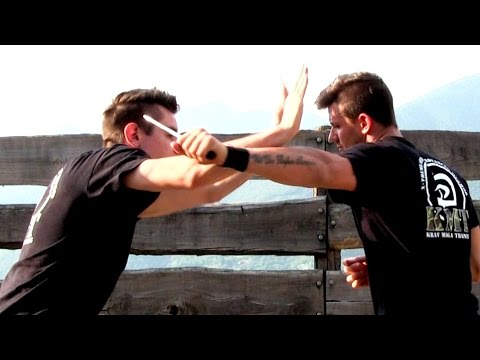
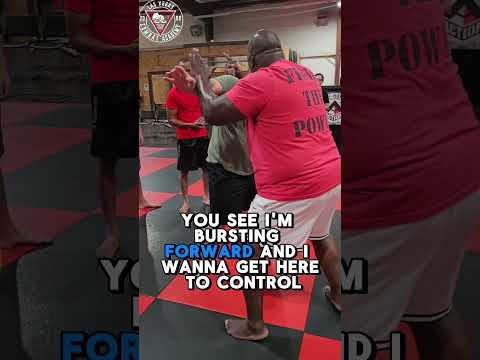
Krav Maga 360 Defenses, learn how to defend haymaker punches & knife attacks. Learn More @ http://clearsky.training/ Co…
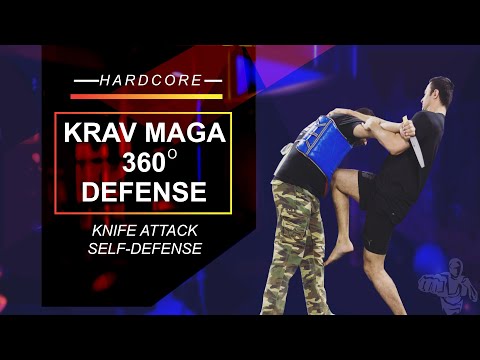
Krav maga Knife Defense. improve your skills with the 360 defense. Black belt conditioning. How to block stabs. Starring…
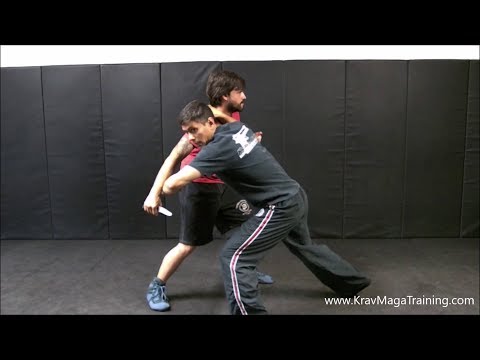
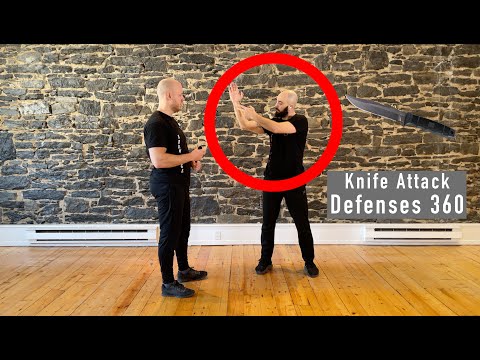
This video demonstrates Hand Defenses Against a Knife Attack using 360 Degree Outside Defenses. It will explain two way…
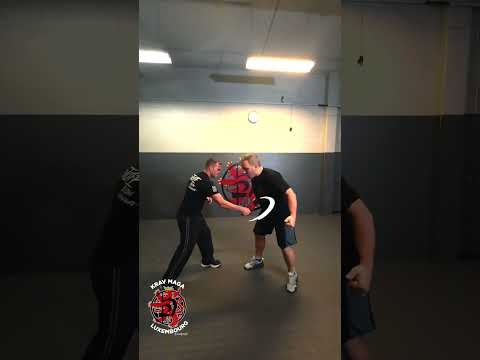
This video demonstrates Krav Maga 360 Defense technique & it's applications against attack at any angle from outside of …
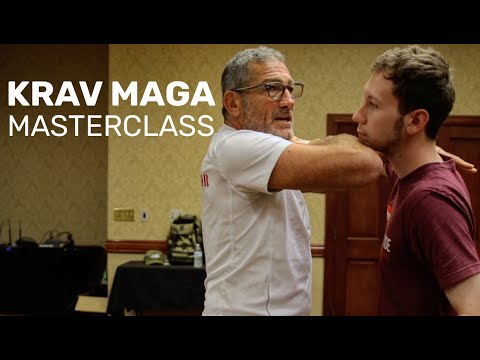
Moti Horenstein discusses self-defense concepts and conducts a master class demonstrating how to use Krav Maga for self-…
Defense against an attacker armed with knife. Your safety is our No. 1 priority! In any threatening situation, if th…
The Krav Maga 360 defence is a circular blocking technique designed to protect against knife attacks from any angle outside the body's perimeter. According to MKM Canada, the technique derives its name from the circular arm motion that traces a complete 360-degree arc around the defender's body. The arms maintain an angle of approximately 110 degrees (wider than 90 degrees) with palms facing upward to defend using the ulna bone, ensuring structural rigidity against strong curved attacks. MKM Canada emphasizes a slight forward lean toward the attacker rather than away, maintaining contact with an imaginary wall to keep hands and elbows aligned. Fitness Crazed and Krav Maga Worldwide – Fort Lauderdale both stress that the 360 defence progresses from basic blocking to simultaneous counter-attacks and weapon control. Krav Maga Worldwide uniquely introduces tactical timing, recommending that weapon disarms be attempted during the attacker's backswing when they are structurally weaker, rather than when the blade extends forward. This instructor advocates for sparring with resistance and live training to develop practical success rates, warning that poor timing increases injury risk. All instructors agree that the 360 defence is foundational, develops reflexive responses, and must integrate counter-striking to neutralize ongoing threats effectively.
Synthesized from 4 instructors
No instructional courses yet for this technique.
Sign in to suggest a course.
Risk of injury to the person this technique is applied to
This is a defensive technique — the block itself causes minimal injury to the attacker. However, the simultaneous counter-strike that accompanies every block can cause significant damage depending on the target (palm strike to nose, eye gouge, throat strike, etc.).
Skill level needed to execute this technique reliably
Whether this technique is allowed under major competition rule sets
The Book of Krav-Maga: The Bible (Lichtenstein, 2007)
description: [1] Lichtenstein 2007, [2] Lichtenfeld & Yanilov 2001
Standard katakana transliteration of Western martial arts terminology (外来語) — used in Japanese MMA, boxing, and BJJ communities
description: [1] Lichtenstein 2007, [2] Lichtenfeld & Yanilov 2001
effective self-defence for everyone, not just athletes
Requires no flexibility, no special conditioning, and no prior martial arts experience
deltoids and biceps for holding the blocking positions, but the skeletal structure (ulna bone) does the actual blocking work
Can be performed by elderly practitioners, children, and people with physical limitations — the six positions are adaptable
The 360 defense appears in 10 passages across 3 books. A Krav Maga blocking system that covers all angles of attack in a circular pattern — designed to be instinctive and trainable under stress. Covers attacks from any direction with a single defensive framework. (3 books; Complete Krav Maga, Levine & Whitman)
Place your arm at the right angle and keep it very stiff, using your ulna (forearm bone) to make contact with the attack. Your palm should face upward to defend with the ulna whether the defense is high or low.
You need to stay stable and maintain your defensive structure because if you lean away from the knife, you risk getting stabbed. Staying grounded also keeps you in position to counterattack if needed.
According to Krav Maga Worldwide instructors, you should control the weapon when the attacker's arm is farther back in the backswing, because they are structurally weaker in that position and less able to power through your defense.
You must simultaneously defend and counter during a 360 defense because if you don't neutralize or destabilize the attacker, they will keep attacking until they penetrate your defense or exploit a mistake.
The Krav Maga 360 Defence is a comprehensive blocking system that uses six forearm blocking positions arranged around the body to intercept strikes coming from any angle — above, below, left, right, front-left, and front-right — providing 360 degrees of defensive coverage with a single unified defensive framework. Developed by Imi Lichtenfeld (Sde-Or) as the foundational defensive technique of Krav Maga, the 360 Defence solves a fundamental self-defence problem: in a real attack, the defender rarely knows from which direction the strike will come, and cannot rely on identifying the specific attack type before responding.
The 360 Defence was developed by Imi Lichtenfeld (later Imi Sde-Or, 1910-1998), the founder of Krav Maga, during his development of a practical self-defence system first for the pre-state Israeli paramilitary (Haganah) in the 1940s and later for the Israel Defence Forces (IDF) after 1948. Lichtenfeld, a champion boxer and wrestler from Bratislava who had defended the Jewish quarter against fascist groups in the 1930s, recognised that traditional martial arts blocking systems were too complex for rapid military training and too specific for unpredictable street attacks.
Unified MMA: legal — Legal defensive technique; IBJJF: legal — Legal; IJF: legal — Legal defensive action; WBC/Boxing: legal — Legal; WKF: legal — Legal; WT: legal — Legal
Danger rating 2/10. This is a defensive technique — the block itself causes minimal injury to the attacker. However, the simultaneous counter-strike that accompanies every block can cause significant damage depending on the target (palm strike to nose, eye gouge, throat strike, etc.).
The standard setup chain: Threat detected (attacker swings/strikes from any angle) → Identify the zone (reflexive, not analytical) → Forearm moves to the correct blocking position → SIMULTANEOUSLY: opposite hand delivers counter-strike to attacker's face/throat → Continue counter-attacking with combinations (punches, knees, elbows, groin kicks) → Scan for additional threats → Disengage and escape OR control the attacker.
Standard counters include: Feinting — a skilled attacker can feint to one zone and strike to another, exploiting the 360 system's reactive nature / Combinations — rapid multi-strike combinations can overwhelm the zone-based response / Low kicks — the standard 360 system does not include leg defences (addressed by the Extended 360 variant) / Takedowns — the 360 system is designed for striking defence, not grappling attacks.
Common variants: Standard 360 (6-position) (the core system with six forearm blocking zones); Extended 360 (adding shoulder blocks and shin checks for additional cov…); Moving 360 (performing the blocks while advancing toward the attacker…); Retreating 360 (blocking while creating distance for escape); Weapon 360 (modified forearm angles to defend against knife slashes, …); Ground 360 (adapted blocking positions for defending strikes while on…).
Not applicable — Krav Maga is not a competitive sport. The 360 Defence has been validated through real-world use by Israeli military and security forces, police agencies worldwide, and civilian self-defence encounters.
Top errors to watch for: Blocking without counter-striking — the most fundamental error in 360 Defence training; every block MUST include a si… / Using the wrong forearm surface — blocking with the inner forearm (radial side) instead of the outer forearm (ulnar s… / Reaching too far from the body — the blocking forearm should stay close to the body (approximately 6-12 inches from t… / Freezing after the block — the 360 block is the opening move, not the entire response; failing to follow up with cont….
The Krav Maga 360 Defence is also known as Kuravu Maga 360 Difensu, 360 Defence, 360 Degree Outside Defence, Krav Maga Outside Block, Haganah 360.