Krav Maga - Inside Defense (Redirecting at the Correct Angle)
0
Inside Defense·Krav Maga Worldwide - Fort Lauderdale, Florida
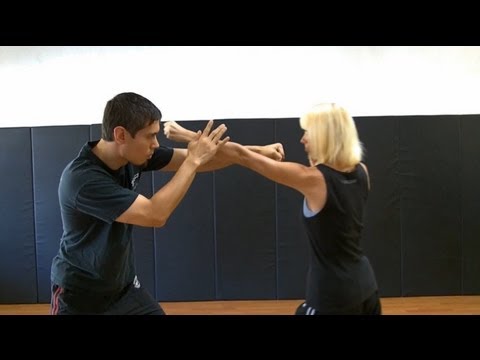
The most common beginner mistake when performing Inside Defenses against Straight Punches is not redirecting the punch a…
Translation: inside defense (Krav Maga palm deflection from outside to inside)
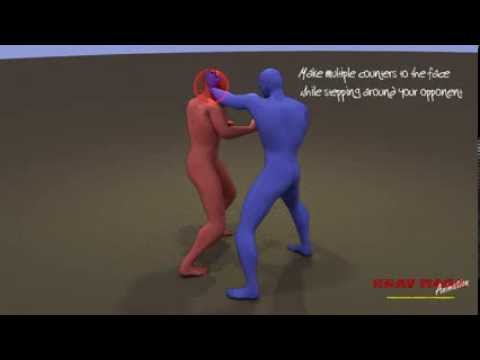
The Inside Defense is a Krav Maga technique where the defender deflects an incoming straight attack by sweeping the hand or forearm from outside to inside across the body's centerline. [1] The open palm or forearm contacts the attacking arm and redirects it inward (across the attacker's own body), simultaneously stepping to the outside. [1] This creates an angle where the defender is outside the attacker's power line and in position for immediate counter-attacks to the exposed flank. [1] It is the mirror complement to the outside defense and together they form the foundation of Krav Maga's straight-attack defense system. [1]
The Inside Defense is a core technique in Krav Maga's self-defense curriculum, developed for the Israeli Defense Forces. [1] Together with the outside defense, it provides coverage against straight-line attacks (punches, knife thrusts) from any angle. The open-palm method was chosen for its simplicity and effectiveness under stress. [1]
Krav Maga lineage: Imi Lichtenfeld (1910–1998) developed the system from street-fighting experience in Bratislava → adopted by the Israel Defense Forces (IDF) in 1948 → civilian Krav Maga spread worldwide through Lichtenfeld's students including Haim Gidon, Eyal Yanilov, and Darren Levine. [1]
Krav Maga is a self-defense system, not a competition sport. These techniques are tested in scenario-based training and military/law enforcement contexts rather than regulated competition. [1]
No images yet for this technique.
Sign in to suggest an image.
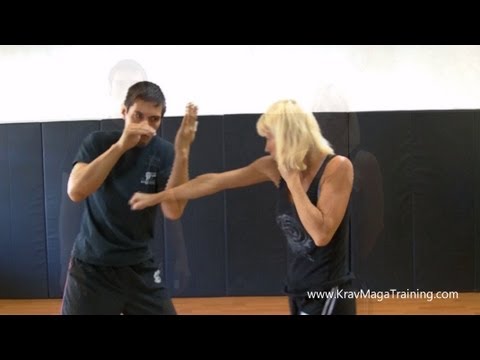
The most common beginner mistake when performing Inside Defenses against Straight Punches is not redirecting the punch a…
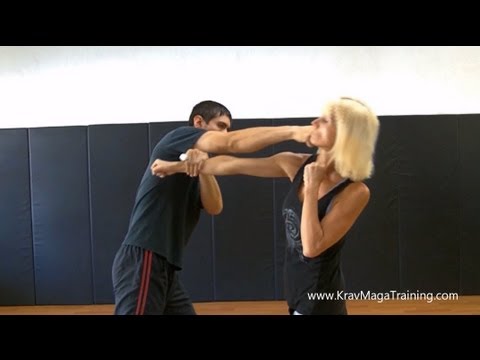
A common error for new Level 2 students is not slipping the punch properly when doing this defense and counterattack. T…
Once a new student learns this defense, they tend to make at least one of these mistakes. This video explains what thes…
Full Playlist: https://www.youtube.com/playlist?list=PLLALQuK1NDrhbNpRSUEAloceyNEMzcKzN - - Like these Krav Maga Tutoria…
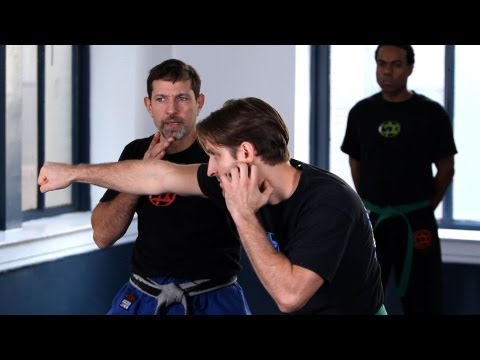
The most common mistake beginners make while performing the Inside Defense Low is dropping their hand two low (similar t…
How to do an inside defense against a straight punch in Krav Maga If you like the video, please consider making a bitco…
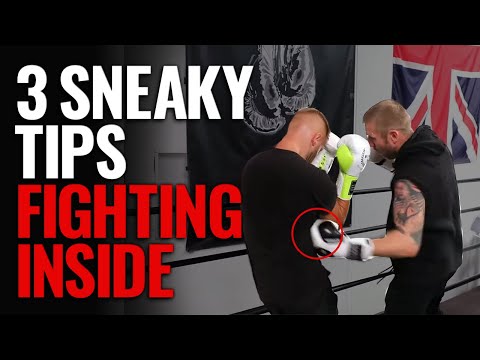
How to Fight Inside Like a Pro in Boxing | Close Range Fighting Techniques. In this video, Tony Jeffries shares 3 tips t…
Full Playlist: https://www.youtube.com/playlist?list=PLLALQuK1NDrhbNpRSUEAloceyNEMzcKzN - - Like these Krav Maga Tutoria…
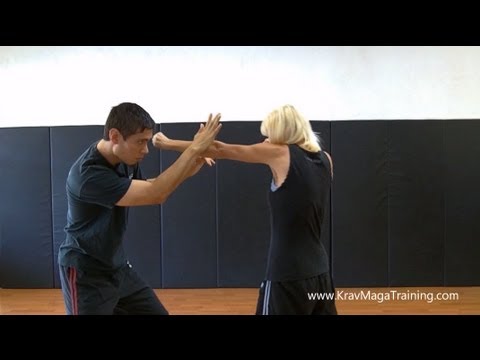
This is Krav Maga's basic method for defending a straight punch.
Inside defense is a redirecting technique fundamental to Krav Maga that deflects straight punches by meeting them at a 45-degree angle rather than directly to the side or straight-on. According to Krav Maga Worldwide instructors, the technique's primary advantage is timing-independence: the defender can intercept the punch early, mid-flight, or late without requiring precise timing, making it accessible to beginners. The hand slides down the attacker's forearm with a smooth ricochet motion—like a bullet deflecting off a surface—rather than a sharp slap or catch. For inside defense against right straights, the defender hooks over the top of the attacking arm and counters with a cross, while against left straights, the counter goes underneath. Proper head movement is critical: the defender should slip forward and to the side rather than backward, protecting the chin while maintaining reach and power for the counter punch. The defending arm should remain vertical with the palm facing inward, keeping the hand elevated to protect the face and maximizing the blocking surface across the entire torso. Body rotation and hip twist are essential for both the defense and counter; relying solely on arm movement leaves the defender exposed. Common mistakes include excessive hand-dropping (like a 360 block), under-hooking on right-punch defenses, leaning backward, and executing counters without full body rotation.
Synthesized from 4 instructors
No instructional courses yet for this technique.
Sign in to suggest a course.
Risk of injury to the person this technique is applied to
Minimal — defensive technique.
Skill level needed to execute this technique reliably
Whether this technique is allowed under major competition rule sets
Lichtenstein, Y. The Book of Krav Maga: The Bible.
[1] Lichtenstein, The Book of Krav Maga, Defense Techniques chapter
[1] Lichtenstein, The Book of Krav Maga, Defense Techniques chapter
hand-eye coordination, footwork to step offline
deltoids, forearms, legs (lateral movement)
According to Krav Maga Worldwide, you should redirect at an angle—not straight up or directly to the side. This angled approach is better for timing because you can defend the punch at any stage, whether you catch it early, in the middle, or late. You'll know you have the right angle when you feel your hand slide down the attacker's forearm rather than hearing a slapping or catching sound.
You should punch over the top of the arm. Trying to go underneath like you would against a left straight will cause your fist to collide with the attacker's arm and interfere with your counter strike, according to Krav Maga Worldwide.
Lower it just enough so you can see over the top to see your opponent's face—think of it like peek-a-boo. Dropping it way too low leaves your face open and turns it into a race to land the next punch. Focus on moving your elbow down rather than your hand to avoid excessive lowering, per Krav Maga Worldwide.
Keeping your arm vertical protects your face and allows you to defend your entire torso, not just a specific point. It also helps if you're slightly off-target, protecting the inside of your wrist (a vital area) rather than the outside, according to Krav Maga Worldwide.
Rotate your hips and pivot your back foot—don't just punch with your arm. Krav Maga Worldwide emphasizes that body rotation is essential both for reach and power; arm punching alone won't have enough force to be effective.
The Inside Defense is a Krav Maga technique where the defender deflects an incoming straight attack by sweeping the hand or forearm from outside to inside across the body's centerline. The open palm or forearm contacts the attacking arm and redirects it inward (across the attacker's own body), simultaneously stepping to the outside.
The Inside Defense is a core technique in Krav Maga's self-defense curriculum, developed for the Israeli Defense Forces. Together with the outside defense, it provides coverage against straight-line attacks (punches, knife thrusts) from any angle.
Krav Maga competitions: Legal: legal — fundamental defense; Unified MMA: Legal {src:Unified Rules of MMA, August 2025|/sources/Unified: legal — MMA-Rules-August-2025.pdf}
Danger rating 1/10. Minimal — defensive technique.
The standard setup chain: Inside defense a jab → step to outside angle → counter-cross to the jaw → Inside defense a knife thrust → control the weapon hand → knee to body → disarm → Inside defense → clinch → knee strikes.
Standard counters include: N/A — this IS a defensive technique..
Common variants: Inside defense against jab (quick deflection of a fast straight punch); Inside defense against knife thrust (palm redirects the blade across attacker's body); Inside defense with simultaneous counter (deflecting while striking with the other hand); Inside defense against front kick (palm deflects the incoming kick).
Krav Maga is a self-defense system, not a competition sport. These techniques are tested in scenario-based training and military/law enforcement contexts rather than regulated competition.
Top errors to watch for: Stepping inward instead of outward — puts you in the path of the other hand / Using a fist instead of open palm — reduces deflection surface and feel / Not redirecting far enough — the attacker can still reach you / Forgetting the counter-attack — the defense must flow into offense.
The Inside Defense is also known as Insaido Difensu, Inside Block, Inside Deflection, Krav Maga Inside Defense, Inward Defense.