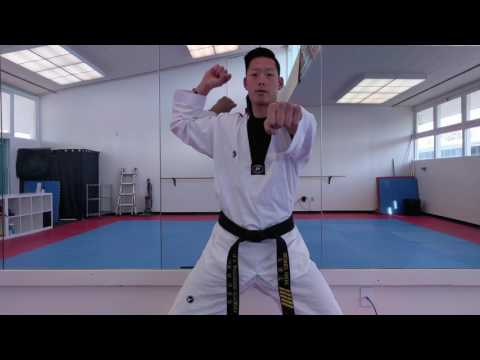
Inside block martial arts for beginners part 1
0
Inside Defence Against Straight Punch·Fitness Karate Academy
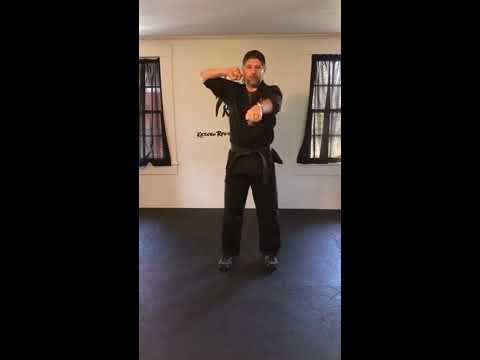
You will learn Martial arts techniques inside block for beginners, inside block step by step on natural pose, part 1 wi…
Translation: Inside defence — the deflecting hand works from the inside line (between the attacker's arm and the defender's centreline), redirecting the straight punch outward past the face
The Inside Defence Against Straight Punch is a core Krav Maga defensive technique where the defender uses the palm of the hand to deflect an incoming straight punch from the inside line — the hand moves from the defender's centreline outward, contacting the inside of the attacker's forearm or wrist and redirecting the punch past the face. [1] The critical principle that separates the Inside Defence from traditional martial arts blocking is SIMULTANEITY: the deflecting hand redirects the punch while the opposite hand delivers a counter-strike to the attacker's face at the same instant — the defender does not block first and then counter, but performs both actions in a single moment. [1],[2] This simultaneous defence-and-attack principle is the defining characteristic of Krav Maga and reflects its development as a military combatives system where the first priority is immediate counter-attack rather than sustained defence. [1],[2] The Inside Defence is the first technique taught in Krav Maga for defending against straight punches (the most common street attack) and is practised at every training session from white belt through expert levels. [1] Imi Lichtenfeld designed the technique to be as simple as possible: the deflecting hand performs a natural sweeping motion outward (similar to brushing a fly off your face), requiring no special skill or training to execute at a basic level. [1],[2] At advanced levels, the Inside Defence is refined to include precise body movement (stepping offline at 15-30°), weight transfer into the counter-strike, and immediate follow-up combinations. [1] Yaron Lichtenstein (9th Dan) documented the technique in The Book of Krav-Maga: The Bible as the foundational defence against the most common unarmed attack. [1]
The Inside Defence was developed by Imi Lichtenfeld (1910-1998) as part of the foundational Krav Maga curriculum, first for the pre-state Israeli paramilitary (Haganah) and later for the Israel Defence Forces (IDF) after Israeli independence in 1948. [1],[2] Lichtenfeld, who had practical experience defending against anti-Semitic attacks in 1930s Bratislava, designed the Inside Defence to be the simplest possible response to the most common attack (a straight punch to the face). [2] The simultaneous defence-and-attack principle was a deliberate departure from traditional martial arts (where students typically learn to block first, then counter in a separate movement) — Lichtenfeld recognised that in real combat, a passive defender who only blocks will eventually be overwhelmed, while a defender who attacks simultaneously disrupts the attacker's initiative. [1],[2] Yaron Lichtenstein (9th Dan), one of the highest-ranked Krav Maga practitioners in the world, documented the technique in The Book of Krav-Maga: The Bible (2007), standardising its instruction for international audiences. [1]
The Inside Defence is effective because it addresses the most common real-world attack (a straight punch or push to the face/chest) with the simplest possible response (a natural sweeping motion with simultaneous counter-strike). [1],[2] The technique has been validated through decades of use by Israeli military and security forces in actual combat and self-defence situations. [2] Its primary advantage over traditional blocking systems is the simultaneous counter-attack: instead of a block-then-counter sequence (which gives the attacker time to recover between the block and the counter), the Inside Defence delivers the counter at the same moment as the deflection, catching the attacker during their maximum commitment. [1] The technique's simplicity means it can be performed under extreme adrenal stress — the sweeping palm motion does not require fine motor control (which degrades under stress), only gross motor movement. [1],[2]
Not applicable — Krav Maga is not a competitive sport. The Inside Defence has been validated through real-world use by Israeli military, security forces, and law enforcement agencies. After-action reports from actual violent encounters have informed refinements to the technique over decades.
No images yet for this technique.
Sign in to suggest an image.
You will learn Martial arts techniques inside block for beginners, inside block step by step on natural pose, part 1 wi…
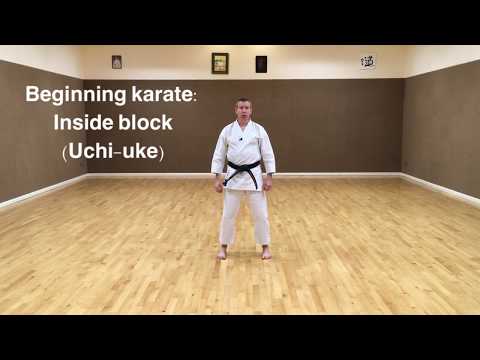
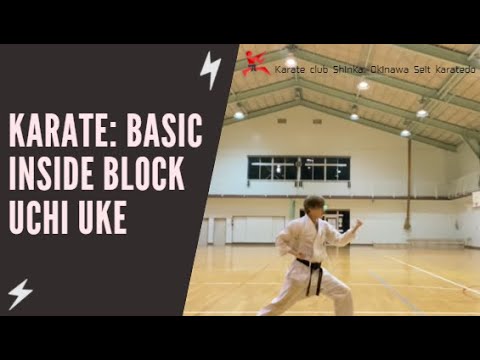
For new students to karate: How to learn to do a basic inside block (uchi-uke).
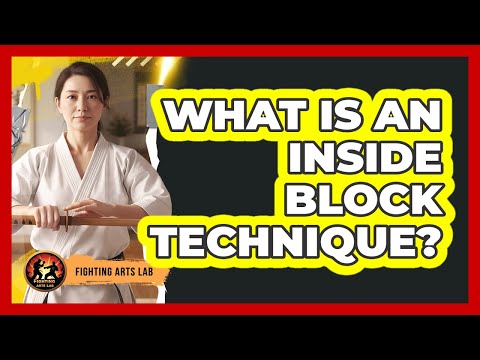
Ever wondered about the precise mechanics of an 'inside block' in martial arts? This video from Fighting Arts Lab breaks…
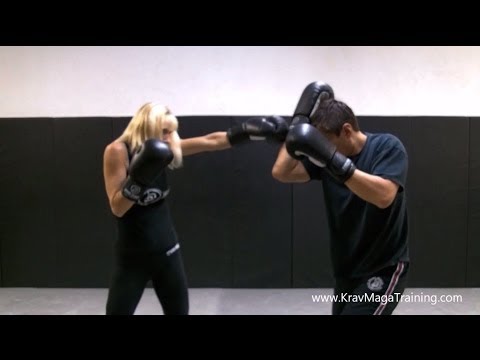
A common complaint from Krav Maga students when they first start sparring is they have trouble making their inside defen…
In this video we cover how to do the fifth and final block in basic karate, the inside block.
Basic Karate Inside Block: So today let`s learn one of the basic karate block technique called "Uchi-Uke", which means …
How to perform the inside block
The inside defence against straight punch, known in karate as uchi uke (chudan ude uchi uke), is a fundamental defensive technique taught across multiple martial arts disciplines. Fitness Karate Academy and KRMAmartialarts emphasize the traditional karate execution: the defending arm sweeps from the inside outward across the body, with the forearm meeting the incoming strike at eye level, creating a protective frame for the face. The movement travels in a straight line rather than a circular arc, with proper hand positioning ensuring the blocking arm ends in line with the opposite shoulder while maintaining a firm wrist. Krav Maga Worldwide—Fort Lauderdale introduces a practical sparring perspective, noting that while inside defences are theoretically superior due to better counter-striking position, they become unreliable when an opponent is too close, moving quickly, or when beginners struggle to read which hand is attacking. In such scenarios, Krav Maga instructors recommend switching to covering defences—tucking the chin, placing the palm against the forehead, rotating the body, and using the arm as a shield—which function effectively even when executed with the wrong arm. Fighting Arts Lab frames the inside block as a redirection principle using the opponent's momentum rather than stopping force, emphasizing efficiency and protection of the body's centre line. All instructors agree on the importance of wrist firmness, proper stance, and decisive execution.
Synthesized from 4 instructors
No instructional courses yet for this technique.
Sign in to suggest a course.
Risk of injury to the person this technique is applied to
The Inside Defence itself causes no injury — it is a deflection. However, the simultaneous counter-strike (palm strike to the nose, punch to the jaw, eye strike) can cause significant injury depending on the target and force. The combined defence-and-counter is designed to end the confrontation immediately.
Skill level needed to execute this technique reliably
Whether this technique is allowed under major competition rule sets
The Book of Krav-Maga: The Bible (Lichtenstein, 2007)
description: [1] Lichtenstein 2007, [2] Lichtenfeld & Yanilov 2001
Standard katakana transliteration of Western martial arts terminology (外来語) — used in Japanese MMA, boxing, and BJJ communities
description: [1] Lichtenstein 2007, [2] Lichtenfeld & Yanilov 2001
Designed to be accessible to EVERYONE — no special physical attributes required
The palm deflection uses a natural sweeping motion that requires no training to perform at a basic level
The simultaneous counter-strike is a gross motor movement (straight palm strike or punch) that functions under adrenal stress
Can be performed by elderly practitioners, children, and people with physical limitations
No flexibility, strength, or conditioning requirements
Inside defense redirects the straight punch by deflecting from inside (toward the attacker's centerline) — the defender's hand pushes the punch offline while stepping to the outside angle. A core Krav Maga technique trained from the first lesson. (Complete Krav Maga; Lichtenfeld system)
According to Krav Maga Worldwide, maintaining greater distance forces your opponent to take a big step forward, making the punch easier to see coming. Inside defenses also provide better counter-striking ability, but only work effectively at range; if your opponent gets too close, you won't have time to react.
Krav Maga Worldwide instructors emphasize that beginners often hold their hands too far away from their head, causing the punch to bounce back into their own face, or position them too low to protect against the strike. Your palm and arm must be glued close to your head or forehead to create an effective shield.
With covering defenses, you don't necessarily need to read which hand is attacking—even if you use the wrong arm, the defense will often still work because the cover creates a protective shield that can deflect punches regardless of which side they come from.
According to Seamus O'Dowd, the inside block must always come around to the front—never come straight in from the side. The pulling hand comes from the hip, and the blocking arm circles around while your weight stays forward, not pulled back.
The Inside Defence Against Straight Punch is a core Krav Maga defensive technique where the defender uses the palm of the hand to deflect an incoming straight punch from the inside line — the hand moves from the defender's centreline outward, contacting the inside of the attacker's forearm or wrist and redirecting the punch past the face. The critical principle that separates the Inside Defence from traditional martial arts blocking is SIMULTANEITY: the deflecting hand redirects the punch while the opposite hand delivers a counter-strike to the attacker's face at the same instant — the defender does not block first and then counter, but performs both actions in a single moment.
The Inside Defence was developed by Imi Lichtenfeld (1910-1998) as part of the foundational Krav Maga curriculum, first for the pre-state Israeli paramilitary (Haganah) and later for the Israel Defence Forces (IDF) after Israeli independence in 1948. Lichtenfeld, who had practical experience defending against anti-Semitic attacks in 1930s Bratislava, designed the Inside Defence to be the simplest possible response to the most common attack (a straight punch to the face).
Unified MMA: legal — Legal defensive technique; IBJJF: legal — Legal; IJF: legal — Legal defensive action; WBC/Boxing: legal — Legal; WKF: legal — Legal; WT: legal — Legal
Danger rating 2/10. The Inside Defence itself causes no injury — it is a deflection. However, the simultaneous counter-strike (palm strike to the nose, punch to the jaw, eye strike) can cause significant injury depending on the target and force. The combined defence-and-counter is designed to end the confrontation immediately.
The standard setup chain: Threat detected (attacker cocks or throws a straight punch) → Palm of the defending hand sweeps outward from centreline, contacting the inside of the punching arm → Punch is redirected past the face (deflection, not block) → SIMULTANEOUSLY: opposite hand delivers counter-strike to attacker's face (palm strike, punch, or eye strike) → Step offline at 15-30° for additional safety → Continue counter-attacking with combinations (punches, knees, elbows, groin kicks) → Scan for additional threats → Disengage and escape OR control the attacker.
Standard counters include: Feint then attack — feinting the straight punch to draw the Inside Defence, then attacking with the other hand to the… / Combination attacks — following the first punch immediately with a second from the opposite hand, faster than the def… / Low attack — attacking below the Inside Defence's coverage area (body, legs) / Grab after the deflection — if the deflection is slow, the attacker can grab the deflecting arm.
Common variants: Standard Inside Defence (palm deflection outward with simultaneous straight counter); Inside Defence with palm strike (the counter-strike is a palm heel to the nose or chin); Inside Defence with eye strike (the counter targets the eyes (extreme self-defence situat…); Inside Defence with simultaneous knee (deflecting the punch while delivering a simultaneous knee…); Inside Defence stepping offline (adding a 15-30° step to take the body completely off the …); Inside Defence from seated (adapted for defending while seated (in a car, at a desk, …).
Not applicable — Krav Maga is not a competitive sport. The Inside Defence has been validated through real-world use by Israeli military, security forces, and law enforcement agencies.
Top errors to watch for: Deflecting without counter-striking — this is the cardinal error in Krav Maga defence; a block without a counter give… / Deflecting too early — sweeping the hand out before the punch has committed allows the attacker to redirect or feint;… / Deflecting too far — sweeping the hand far to the outside opens the centreline for the attacker's other hand; the def… / Using the forearm instead of the palm — the forearm provides a narrow contact surface that requires precise timing; t….
The Inside Defence Against Straight Punch is also known as Insaido Difensu, Inside Block, Inside Deflection, Inside Palm Defence, Palm Redirect.