Boxing Tutorial to defend Jabs, Crosses, Hooks, Uppercuts!
0
Defence Against Uppercut·Regal Boxing
Master the Art of Boxing Defense! 🥊 Learn to Defend Every Punch - Jab, Cross, Hook, Uppercuts! From parries to footwork…
Translation: Defence against uppercut — the Krav Maga defensive response to a rising uppercut punch, using a downward elbow drop to intercept the rising fist while simultaneously delivering a counter-strike
The Defence Against Uppercut is the Krav Maga technique for defending against rising uppercut punches — close-range attacks that drive the fist upward from below into the chin, jaw, or solar plexus. [1] The uppercut is one of the most dangerous punches in combat because it arrives from below the defender's visual field (most awareness is focused on attacks coming from the front, sides, and above) and targets the chin (the body's most vulnerable knockout target) from the direction that produces maximum rotational head acceleration. [1],[2] The Krav Maga defence addresses the uppercut by dropping the elbow downward to intercept the rising fist before it reaches the chin — the hard point of the elbow meets the incoming fist, deflecting the uppercut and potentially injuring the attacker's hand on the bony olecranon. [1] Following the fundamental Krav Maga principle of simultaneous defence and attack, the opposite hand delivers a counter-strike to the attacker's face at the same moment the elbow drop intercepts the uppercut. [1] The elbow-drop defence is biomechanically efficient because it uses gravity: the elbow drops downward (assisted by gravity) to meet a fist rising upward (against gravity), creating a collision where the defender has the gravitational advantage. [1] Yaron Lichtenstein documented this technique in The Book of Krav-Maga: The Bible as the defence specifically designed for the uppercut — distinct from the 360 Defence (which covers wide attacks), the Inside/Outside Defence (which covers straight punches), and the Shield Block (which covers hook punches). [1] Together, these four defensive techniques provide coverage against every common unarmed attack angle: straight (Inside/Outside), circular (Shield), descending (360), and RISING (Elbow Drop). [1]
The Defence Against Uppercut was developed as part of the Krav Maga defensive curriculum, completing the system's coverage of all major unarmed attack angles: straight (Inside/Outside Defence), circular (Shield Block), descending (360 Defence), and rising (Elbow Drop). [1] Imi Lichtenfeld and subsequent Krav Maga instructors recognised that each attack trajectory requires a specific defensive mechanism — the deflection principle works for straight attacks, the absorption principle works for circular attacks, the overhead principle works for descending attacks, and the DOWNWARD INTERCEPTION principle works for rising attacks. [1],[2] Yaron Lichtenstein documented the complete defensive system in The Book of Krav-Maga: The Bible (2007), presenting the four defences as an integrated system that together provide 360-degree coverage against all common unarmed attacks. [1]
The Defence Against Uppercut is effective because it uses gravity and the hardest bony surface (the olecranon) against the rising fist's fragile metacarpal bones — the defender has both a gravitational and structural advantage. [1] The deterrent effect is significant: after having their fist slam into the defender's elbow point once, most attackers are reluctant to throw another uppercut, effectively removing one weapon from their arsenal. [1] The technique completes the Krav Maga defensive system: with the 360 Defence, Inside/Outside Defence, Shield Block, and Elbow Drop, a practitioner can defend against any unarmed attack from any angle. [1] The simplicity of the elbow drop (gravity-assisted downward motion) means it functions reliably under extreme adrenal stress, where fine motor control is degraded. [1]
Not applicable — self-defence technique. The elbow-drop concept against rising attacks is used in MMA defensive training.
No images yet for this technique.
Sign in to suggest an image.
Master the Art of Boxing Defense! 🥊 Learn to Defend Every Punch - Jab, Cross, Hook, Uppercuts! From parries to footwork…
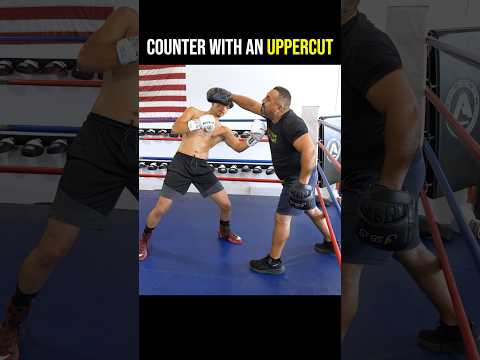
Perfect your counter uppercut technique with elite boxing coach Joe Vargas and fighter Jabin Chollet. Watch as they brea…
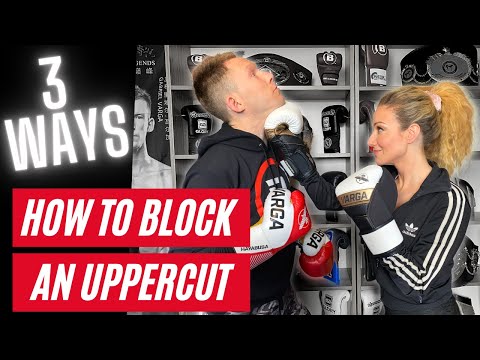
Many people struggle with uppercut defense so today I take you through 3 ways to protect yourself from this scary punch.…
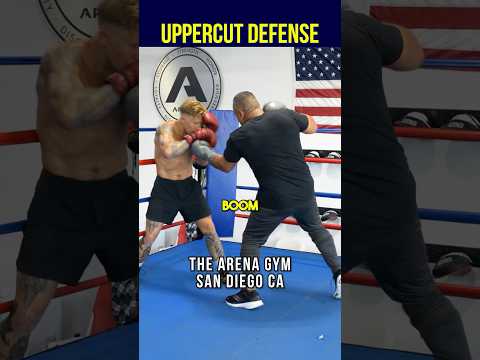
Learn the correct technique for defending uppercuts when trapped on the ropes! In this boxing training tutorial, The Are…
The uppercut is a really unpleasant punch to get hit with. It's also probably the most difficult punch to reactively def…
Tony Jeffries on the perfect technique of how to throw lead uppercut in boxing. This is a difficult punch to throw and l…
Defence against the uppercut emphasizes multiple layered strategies, as instructors collectively recognize it as a difficult punch to counter. Gabriel Varga presents a three-tiered progression: the fade-back (moving the head back to alter trajectory), the turtle shell (drawing elbows together to create a tight guard while maintaining sight), and the centre-line elbow deflection (using one arm across the middle to reduce impact and protect against follow-up hooks). Varga notes the turtle shell limits impact absorption, while the elbow deflection ricochets the shot effectively. THE ARENA stresses the critical error of leaning back against the ropes, instead advocating close-range hand placement with head movement and positional adjustments to avoid self-contact during the block. MyBoxingCoach emphasizes head movement and unpredictability—maintaining constant lateral head motion off the centre line rather than relying solely on blocks, making the defender a harder target. Tony Jeffries focuses primarily on offensive execution of the lead uppercut rather than defence, though he acknowledges its brutal nature and difficulty. A consensus emerges: passive leaning is counterproductive, active head movement and deflection are superior to absorption-based blocking, and defensive positioning should prevent the punch's setup rather than merely respond to it.
Synthesized from 4 instructors
No instructional courses yet for this technique.
Sign in to suggest a course.
Risk of injury to the person this technique is applied to
The defence itself is defensive, causing minimal injury to the defender. However, the elbow-drop interception can cause significant injury to the ATTACKER'S hand: the collision of the fist's metacarpal bones against the hard olecranon can produce a boxer's fracture (5th metacarpal break) or metacarpal bruising. The simultaneous counter-strike to the attacker's face adds offensive danger.
Skill level needed to execute this technique reliably
Whether this technique is allowed under major competition rule sets
The Book of Krav-Maga: The Bible (Lichtenstein, 2007)
description: [1] Lichtenstein 2007, [2] Lichtenfeld 2001
Standard katakana transliteration of Western martial arts terminology (外来語) — used in Japanese MMA, boxing, and BJJ communities
description: [1] Lichtenstein 2007, [2] Lichtenfeld 2001
Minimal requirements — dropping the elbow is gravity-assisted, requiring minimal muscular effort
No special conditioning needed
Accessible to all ages, body types, and fitness levels
The defence is one of the simplest in the Krav Maga curriculum
Uppercut defense in Krav Maga uses a downward forearm block to intercept the rising punch — the forearm crosses the path of the uppercut before it reaches the chin. Simultaneous counter-attack with the free hand. (Complete Krav Maga; Krav Maga training manuals)
According to Gabriel Varga, creating a tight 'turtle shell' by bringing your elbows together and clenching your arms is an effective defence that keeps you protected while allowing you to see the punch coming and make adjustments for follow-up shots.
THE ARENA emphasizes that leaning back limits your mobility—once you're back against the ropes, you can't retreat further, leaving you trapped. Instead, stay positioned close enough to use hand blocks effectively.
MyBoxingCoach recommends using your lead hand to block a backhand uppercut when your opponent is in front of you, positioning it to catch the punch before it reaches your face.
According to THE ARENA, many fighters position their block too far out and end up hitting themselves in the face with their own hands; moving closer allows for a tighter, more effective block.
The Defence Against Uppercut is the Krav Maga technique for defending against rising uppercut punches — close-range attacks that drive the fist upward from below into the chin, jaw, or solar plexus. The uppercut is one of the most dangerous punches in combat because it arrives from below the defender's visual field (most awareness is focused on attacks coming from the front, sides, and above) and targets the chin (the body's most vulnerable knockout target) from the direction that produces maximum rotational head acceleration.
The Defence Against Uppercut was developed as part of the Krav Maga defensive curriculum, completing the system's coverage of all major unarmed attack angles: straight (Inside/Outside Defence), circular (Shield Block), descending (360 Defence), and rising (Elbow Drop). Imi Lichtenfeld and subsequent Krav Maga instructors recognised that each attack trajectory requires a specific defensive mechanism — the deflection principle works for straight attacks, the absorption principle works for circular attacks, the overhead principle works for descending attacks, and the DOWNWARD INTERCEPTION principle works for rising attacks.
Unified MMA: legal — Legal defensive technique; IBJJF: legal — Legal; IJF: legal — Legal defensive action; WBC/Boxing: legal — Legal; WKF: legal — Legal; WT: legal — Legal
Danger rating 3/10. The defence itself is defensive, causing minimal injury to the defender. However, the elbow-drop interception can cause significant injury to the ATTACKER'S hand: the collision of the fist's metacarpal bones against the hard olecranon can produce a boxer's fracture (5th metacarpal break) or metacarpal bruising. The simultaneous counter-strike to the attacker's face adds offensive danger.
The standard setup chain: Attacker throws a rising uppercut toward the chin or body → Defender drops the elbow straight downward into the path of the rising fist → Olecranon (elbow point) collides with the attacker's fist/forearm → Uppercut is intercepted and deflected downward → SIMULTANEOUSLY: opposite hand fires a counter-strike to the attacker's face → Continue with follow-up combatives → Disengage and escape OR control the attacker.
Standard counters include: Feint the uppercut — draw the elbow drop, then attack a different line (hook, straight) / Speed — a very fast uppercut may arrive before the elbow can drop / Body uppercut then head uppercut — the first uppercut draws the elbow drop low, the second targets the chin above the… / Combination — following the feinted uppercut with a different attack overwhelms the single-response defence.
Common variants: Standard elbow drop (dropping the elbow directly downward to meet the rising fist); Angled elbow drop (dropping the elbow at a slight angle to deflect the upper…); Double elbow drop (both elbows drop simultaneously to defend against uppercu…); Elbow drop to forearm (the elbow drops onto the attacker's rising forearm rather…); Elbow drop with body turn (turning the body slightly during the drop to add the body…); Elbow drop to clinch (after the elbow intercepts the uppercut, the defending ar…).
Not applicable — self-defence technique. The elbow-drop concept against rising attacks is used in MMA defensive training.
Top errors to watch for: Dropping the forearm instead of the elbow — the forearm is a softer, wider surface that doesn't effectively stop the … / Not counter-striking — blocking the uppercut without simultaneously hitting back gives the attacker a free follow-up / Dropping too late — the elbow must drop BEFORE or AT THE MOMENT the uppercut arrives; dropping after the fist passes … / Dropping too far — the elbow should drop only enough to intercept the fist (approximately 6-8 inches from the guard p….
The Defence Against Uppercut is also known as Appākatto Difensu, Uppercut Defence, Krav Uppercut Block, Anti-Uppercut Defence, Elbow Drop Block.