8 TYPES OF KAMAE (STANCE)
0
Kamae — Stance·SAMURAI KAZ ARTS / KAZ KOBAYASHI
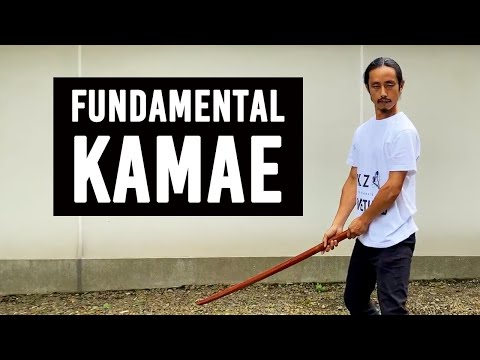
8TYPES OF KAMAE (STANCE) These are the 8 fundamental kamae or stances in samurai sword martial arts. Once you learn t…
Translation: Stances / Postures
The Kamae subfamily encompasses the five standard sword guards (go-gyō-no-kamae) used across Japanese sword arts — chūdan, jōdan, gedan, hassō, and waki-gamae. [1] Each kamae positions the sword to defend specific lines while threatening others, creating a matrix of tactical options for attack, defence, and counter-attack. [1],[2] Kamae are not static postures but dynamic states from which techniques flow; the choice of kamae communicates intent and invites or denies specific opponent actions. [2],[3]
The five kamae system is attributed to the classical koryū traditions, with Miyamoto Musashi's Book of Five Rings (1645) providing one of the most influential discussions of guard positions and their tactical applications. [1] The five guards correspond to the five elements (gogyō) in Japanese philosophy — earth, water, fire, wind, and void. [2],[3]
Kamae (stances) in Japanese sword arts serve as both defensive postures and platforms for attack, with each kamae controlling different lines and enabling different techniques. [1]
In kendo competition, chūdan no kamae is used by the vast majority of competitors, while jōdan no kamae is a specialised stance used by some elite competitors. [1]
No images yet for this technique.
Sign in to suggest an image.
8TYPES OF KAMAE (STANCE) These are the 8 fundamental kamae or stances in samurai sword martial arts. Once you learn t…
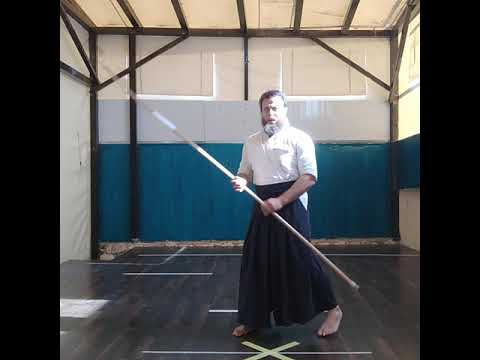
How to do correct kamae in Naginata. By Gur Nedzvetsky, 3rd dan.
No instructional courses yet for this technique.
Sign in to suggest a course.
Risk of injury to the person this technique is applied to
Edged weapons cause fatal lacerations; historical battlefield mortality rates >30% (Amberger 1999)
Skill level needed to execute this technique reliably
Whether this technique is allowed under major competition rule sets
The Book of Five Rings (Miyamoto Musashi, 1645)
Alias sources — [1] Ozawa, H., Kendo: The Definitive Guide (Kodansha, 1997) [2] Warner, G. & Draeger, D., Japanese Swordsmanship (Weatherhill, 1982)
Effectiveness sources — [1] Classical Bujutsu (Draeger, 1973)
Established Japanese martial arts naming convention — native Japanese term (和語/漢語)
Alias sources — [1] Ozawa, H., Kendo: The Definitive Guide (Kodansha, 1997) [2] Warner, G. & Draeger, D., Japanese Swordsmanship (Weatherhill, 1982)
Effectiveness sources — [1] Classical Bujutsu (Draeger, 1973)
wrist control for edge alignment, grip endurance, footwork precision
quick wrists, strong forearms, good posture
forearm extensors/flexors, deltoids, core, calves
Every move, in any martial art, shares a few universal traits. Mix and match below to pinpoint the right tool — or compare equivalents across styles.
Chūdan-no-kamae (middle guard) positions the sword with the tip (kissaki) pointed at the opponent's throat or eyes, the tsuka (handle) held at navel height, embodying the principle of centre-line dominance. [1] Chūdan is the most versatile and commonly used kamae in Japanese swordsmanship, as it simultaneously threatens the opponent's centreline and defends the wielder's torso and head. [1,2] In kendō, chūdan-no-kamae is the default stance from which all basic techniques are initiated and to which the practitioner returns after each exchange. [2,3]
Gedan-no-kamae (low guard) positions the sword with the tip pointed downward toward the opponent's knees, the tsuka held at hip level. [1] Gedan is a defensive and inviting guard that conceals the wielder's intentions while protecting the lower body and threatening upward cuts. [1,2] In kenjutsu the low guard is associated with the element of earth (chi) and is used to invite the opponent's attack to the apparently undefended upper body, enabling counter-techniques. [2,3]
Hassō-no-kamae (eight-direction guard) positions the sword vertically beside the right side of the head, with the tsuka at mouth height and the blade pointing upward. [1] This guard radiates threat in all eight directions (hence its name) and is an aggressive posture that facilitates rapid downward and diagonal cuts. [1,2] Hassō-no-kamae is associated with the element of fire (ka) and is used in kenjutsu to pressure the opponent with the implied threat of explosive cutting from a high position. [2,3]
Jōdan-no-kamae (high guard) raises the sword overhead with the arms extended, threatening an immediate downward cut to any target. [1] Jōdan is the most aggressive of the five standard kamae, projecting dominance and forcing the opponent to respect the imminent overhead strike. [1,2] In kendō, jōdan players (jōdansha) are a distinctive and respected minority who sacrifice the defensive security of chūdan for overwhelming offensive pressure, using the height advantage to power devastating men and kote strikes. [2,3]
Waki-gamae (side guard) conceals the sword behind the body with the blade pointing rearward, hiding the weapon's length and the wielder's intent from the opponent. [1] This deceptive guard denies the opponent information about the sword's position, making it difficult to judge distance or predict the line of attack. [1,2] Waki-gamae is associated with the element of wind (fū) in the five-element system and is considered a highly tactical guard used to lure opponents into committed attacks. [2,3]
In chudan no kamai, your wrists should touch your hips, with your body and neck completely straight and no tension in the shoulders. Position your hands with two thumbs above the fist (left on right), keep approximately 90 degrees between your elbow and hips, and maintain the weapon in the center—not too far in or too far out.
According to Naginata Israel's basics instruction, avoid moving your legs at uneven times—they should move together. Never hold the weapon in the air; keep it close to your body. Also avoid excessive tension and ensure smooth transitions by switching at the center when moving between positions.
In waki gamae, the naginata must be parallel to the ground—not angled up or down. Maintain control at the center and ensure your hands are positioned correctly to support this horizontal alignment.
The Kamae subfamily encompasses the five standard sword guards (go-gyō-no-kamae) used across Japanese sword arts — chūdan, jōdan, gedan, hassō, and waki-gamae. Each kamae positions the sword to defend specific lines while threatening others, creating a matrix of tactical options for attack, defence, and counter-attack.
The five kamae system is attributed to the classical koryū traditions, with Miyamoto Musashi's Book of Five Rings (1645) providing one of the most influential discussions of guard positions and their tactical applications. The five guards correspond to the five elements (gogyō) in Japanese philosophy — earth, water, fire, wind, and void.
FIK Kendo: legal — Legal, valid strike requires correct form (datotsu-bu), spirit (kiai), and fo…
Danger rating 9/10. Extreme — edged weapons cause fatal lacerations; historical battlefield mortality rates >30% (Amberger 1999)
The standard setup chain: Assume Guard (Kamae/Hut) → Measure Distance (Ma-ai) → Initiate Cut/Thrust → Follow Through (Zanshin).
Standard counters include: Parry (Absetzen) — deflect the incoming blade with a counter-displacement / Void (Step Back) — withdraw from measure to avoid the cutting arc / Counter-Cut (Nachreisen) — strike into the opponent's opening during their attack.
Common variants: Standard cut (primary cutting angle from the ready stance); Thrust (tsuki) (straight thrust targeting the throat, chest, or face); Rising cut (kiri-age) (upward diagonal cut from low to high); Diagonal cut (kesa-giri) (downward diagonal cut following the kimono line).
In kendo competition, chūdan no kamae is used by the vast majority of competitors, while jōdan no kamae is a specialised stance used by some elite competitors.
Top errors to watch for: Holding kamae with excessive tension — the stance must be ready and alert but not rigid / Using only one kamae — all five stances must be studied and understood for complete swordsmanship / Treating kamae as a static position — kamae flows into technique; it is a moment of readiness, not a held pose / Not understanding the strategic intent of each kamae — each stance has offensive and defensive implications.
The Kamae — Stance is also known as Kamae, Kendo Stance, Guard Position, Chudan-no-Kamae (middle guard), Jodan-no-Kamae (high guard).