Every Sword Martial Art Explained in 12 Minutes
0
Sword — Long Blade·Swords Explained
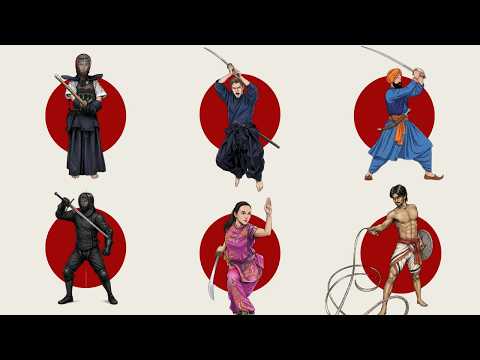
Ever wondered how many different ways humans learned to fight with swords? In this video, “Every Sword Martial Art Expla…
Translation: sword — long blade
The Sword group encompasses all combat techniques employing bladed weapons of sword length, spanning both East Asian and European traditions. [1] This group unifies the Japanese sword arts (kenjutsu, kendō, iaidō) with the European historical swordsmanship traditions (longsword, rapier, sabre, sword and shield) under a single taxonomic heading, reflecting the sword's universal status as the most culturally significant weapon class in martial history. [1],[2] The Japanese sword tradition is anchored in an unbroken lineage from battlefield kenjutsu of the Kamakura period through the Edo-period refinement of iaidō to modern competitive kendō, while the European tradition is preserved in medieval and Renaissance fight-books and reconstructed by the Historical European Martial Arts movement. [2],[3] Together these traditions represent thousands of individual techniques — cuts, thrusts, guards, binds, windings, draws, and disarms — each systematically organised within the curricula of their respective schools. [3],[4] The sword remains the most widely practised weapon in martial arts worldwide, with kendō alone claiming over six million practitioners under the International Kendo Federation. [4],[5]
The sword emerged independently as a prestige weapon in virtually every martial culture, from the bronze khopesh of ancient Egypt to the katana of feudal Japan and the longsword of medieval Europe. [1] Japanese swordsmanship traces its origins to the curved tachi of the Heian period (794–1185), while European swordsmanship was first systematically recorded in the Royal Armouries Manuscript I.33 (c. 1300). [2],[3] The Japanese koryū schools — Tenshin Shōden Katori Shintō-ryū (c. 1447), Ittō-ryū, Yagyū Shinkage-ryū — codified comprehensive sword curricula, while the German tradition was anchored in Johannes Liechtenauer's fourteenth-century teachings and the Italian tradition in Fiore dei Liberi's 1409 Fior di Battaglia. [3],[4] The modern era saw kendō become an international competitive sport and HEMA grow into a global reconstruction movement, ensuring that historical sword arts continue to be practised and studied. [4],[5]
Longsword is the most popular HEMA competition category, featured at major tournaments including Swordfish, Longpoint, and the HEMA World Championship. [1]
No images yet for this technique.
Sign in to suggest an image.
Ever wondered how many different ways humans learned to fight with swords? In this video, “Every Sword Martial Art Expla…
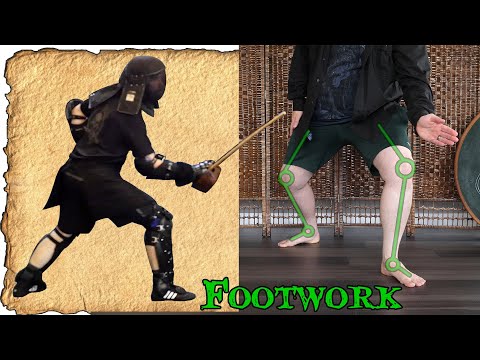
This is an introduction to the fundamentals of stance and movement in HEMA (historical European Martial Arts). It's dire…
No instructional courses yet for this technique.
Sign in to suggest a course.
Risk of injury to the person this technique is applied to
Edged weapons cause fatal lacerations; historical battlefield mortality rates >30% (Amberger 1999)
Skill level needed to execute this technique reliably
Whether this technique is allowed under major competition rule sets
The Book of Five Rings (Miyamoto Musashi, 1645)
Alias sources — [1] MMA Instruction Manual (UFC, 2008) [2] MMA Instruction Manual (UFC, 2008) [3] MMA Instruction Manual (UFC, 2008)
Effectiveness sources — [1] Fighting with the German Longsword (Tobler, 2004) [2] The Martial Arts of Renaissance Europe (Anglo, 2000)
Established Japanese martial arts naming convention — native Japanese term (和語/漢語)
Alias sources — [1] MMA Instruction Manual (UFC, 2008) [2] MMA Instruction Manual (UFC, 2008) [3] MMA Instruction Manual (UFC, 2008)
Effectiveness sources — [1] Fighting with the German Longsword (Tobler, 2004) [2] The Martial Arts of Renaissance Europe (Anglo, 2000)
wrist control for edge alignment, grip endurance, footwork precision
quick wrists, strong forearms, good posture
forearm extensors/flexors, deltoids, core, calves
Every move, in any martial art, shares a few universal traits. Mix and match below to pinpoint the right tool — or compare equivalents across styles.
The Fencing Blade Action family covers preparatory blade techniques in fencing that manipulate, displace, or control the opponent's blade to create openings for attacks — the tactical tools that allow a fencer to safely navigate past the opponent's defensive blade and score touches. [1] Blade actions include beats (battements — sharp percussive contact that knocks the opponent's blade aside), presses (pressures that push the blade offline), binds (liements — carrying the opponent's blade from one line to another), froissements (sliding forcefully along the blade), and envelopments (circular blade actions that trap the opponent's blade). [1,2] These techniques are fundamental to competitive fencing strategy: a direct attack into a well-positioned defensive blade is easily parried, but an attack preceded by a blade action that displaces the defensive blade can score freely. [2,3] The blade action system was codified in the French and Italian fencing schools of the 17th–18th centuries and remains the standard tactical toolkit in modern Olympic fencing. [3]
The Fencing Thrust family covers the offensive attacking techniques in fencing — the extension of the arm and blade to land a touch on the opponent's valid target area, which is the fundamental scoring action in foil and épée. [1] Thrusts include simple attacks (direct thrust, disengage — circling around the opponent's blade, coupé — cutting over the blade), compound attacks (one-two, double disengage — combining multiple feints before the final thrust), and attacks on the blade (attacks preceded by blade actions like beats or presses). [1,2] In foil fencing, the thrust must have right-of-way (priority) to score — the attack must be initiated first or follow a proper parry (riposte), adding a tactical layer beyond simply touching the opponent. [2,3] The lunge — the explosive forward step that delivers the thrust — is fencing's most iconic movement and the primary delivery mechanism for all thrusting attacks. [3]
The HEMA Counter family encompasses the defensive-offensive techniques of the German longsword tradition — actions that simultaneously defend against an incoming attack and deliver a counter-attack. [1] In the Liechtenauer system, countering is not a passive act of blocking followed by a separate attack; instead, the core principle of Indes ('meanwhile') teaches the fighter to defend and attack in the same tempo. [1] Counter-techniques include Absetzen (setting aside with a thrust), Nachreisen (traveling after an opponent's movement), and various Versetzen (displacements) that redirect the opponent's blade while creating an opening. [1,2] The family is distinct from the HEMA Guard family (static positions) and the HEMA Strike family (offensive cuts) because counter-techniques are reactive — they require the opponent to initiate an action. [2]
The HEMA Guard family encompasses the named sword guard positions (Huten or Leger) of the German and Italian longsword traditions. [1] Guards are specific positions in which the sword is held relative to the body, each offering a distinct combination of defensive coverage and offensive threat. [1] The Liechtenauer German tradition identifies four principal guards: Vom Tag (from the roof — sword held high), Ochs (ox — sword at shoulder with point forward), Pflug (plow — sword at hip with point forward), and Alber (fool — sword held low with point toward the ground). [1,2] Italian traditions add additional guards such as Posta di Donna (woman's guard) and Posta Longa (long guard). [2] Guards are not static — they are transitional positions from which attacks and counters are launched, and through which the sword passes between actions. [1,2]
The HEMA Longsword family covers the two-handed sword techniques of the German Kunst des Fechtens and the Italian school of Fiore dei Liberi, the most widely studied and competitively practised weapon in Historical European Martial Arts. [1] The longsword — a cruciform-hilted, double-edged blade with a grip long enough for two hands, typically 100–130 cm in total length — was the quintessential weapon of the European knight from the fourteenth to sixteenth centuries. [1,2] German longsword technique is organised around Liechtenauer's system of five master cuts (Meisterhäue), four principal guards (Vier Leger), and the concept of Vor and Nach (before and after) that governs initiative. [2,3] Italian longsword technique, following Fiore, emphasises twelve guards (poste), flowing plays, and the integration of wrestling (abrazare) into sword combat. [3,4]
The HEMA Strike family encompasses the offensive cutting techniques (Hauw/Hau) of the German longsword tradition. [1] The Liechtenauer system organizes sword strikes into a hierarchy: the five Meisterhauwe (master cuts) — Zornhau (wrath cut), Krumphau (crooked cut), Zwerchau (cross cut), Schielhau (squinting cut), and Scheitelhau (parting cut) — sit at the pinnacle, each designed to defeat a specific guard or situation. [1,2] Below the master cuts are the common cuts (Gemeine Hauw): Oberhau (overhead cut), Unterhau (rising cut), Mittelhau (middle cut), and their diagonal and horizontal variants. [1] Each cut follows a specific trajectory, uses the true or false edge of the blade, and is mechanically linked to specific guards as starting and ending positions. [2] The family also includes thrusts (Stich), although the German tradition emphasizes cutting as the primary offensive action. [1,2]
The Japanese Sword family encompasses the interrelated disciplines of kenjutsu (classical sword combat), kendō (modern bamboo-sword fencing), and iaidō/iaijutsu (the art of drawing and cutting), all practised with the Japanese katana or its training equivalents. [1] The Japanese sword tradition is among the most technically refined and culturally significant weapon arts in world history, with an unbroken lineage stretching from battlefield kenjutsu of the Kamakura period (1185–1333) through the Edo-period refinement of iaidō to the modern competitive sport of kendō. [1,2] Kenjutsu preserves the combat techniques of the samurai through kata with bokutō or shinken, kendō tests striking skill in full-contact sparring with shinai and bōgu, and iaidō develops the art of the draw-cut through solo kata with iaito or shinken. [2,3] The great koryū schools — Tenshin Shōden Katori Shintō-ryū (c. 1447), Ittō-ryū, and Yagyū Shinkage-ryū — codified comprehensive sword curricula, while the All Japan Kendo Federation standardised modern kendō and Seitei Iai for international practice. [3,4]
The Rapier family covers the combat techniques of the rapier, the long, slender, thrusting-oriented sword that dominated European civilian swordsmanship from the mid-sixteenth through seventeenth centuries. [1] Rapier fencing developed into three major schools: the Italian school (Salvator Fabris, Ridolfo Capoferro, Francesco Alfieri), the Spanish school of Destreza (Jerónimo Sánchez de Carranza, Luis Pacheco de Narváez), and the various German, English, and French interpretations. [1,2] Rapier technique emphasises thrusting over cutting, precise distance management (misura), the use of the off-hand or companion weapon (dagger, cloak, buckler) for defence, and a vocabulary of guards, invitations, and counter-attacks that directly prefigured modern sport fencing. [2,3] HEMA rapier tournaments are among the most popular competitive events in the HEMA community. [3,4]
The Sabre (Military) family covers the techniques of the military sabre, the curved, single-edged cavalry sword used by European and colonial armies from the seventeenth through early twentieth centuries. [1] Military sabre technique combines powerful cutting actions delivered from horseback or on foot with a simpler guard system than the rapier or longsword, reflecting its design as a battlefield weapon for mounted troops. [1,2] The sabre tradition influenced the development of modern sport sabre fencing, one of three Olympic fencing disciplines, though military sabre technique differs significantly from the sport form in its emphasis on power cuts and cavalry tactics. [2,3]
Long blade techniques cover longsword, katana, rapier, sabre, and other two-handed or long single-handed swords. The longsword is the primary HEMA weapon; the katana is the iconic Japanese weapon. Fencing blade actions and thrusts are the sport fencing sword techniques. (200+ books; Clements, Medieval Swordsmanship; Draeger, Classical Budo; FIE rules)
Keep most of your weight on the balls of your feet rather than your heels. This gives you better agility, lets you push off easily, and allows you to change direction and redistribute weight quickly.
The three most important steps are the passing step (used to close distance), the advancing and retreating step (where you push off with your rear leg while stepping forward with the front leg), and the gathering step (similar to advancing but starting with the opposite leg). According to Skallagrim, all of these should be performed with a low stance for stability and balance.
In Kenjutsu, controlling the line and using cutting angles that shut down counterattacks—combined with body positioning—allows you to stay safe while you attack.
Drive your steps from your core by rotating your hips rather than just reaching out limply with your leg. However, avoid over-rotating to the point where you no longer face your target, as this messes with edge alignment during cuts.
The Sword group encompasses all combat techniques employing bladed weapons of sword length, spanning both East Asian and European traditions. This group unifies the Japanese sword arts (kenjutsu, kendō, iaidō) with the European historical swordsmanship traditions (longsword, rapier, sabre, sword and shield) under a single taxonomic heading, reflecting the sword's universal status as the most culturally significant weapon class in martial history.
The sword emerged independently as a prestige weapon in virtually every martial culture, from the bronze khopesh of ancient Egypt to the katana of feudal Japan and the longsword of medieval Europe. Japanese swordsmanship traces its origins to the curved tachi of the Heian period (794–1185), while European swordsmanship was first systematically recorded in the Royal Armouries Manuscript I.
FIK Kendo: legal — Legal, valid strike requires correct form (datotsu-bu), spirit (kiai), and fo…
Danger rating 9/10. Extreme — edged weapons cause fatal lacerations; historical battlefield mortality rates >30% (Amberger 1999)
The standard setup chain: Assume Guard (Kamae/Hut) → Measure Distance (Ma-ai) → Initiate Cut/Thrust → Follow Through (Zanshin).
Standard counters include: Parry (Absetzen) — deflect the incoming blade with a counter-displacement / Void (Step Back) — withdraw from measure to avoid the cutting arc / Counter-Cut (Nachreisen) — strike into the opponent's opening during their attack.
Common variants: Standard cut (primary cutting angle from the ready stance); Thrust (tsuki) (straight thrust targeting the throat, chest, or face); Rising cut (kiri-age) (upward diagonal cut from low to high); Diagonal cut (kesa-giri) (downward diagonal cut following the kimono line).
Longsword is the most popular HEMA competition category, featured at major tournaments including Swordfish, Longpoint, and the HEMA World Championship.
Top errors to watch for: Swinging the sword with arm strength alone — power comes from the hips, core, and proper body mechanics / Ignoring edge alignment during cuts — a misaligned edge bounces rather than cuts / Not maintaining proper distance — sword distance is precise; too close negates the weapon, too far wastes the attack / Treating the sword as a club — slashing with the flat or striking without technique wastes the weapon's design.
The Sword — Long Blade is also known as Kenjutsu / Chōtō, Long Blade, Swordsmanship, Swordplay.