Kenjutsu: Kamae Kihon, Jinen Ryu basic sword postures and intent
0
Chudan No Kamae·Yasuragi Dojo
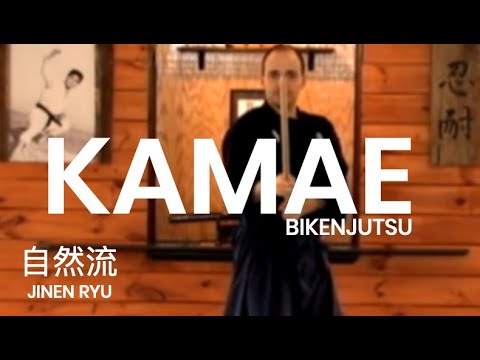
The first part of the Jinen Ryu Bikenjutsu Chi no Maki, is kamae, or stances. As with the scrolls, there are five kenjut…
Translation: Middle-Level Stance
Chūdan-no-kamae (middle guard) positions the sword with the tip (kissaki) pointed at the opponent's throat or eyes, the tsuka (handle) held at navel height, embodying the principle of centre-line dominance. [1] Chūdan is the most versatile and commonly used kamae in Japanese swordsmanship, as it simultaneously threatens the opponent's centreline and defends the wielder's torso and head. [1],[2] In kendō, chūdan-no-kamae is the default stance from which all basic techniques are initiated and to which the practitioner returns after each exchange. [2],[3]
Chudan no kamae (middle guard) is the fundamental kendo stance, with the shinai held at centre with the tip (kensen) aimed at the opponent's throat. [1] It is universally regarded as the strongest and most balanced kamae because it covers the centre line, allows attacks to all four targets (men, kote, do, tsuki), and provides the foundation for receiving and countering attacks. [2] Approximately 90% of kendo practitioners use chudan as their primary kamae. [2]
Chūdan no kamae (middle guard) is the standard stance in kendo competition, used by over 95% of competitors at all levels from beginner to World Championship. [1]
No images yet for this technique.
Sign in to suggest an image.
The first part of the Jinen Ryu Bikenjutsu Chi no Maki, is kamae, or stances. As with the scrolls, there are five kenjut…
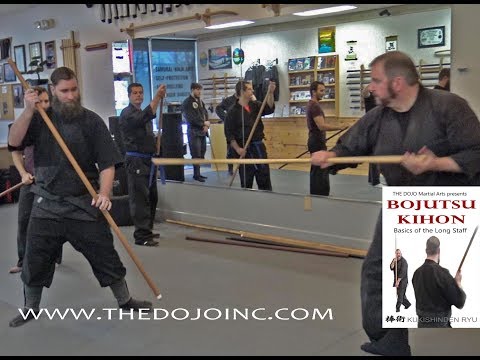
Clip from the Staff (Bo) Basics DVD Order it at: https://www.ebay.com/sch/thedojomartialarts/m.html?item=263991596546&ha…
Kendo Lecture by Kunio Hayashi Chudan-no-kamae
Chudan no kamae is a middle-level stance fundamental to both bojutsu and kenjutsu traditions. The Dojo Martial Arts Mason Ohio emphasizes that 'chu' means middle, positioning the weapon horizontally at approximately chest/throat height with the back hand tucked under the arm in a rifle-like grip, palm facing upward, while the front hand remains light and controlling. The stance allows the practitioner to adjust distance fluidly through footwork, moving laterally like a spider or crab while keeping the weapon barrel pointed toward the opponent's eyes. A key technical detail from this instructor involves concealing hand and finger movements by projecting the chest forward and aligning shoulders, making strikes less telegraphed. The Dojo instructor also notes variations in hand positioning—motorcycle grip versus pulling grip—and mentions that chudan can transition to or relate to heitou no kamae for body strikes (dou uchi). Yasuragi Dojo's treatment of the broader kamae system positions chudan within a comprehensive framework alongside seigan no kamae, gedan no kamae, and others, though the transcripts provided do not isolate chudan-specific details from this source. Both instructors emphasize that the stance is not rigidly formal but rather a living, adaptive position for survival-oriented movement against an opponent.
Synthesized from 3 instructors
No instructional courses yet for this technique.
Sign in to suggest a course.
Risk of injury to the person this technique is applied to
Edged weapons cause fatal lacerations; historical battlefield mortality rates >30% (Amberger 1999)
Skill level needed to execute this technique reliably
Whether this technique is allowed under major competition rule sets
The Book of Five Rings (Miyamoto Musashi, 1645)
Alias sources — [1] Japanese Swordsmanship (Warner & Draeger, 1982) [2] The Book of Five Rings (Musashi, trans. Harris, 1974) [3] The Book of Five Rings (Musashi, trans. Harris, 1974)
Effectiveness sources — [1] All Japan Kendo Federation, Kendo Official Manual (AJKF) [2] Warner, G. & Draeger, D., Japanese Swordsmanship: Technique and Practice (Weatherhill, 1982)
Established Japanese martial arts naming convention — native Japanese term (和語/漢語)
Alias sources — [1] Japanese Swordsmanship (Warner & Draeger, 1982) [2] The Book of Five Rings (Musashi, trans. Harris, 1974) [3] The Book of Five Rings (Musashi, trans. Harris, 1974)
Effectiveness sources — [1] All Japan Kendo Federation, Kendo Official Manual (AJKF) [2] Warner, G. & Draeger, D., Japanese Swordsmanship: Technique and Practice (Weatherhill, 1982)
wrist control for edge alignment, grip endurance, footwork precision
quick wrists, strong forearms, good posture
forearm extensors/flexors, deltoids, core, calves
Your right foot should be forward with your left foot pointing at a 45-degree angle back, with your knee tracking correctly over the foot. Ensure you have at least a 45-degree angle with your hips to complete the stance (Yasuragi Dojo).
The kisaki (tip of the sword) should connect to a straight line between the eyes of your opponent and yours, with the blade edge directed at your opponent and the hand positioned at temple or ear height (Yasuragi Dojo).
Keep your arms soft with a gap between your forearm and the sword scabbard; avoid tensioned or overly bent wrists, and do not hold your arms rigidly close to your body (Yasuragi Dojo).
Chūdan-no-kamae (middle guard) positions the sword with the tip (kissaki) pointed at the opponent's throat or eyes, the tsuka (handle) held at navel height, embodying the principle of centre-line dominance. Chūdan is the most versatile and commonly used kamae in Japanese swordsmanship, as it simultaneously threatens the opponent's centreline and defends the wielder's torso and head.
Chūdan-no-kamae has been the foundational guard position in Japanese swordsmanship since the earliest koryū schools, corresponding to the element of water (sui) in the five-element system. Miyamoto Musashi wrote that the middle guard is the essence of all guards.
FIK Kendo: legal — Legal, valid strike requires correct form (datotsu-bu), spirit (kiai), and fo…
Danger rating 9/10. Extreme — edged weapons cause fatal lacerations; historical battlefield mortality rates >30% (Amberger 1999)
The standard setup chain: Assume Guard (Kamae/Hut) → Measure Distance (Ma-ai) → Initiate Cut/Thrust → Follow Through (Zanshin).
Standard counters include: Parry (Absetzen) — deflect the incoming blade with a counter-displacement / Void (Step Back) — withdraw from measure to avoid the cutting arc / Counter-Cut (Nachreisen) — strike into the opponent's opening during their attack.
Common variants: Standard cut (primary cutting angle from the ready stance); Thrust (tsuki) (straight thrust targeting the throat, chest, or face); Rising cut (kiri-age) (upward diagonal cut from low to high); Diagonal cut (kesa-giri) (downward diagonal cut following the kimono line).
Chūdan no kamae (middle guard) is the standard stance in kendo competition, used by over 95% of competitors at all levels from beginner to World Championship.
Top errors to watch for: Holding the point too high or too low — the point must be directed at the throat or between the eyes / Gripping the sword too tightly in Chudan — the grip is relaxed until the moment of the strike / Not using seme (pressure) from Chudan — the point must actively threaten and pressure the opponent / Standing too far from the opponent — Chudan requires proper distance (ma-ai) where the point can threaten.
The Chudan No Kamae is also known as Middle Guard, Seigan, Centre Stance.