De Ashi Barai and Harai Tsuri Komi Ashi
0
Standard De Ashi Barai·Seiryoku Zenyo
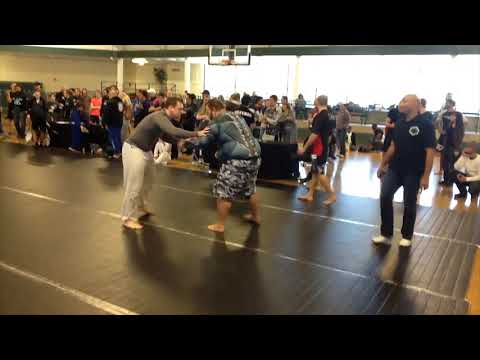
Mark Gilston, 4th degree judo black belt, discusses and demonstrates uses for two basic foot sweeps in judo and BJJ. htt…
Translation: standard advancing foot sweep
The Standard De Ashi Barai executes the fundamental advancing foot sweep where the attacker pulls the opponent forward with the hands (tsurite and hikite), and as the opponent steps forward and their advancing foot touches the mat, the attacker sweeps that foot laterally with the sole of their own foot. [1] The hand pull creates the forward momentum, the weight transfer loads the advancing foot, and the sweep removes the loaded foot at the critical moment. [1],[2] The opponent falls in the direction of the sweep, typically landing on their back or side. [2] The technique requires the attacker to read the opponent's stepping rhythm and anticipate the precise moment of weight commitment. [2],[3]
De ashi barai is considered one of the most important techniques in judo because it teaches timing and kuzushi (balance breaking) principles that underpin all throwing techniques. [1] The technique is highly effective when the opponent is stepping forward, as the sweep catches the advancing foot at the moment of maximum weight commitment. [1] Its minimal physical effort and reliance on timing make it effective regardless of size or strength differences. [2]
De ashi barai is one of the original 40 throws of the Kodokan Gokyo no Waza, classified as the first technique in the Dai Ikkyo (first group) by Jigoro Kano in 1895. [1] It has been taught as a fundamental technique at the Kodokan since judo's founding in 1882. [1] The technique appears in virtually every judo curriculum worldwide and is often the first throw taught to beginners. [2]
De ashi barai is one of the most frequently attempted techniques in international judo competition, appearing at every Olympic Games since judo's inclusion in 1964. [1] Statistical analysis of World Championship and Olympic judo matches shows foot sweeps among the highest-frequency attack techniques across all weight divisions. [2]
No images yet for this technique.
Sign in to suggest an image.
Mark Gilston, 4th degree judo black belt, discusses and demonstrates uses for two basic foot sweeps in judo and BJJ. htt…
Here are 2 examples with a simple breakdown of deashi harry that I hit in competition years ago. This is a low risk trip…
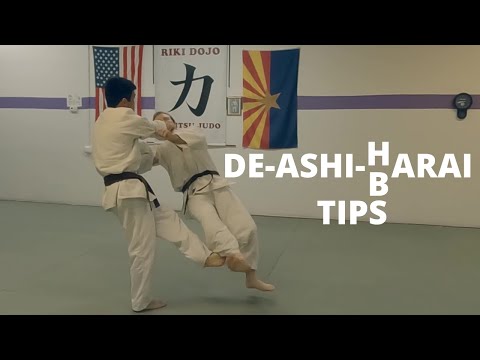
Riki sensei showed us the fundamental way of doing de-ashi-harai / de-ashi-barai (advancing foot sweep) during judo clas…
Brand New Inside Camping Instructional Here: https://bjjfanatics.com/collections/new-releases/products/systematically-at…
#kumikata #okuriashiharai #footsweep In this video, we demonstrate an armpit grip that will improve your Kuzushi (off b…
De Ashi Barai (also written Deashi Harai), meaning 'advanced foot sweep,' is one of judo's most frequently used but often ineffectively executed techniques. The core principle, emphasized across all four instructors, is timing the sweep to catch the opponent's foot as it leaves the ground during a step forward, rather than when planted. Gordon Ryan stresses creating movement to off-balance the opponent before executing the sweep, using a specific drill progression: mirroring footsteps with hand placement on hips, then locking hands while monitoring foot movement, then adding hip pop with proper hand positioning (right elbow rising, left cracking down), resulting in full-body mechanics that leave the opponent's hips between the attacker's knees for immediate positional control. Riki Judo Dojo emphasizes kazushi (off-balancing) through proper hand mechanics—the hikite (pulling hand) coming down to bend the opponent while the tsunite (following hand) turns the body—and maintaining a straight leg throughout the sweep to preserve energy transfer, achieved by adjusting distance (ma'i) correctly; the instruction warns against the common mistake of stopping the sweep early rather than following through. Takedowns for Jiu-Jitsu demonstrates grip modification for okuri ashi barai (sliding foot sweep), replacing lapel grips with underarmpit control to achieve superior body tilt and easier off-balancing, using side-to-side or circular movement patterns. Daniel Barnett provides no-gi application, executing the sweep with minimal grip control while timing weight transfer, characterizing it as low-risk and highly practical for competition. All instructors agree the technique requires precise timing, proper off-balancing, and follow-through rather than explosive power.
Synthesized from 4 instructors
No instructional courses yet for this technique.
Sign in to suggest a course.
Risk of injury to the person this technique is applied to
Timing-based sweep; lower force than trips
Skill level needed to execute this technique reliably
Whether this technique is allowed under major competition rule sets
Kodokan Judo — Official Nage-waza Classification
Traditional Judo throwing/takedown terminology (Kodokan Institute)
Official Kodokan ground technique classification system
Standard Japanese martial arts terminology (kanji/hiragana)
Established Japanese martial arts naming convention — native Japanese term (和語/漢語)
Traditional Judo throwing/takedown terminology (Kodokan Institute)
timing, balance, upper body control for push-pull
good coordination and sense of opponent's weight distribution
core stabilisers, hip adductors/abductors, calves
Gordon Ryan emphasizes that you need to create movement first—either pulling your opponent backwards or pushing them forward to get them off balance. Your opponent should be focused on not falling over, not on defending their hands, which makes them vulnerable to the sweep.
Gordon Ryan stresses that you don't want to catch the foot when it's weighted, because you'll have no effect. Instead, time your sweep to catch the foot as your opponent is moving and shifting their weight.
According to Seiryoku Zenyo, keep your legs straight and point your toe to make that part of your foot stronger and generate more power. Always sweep with the sole of your foot (the bottom) to avoid injuring your shin or your opponent's shin.
Riki Judo Dojo explains that the hikite (pulling hand) should come down and bend your opponent, while you maintain proper distance. Keeping your arm straight requires you to adjust your distance from your opponent correctly.
Daniel Barnett describes de ashi barai as 'the jab of judo'—you can use it to probe and test your opponent, and if it works, great. If not, you can use the reaction to set up other throws.
The Standard De Ashi Barai executes the fundamental advancing foot sweep where the attacker pulls the opponent forward with the hands (tsurite and hikite), and as the opponent steps forward and their advancing foot touches the mat, the attacker sweeps that foot laterally with the sole of their own foot. The hand pull creates the forward momentum, the weight transfer loads the advancing foot, and the sweep removes the loaded foot at the critical moment.
Standard de ashi barai has been practised since judo's founding and remains one of the most commonly attempted throws in judo competition at all levels. Its influence extends into wrestling and MMA, where timing-based foot sweeps are increasingly incorporated.
IJF: legal — Legal (ashi-waza) — trips executed without grabbing opponent's legs are permi…; IBJJF: legal — Legal at all belt levels, scored as takedown (2 points); UWW: restricted — Legal in freestyle, restricted in Greco-Roman (leg-to-leg contact prohibited); Unified MMA: legal — Legal takedown technique; ADCC: legal — Legal, scored 2-4 points in second half of match; FIAS Sport Sambo: legal — Legal — all takedowns permitted; FIAS Combat Sambo: legal — Legal; NCAA Folkstyle: legal — Legal, scored as takedown (2 points)
Danger rating 4/10. Moderate — timing-based sweep; lower force than trips
The standard setup chain: Establish Contact → Create Off-Balance → Execute the Takedown → Follow to Ground.
Standard counters include: Sprawl — drop hips back and drive weight down to stuff the takedown attempt / Underhook — establish inside position to control distance and prevent the takedown entry / Post and Circle — post on the attacker's head and circle away to break their angle / Level Change Defence — recognize the shot early and react with appropriate hip defence.
Common variants: Standard trip (blocking or sweeping the support leg while driving the up…); Combination trip (chaining an inside trip with an outside trip when the opp…); Counter trip (using the trip as a counter when the opponent attacks); Clinch trip (executing the trip from a tight clinch position).
De ashi barai is one of the most frequently attempted techniques in international judo competition, appearing at every Olympic Games since judo's inclusion in 1964. Statistical analysis of World Championship and Olympic judo matches shows foot sweeps among the highest-frequency attack techniques across all weight divisions.
Top errors to watch for: Pulling the opponent forward but sweeping too early (foot still in air) or too late (foot already planted) / Bending the sweeping knee, turning it into a kick instead of a sweep / Hands pulling in a different direction than the sweep — they must coordinate / Standing on the ball of your supporting foot instead of the full foot — unstable base.
The Standard De Ashi Barai is also known as De Ashi Barai, Standard Advancing Foot Sweep, De Ashi Harai, Lead-Foot Sweep.