Introduction to Foot Sweeps
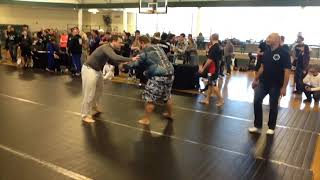
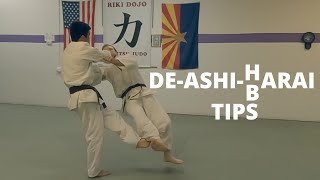
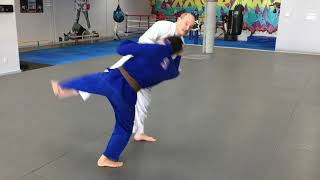
Mark Gilston and Sean Cooper present two fundamental judo techniques: de ashi barai (advancing foot sweep) and harai tsuri komi ashi (sweeping, lifting, pulling foot throw). These closely related techniques differ primarily in whether the opponent moves forward or backward. Both are highly applicable to BJJ and essential in judo competition.
The Importance of Timing and Kuzushi
Off-balancing relies more on natural movement than forced opposition. These sweeps are most effective when the opponent is already moving, creating their own imbalance. The instructor demonstrates how stepping to the side while the opponent advances allows the practitioner to catch them behind the heel at the optimal moment.
Foot Mechanics and Proper Technique
Keeping the legs straight with a pointed toe concentrates power in the correct direction for vertical foot sweeps. The sole of the foot must contact the opponent's leg to prevent injury to both parties. Maintaining a low foot position near the ground maximizes extension and effectiveness, even if the initial target foot moves.
Adapting to Unexpected Movement
The foot sweep remains effective even when the opponent turns or doesn't move as expected. The box step—pulling back and turning—creates a natural opportunity for the sweep. The technique functions whether the practitioner or opponent initiates the movement, providing versatility in application.
The Swallowtail Reversal Counter
As a sophisticated defensive counter, the practitioner can evade an incoming sweep and immediately respond with their own sweep. This technique requires maintaining a straight leg position while transitioning from defense to offense. Executing a successful reversal can create surprising openings in randori.
Harai Tsuri Komi Ashi Against Backward Movement
When the opponent moves backward, the sweep mechanics shift to include lifting and pulling the opponent forward onto their toes. A pumping motion—bending then straightening the leg—generates power as one foot pushes into the other. The sole of the foot drives the sweep while hand control lifts the opponent's center forward.
Box Step Application for Backward Sweeps
The backward foot sweep works equally well from a box step when the opponent actively pulls the practitioner forward. Momentum remains effective even if the initial foot contact is missed, ensuring the technique succeeds through proper positioning and timing.
Setting Up Secondary Techniques
A genuine foot sweep attempt creates a reaction that opens opportunities for follow-up throws such as sacrifice throws or hip throws. If the opponent becomes defensive about the foot sweep, they lean forward and become vulnerable to other techniques. The key is executing a real attack rather than a feint to provoke the necessary reaction.
De Ashi Barai and Harai Tsuri Komi Ashi
Key Takeaways
- •Introduction to Foot Sweeps
- •The Importance of Timing and Kuzushi
- •Foot Mechanics and Proper Technique
- •Adapting to Unexpected Movement
Mark Gilston, 4th degree judo black belt, discusses and demonstrates uses for two basic foot sweeps in judo and BJJ. http://www.coopermma.com/
Frequently Asked Questions
What does this video teach about standard de ashi barai?
This video covers introduction to foot sweeps, the importance of timing and kuzushi, foot mechanics and proper technique. It provides detailed instruction from Seiryoku Zenyo.
How long does it take to learn standard de ashi barai?
The basic mechanics can be understood in a single session, but developing reliable execution requires consistent drilling over weeks of practice. This 8-part breakdown helps structure your training by isolating each phase of the technique.
What are the key details for finishing standard de ashi barai?
The backward foot sweep works equally well from a box step when the opponent actively pulls the practitioner forward. Momentum remains effective even if the initial foot contact is missed, ensuring the technique succeeds through proper positioning and timing.