Introduction to Okuri-Ashi-Barai Grip Modification
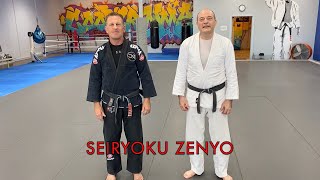
Instructor Larry Keith introduces a critical grip adjustment that enhances the effectiveness of the Okuri-Ashi-Barai (sliding foot sweep). The standard judo grip often creates excess slack in the gi, reducing the practitioner's ability to properly off-balance the opponent during the technique.
Standard Judo Grip Setup
The foundational grip consists of the right hand on the opponent's lapel and the left hand gripping the sleeve underneath the elbow. This traditional grip serves as the baseline for understanding why the modification becomes necessary in practice.
Identifying the Standard Okuri-Ashi-Barai Problem
During the lateral shuffle motion, excess slack in the gi allows the practitioner's hand to move significantly without corresponding body movement from the opponent. This disconnect forces the practitioner to exaggerate the pull, reducing efficiency and making proper off-balancing difficult.
The Armpit Grip Modification
Rather than gripping the lapel, the practitioner reaches under the opponent's armpit and secures the gi material at that point. This grip point creates immediate, direct body contact that translates hand movement directly into opponent body rotation.
Off-Balancing Efficiency with Modified Grip
With the armpit grip, minimal hand movement produces maximum opponent body tilt and reaction. The practitioner achieves superior off-balancing without requiring excessive strength or exaggerated movements.
Lateral Execution of the Sweep
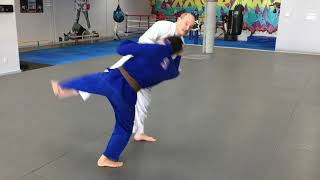
Using the side-to-side shuffle pattern with the modified grip, the practitioner moves the opponent laterally while simultaneously applying the foot sweep. The established body angle and tilt make the sweep execution straightforward and controlled.
Circular Motion Application
In live randori situations, practitioners rarely execute straight lateral movements; instead, they apply the technique through circular or semi-circular footwork around the opponent. The armpit grip maintains consistent control and timing throughout this dynamic movement pattern.
Controlled Throw Execution
By timing the body tilt with the foot sweep, the practitioner can control the force of the throw, allowing for gentle placement or explosive power as the situation demands. This control demonstrates that effective technique relies on proper positioning and timing rather than raw physical strength.
Okuri-ashi-barai with Modified Grip | Takedowns for Jiu-jitsu
Key Takeaways
- •Introduction to Okuri-Ashi-Barai Grip Modification
- •Standard Judo Grip Setup
- •Identifying the Standard Okuri-Ashi-Barai Problem
- •The Armpit Grip Modification
#kumikata #okuriashiharai #footsweep In this video, we demonstrate an armpit grip that will improve your Kuzushi (off balancing) for your Okuri-ashi-barai (sliding foot sweep). The standard lapel grip sometimes has too much slack to get good Kuzushi. The armpit grip has limitations, but creates a good response from the Uke. Blend this grip with good timing and you will be able to easily execute this throw. 0:00--Introduction 0:23--standard grip 1:31--modified grip 2:10--lateral movement 2:47--circular movement 3:37--takedown breakdown 4:03--Thank you Thank you for watching! If you find value in this video, please be sure to give it a thumbs up. Please subscribe to this channel and click on the notification tab to make sure you do not miss any future videos. Be sure to watch for the "Takedown Confidence Summit" coming this summer. It is a 3-day FREE event that has 10 speakers each day. These Jiu-jitsu, Judo, and Wrestling experts share their philosophies and theories on takedowns for BJJ, MMA, and Self-defense. They also offer advice on how to overcome hesitation to learn takedowns and how to improve your takedown game. Some of the speakers include Carlos Machado, Robert Drysdale, Chris Haueter, Vlad Koulikov, Eli Knight, Keith Owen, Ari Knazan, Tom Davey, Reilly Bodycomb, Steve Scott, Rick Hawn, Dan Camarillo, and more. You don't want to miss this chance to get 20+ hours of interview time with these experts. An "All Access Pass" will also be available for purchase with takedown techniques from each of the speakers and more. Until my "Judo for Jiu-jitsu" book becomes available (in progress), here are a few recommendations for your takedown reference materials: "Kodokan Judo Throwing Techniques" by Toshiro Daigo https://amzn.to/3upJZp7 "Effortless Combat Throws" by Tim Cartmell https://amzn.to/34nPIRL "Guerrilla Jiu-jitsu" by Dave Camarillo https://amzn.to/3oLYVNm "Dynamic Judo: Throwing Techniques" by Kazuzo Kudo https://amzn.to/3vmuCPO "Canon of Judo" by Kyuzo Mifune https://amzn.to/3fJQVZ8 --Like the music in our videos? Want access to copyright free music? Use my referral link to get a 30 Day FREE Trial with Epidemic Sound https://www.epidemicsound.com/referral/n16pzd/ As a 50+ year-old Judo and Jiu-jitsu black belt instructor, it is vitally important that I maintain healthy habits. I have been using Advocare products for over 10 years and have always been very satisfied with the quality and service. Use this link to get 10% off your first Advocare order. https://referral.advocare.com/x/SnclDE DISCLAIMER: This video and description contains affiliate links, which means that if you click on one of the product links, I may receive a small commission. This helps support the channel and allows us to continue to make videos like this. Thank you for the support!
Frequently Asked Questions
What does this video teach about standard de ashi barai?
This video covers introduction to okuri-ashi-barai grip modification, standard judo grip setup, identifying the standard okuri-ashi-barai problem. It provides detailed instruction from Takedowns For Jiu-jitsu.
How long does it take to learn standard de ashi barai?
The basic mechanics can be understood in a single session, but developing reliable execution requires consistent drilling over weeks of practice. This 8-part breakdown helps structure your training by isolating each phase of the technique.
What are the key details for finishing standard de ashi barai?
In live randori situations, practitioners rarely execute straight lateral movements; instead, they apply the technique through circular or semi-circular footwork around the opponent. The armpit grip maintains consistent control and timing throughout this dynamic movement pattern.