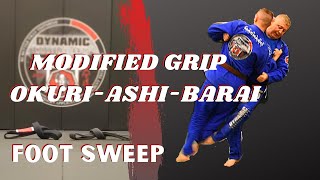
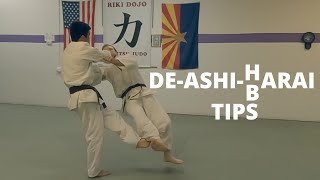
Introduction to De Ashi Barai
De Ashi Barai is a foundational foot sweep that offers excellent risk-reward balance in both competition and training. This technique is particularly valuable for practitioners who prefer footwork-based takedowns over hip throws or wrestling-based entries. The instructor demonstrates why this technique has proven highly effective throughout his tournament experience.
Grip Strategy and Positioning
Effective De Ashi Barai execution does not require traditional judo grips on the collar or sleeves. The practitioner maintains intentionally weak external or internal hand positioning, which paradoxically increases success by making opponents feel safer and less defensive. This psychological advantage allows the sweep to be executed before the opponent recognizes the threat.
Reading Opponent Weight Distribution
Successful De Ashi Barai requires recognizing when the opponent commits weight to their front leg. In the first competition example, the opponent extends his leg heavily while the instructor maintains distance and hand control. The instructor times the sweep to coincide with weight transfer, executing the foot strike against the leg tendon to maximize balance disruption.
Exploiting Footwork Patterns
Opponents who frequently hop or cross their feet during stance transitions become vulnerable to De Ashi Barai. In the second competition clip, the larger opponent's constant weight shifting and light-footed movement allow the sweep to succeed even with minimal technical precision. The instructor capitalizes on these natural movement patterns rather than relying solely on timing.
Execution Mechanics
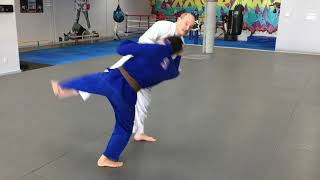
The sweep is performed by striking the opponent's leg—typically with the foot—into their opposite leg while simultaneously applying forward pressure at the chest. The foot contact targets the leg tendon or lower shin, creating momentum that disrupts balance. This simultaneous hand and foot coordination ensures the opponent cannot recover their base.
Post-Takedown Positioning
Following successful De Ashi Barai execution, the practitioner naturally transitions to an open guard position, maintaining the advantage gained from the takedown. Even if initial balance is compromised during the sweep, the resulting guard position provides control for further grappling exchanges. This transition is the natural conclusion of the technique's offensive sequence.
Strategic Applications and Combinations
De Ashi Barai functions most effectively as a setup technique rather than a finishing move, similar to a jab in striking. The sweep can establish pressure, gather information about opponent reactivity, and create opportunities for more complex throws. When executed successfully as demonstrated, it provides immediate tactical advantage and match control.
Deashi Harai No gi
Key Takeaways
- •Introduction to De Ashi Barai
- •Grip Strategy and Positioning
- •Reading Opponent Weight Distribution
- •Exploiting Footwork Patterns
Here are 2 examples with a simple breakdown of deashi harry that I hit in competition years ago. This is a low risk trip and is something I aim for every time I am in a standing position.
Frequently Asked Questions
What does this video teach about standard de ashi barai?
This video covers introduction to de ashi barai, grip strategy and positioning, reading opponent weight distribution. It provides detailed instruction from daniel barnett.
How long does it take to learn standard de ashi barai?
The basic mechanics can be understood in a single session, but developing reliable execution requires consistent drilling over weeks of practice. This 7-part breakdown helps structure your training by isolating each phase of the technique.
What are the key details for finishing standard de ashi barai?
Following successful De Ashi Barai execution, the practitioner naturally transitions to an open guard position, maintaining the advantage gained from the takedown. Even if initial balance is compromised during the sweep, the resulting guard position provides control for further grappling exchanges. This transition is the natural conclusion of the technique's offensive sequence.